Ciri dan struktur
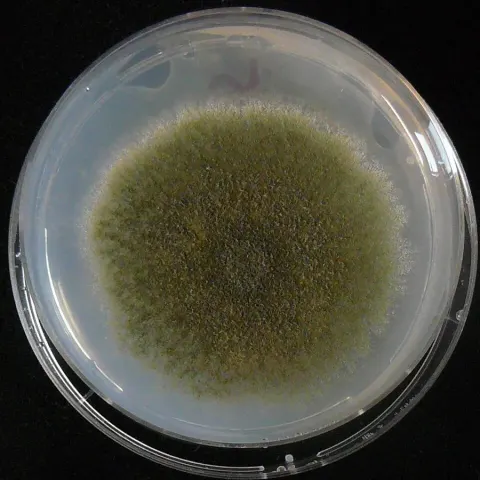
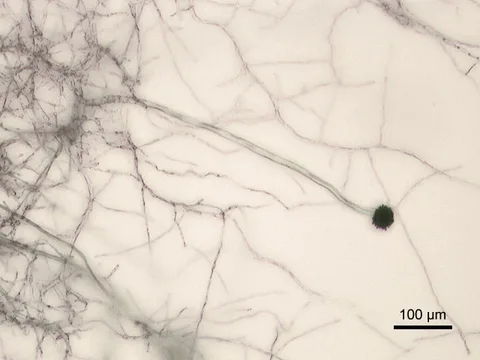
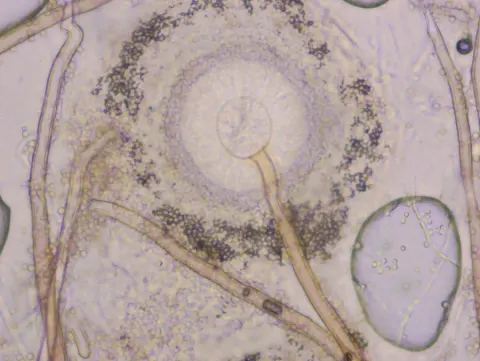
S. keratitidis has very slow growth on a range of cultures, making experiments involving isolation and purification very difficult. It has translucent, linked ameroconidia and very small conidiophores— its unusually small, few conidiophores are the reason why the colonies are white rather than gray. S. keratitidis species have spherical, phialidic conidia. Sagenomella species are closely related to Acremonium, but distinguished by their linked conidia. Sagenomella species are also distinguished from Acremonium species by their sharp-tipped, abruptly-ending conidia. S. keratitidis lacks chlamydospores. S. keratitidis may superficially resemble another member of its genus,S.humicola, under a microscope, but can be distinguished from S.humicola because of its extremely slow growth and lack of chlamydospores.
Habitat dan peran ekologis
S. keratitidis is a human eye pathogen, unlike its other genus counterparts, whose habitat is either soil, manure, or fodder. Although rare, it may occur due to poor sanitation in individuals who wear contact lenses.
- Habitat atau konteks temuan
- Informasi belum tersedia pada sumber rilis ini.
- Substrat
- Informasi belum tersedia pada sumber rilis ini.
- Peran atau konteks
- Belum dikategorikan pada rilis ini.
Reproduksi
S. keratitidis has very slow growth on a range of cultures, making experiments involving isolation and purification very difficult. It has translucent, linked ameroconidia and very small conidiophores— its unusually small, few conidiophores are the reason why the colonies are white rather than gray. S. keratitidis species have spherical, phialidic conidia. Sagenomella species are closely related to Acremonium, but distinguished by their linked conidia. Sagenomella species are also distinguished from Acremonium species by their sharp-tipped, abruptly-ending conidia. S. keratitidis lacks chlamydospores. S. keratitidis may superficially resemble another member of its genus,S.humicola, under a microscope, but can be distinguished from S.humicola because of its extremely slow growth and lack of chlamydospores.
Catatan identitas dan cakupan
- Nama diterima mengikuti Catalogue of Life Base2026-09-11; uraian mempertahankan konsep dan nama sumber aslinya.
- Original geographic, specimen and life-cycle scope retained; source import awaits individual editorial review.
- Impor dan terjemahan otomatis belum diperiksa editorial per profil. Struktur reproduktif yang disebutkan tidak membuktikan seluruh siklus hidup diketahui.
- Pengukuran pada uraian mengikuti spesimen, kultur, dan metode sumber; angka tidak diperluas ke semua populasi.
Catatan distribusi dalam narasi mengikuti sumbernya. Dokumentasi spesimen atau foto mengikuti catatan sumber. Bukti wilayah Indonesia dan penilaian konservasi tidak disimpulkan dari gambar.
Melihat dengan konteks
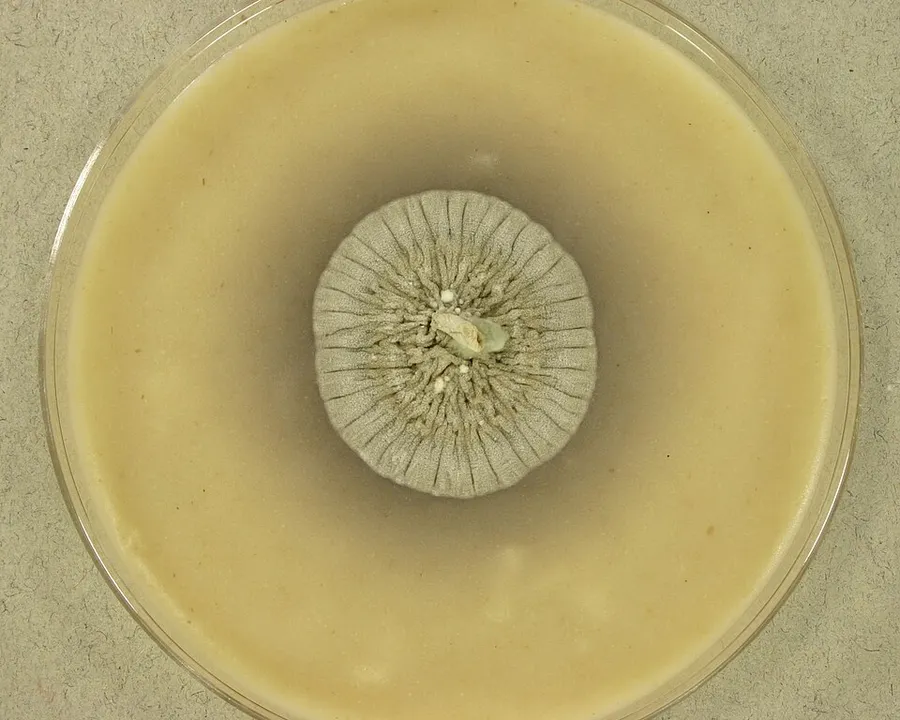
Dokumentasi Sagenomella keratitidis dari Wikimedia Commons. Sagenomella keratitidis (UAMH 11757) grown at 30 °C for 42 days Identifikasi mengikuti record berkas sumber.
- Jenis
- Fotografi
- Kredit
- Medmyco
- Lisensi
- CC BY-SA 4.0
- Sumber media
- Buka entri sumber
Sumber profil
- [1] Sagenomella keratitidis — Wikipedia (en)
- [2] Catalogue of Life Base2026-09-11 — Aspergillus keratitidis
- [3] Dokumentasi visual — Sagenomella keratitidis
Rujukan halaman ini
Fungi. Aspergillus keratitidis. Rilis data fungi-2026-10-12-expansion-2. https://fungi-atlas.mgadib.chatgpt.site/jamur/aspergillus-keratitidis/.
Status: impor sumber; pemeriksaan editorial per profil belum selesai. Untuk klaim biologis, gunakan rujukan pada bagian terkait dan periksa konteks sumber aslinya.