Ciri dan struktur
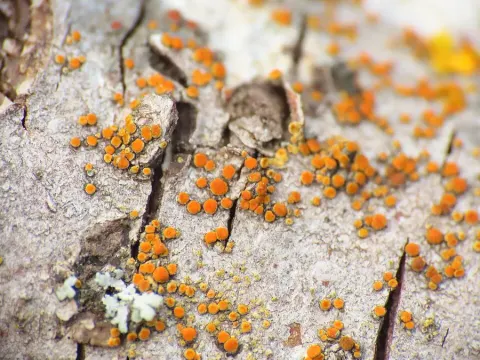
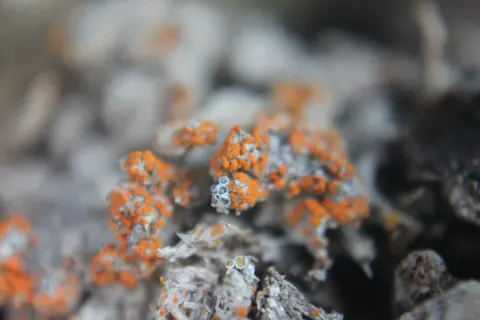
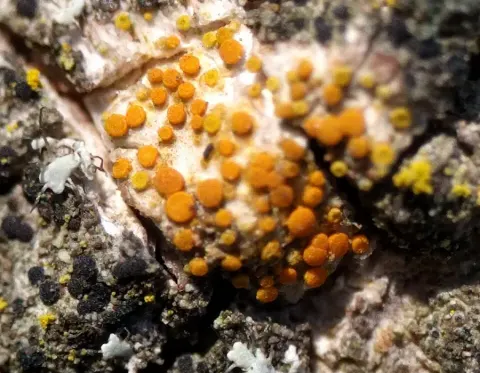
The thallus is inconspicuous and may be partly (developing within the bark), sometimes appearing only as a very thin film close to the apothecia. The apothecia are small, usually about 0.2–0.4 mm across, with yellow to orange . Ascospores are ellipsoid and polarilocular, typically about 10–15 × 6–9 μm, with a relatively thick septum (roughly 4–6 μm); pycnidia have not been reported for this species in the material examined.
Habitat dan peran ekologis
Athallia cerinelloides occurs on nitrophilous (nutrient-enriched) bark across Europe, and it is often found growing alongside the similar bark-dwelling species Caloplaca pyracea.
- Habitat atau konteks temuan
- Informasi belum tersedia pada sumber rilis ini.
- Substrat
- Informasi belum tersedia pada sumber rilis ini.
- Peran atau konteks
- Pembentuk liken
Reproduksi
The thallus is inconspicuous and may be partly (developing within the bark), sometimes appearing only as a very thin film close to the apothecia. The apothecia are small, usually about 0.2–0.4 mm across, with yellow to orange . Ascospores are ellipsoid and polarilocular, typically about 10–15 × 6–9 μm, with a relatively thick septum (roughly 4–6 μm); pycnidia have not been reported for this species in the material examined.
Catatan identitas dan cakupan
- Nama diterima mengikuti Catalogue of Life Base2026-09-11; uraian mempertahankan konsep dan nama sumber aslinya.
- Original geographic, specimen and life-cycle scope retained; source import awaits individual editorial review.
- Impor dan terjemahan otomatis belum diperiksa editorial per profil. Struktur reproduktif yang disebutkan tidak membuktikan seluruh siklus hidup diketahui.
- Pengukuran pada uraian mengikuti spesimen, kultur, dan metode sumber; angka tidak diperluas ke semua populasi.
Catatan distribusi dalam narasi mengikuti sumbernya. Dokumentasi spesimen atau foto mengikuti catatan sumber. Bukti wilayah Indonesia dan penilaian konservasi tidak disimpulkan dari gambar.
Melihat dengan konteks
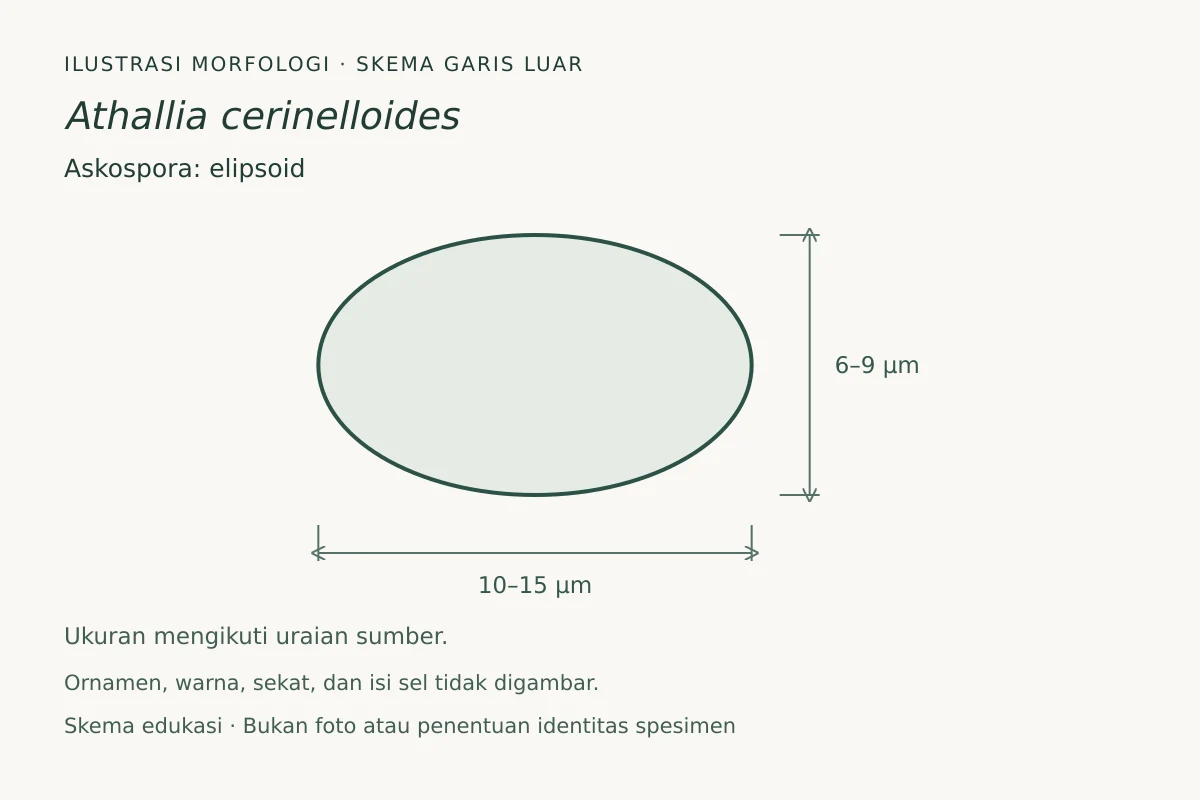
Ilustrasi skematis garis luar askospora Athallia cerinelloides, berdasarkan uraian sumber; ukuran yang dilaporkan 10–15 × 6–9 µm. Proporsi disederhanakan, bukan salinan satu spesimen. Ornamen permukaan, warna, sekat, dan isi sel tidak direkonstruksi. Askospora elipsoid, sekitar 10–15 × 6–9 µm. Sekat polarilokular yang tebal tidak direkonstruksi. Ornamen, warna, sekat, dan isi sel tidak digambar. Skema edukasi, bukan alat identifikasi.
- Jenis
- Ilustrasi skematis
- Kredit
- Fungi, ilustrasi orisinal (2026); fakta morfologi berdasarkan Wikipedia contributors
- Lisensi
- CC BY-SA 4.0
- Sumber media
- Buka entri sumber
Sumber profil
- [1] Athallia cerinelloides — Wikipedia (en)
- [2] Catalogue of Life Base2026-09-11 — Athallia cerinelloides
Rujukan halaman ini
Fungi. Athallia cerinelloides. Rilis data fungi-2026-10-12-expansion-2. https://fungi-atlas.mgadib.chatgpt.site/jamur/athallia-cerinelloides/.
Status: impor sumber; pemeriksaan editorial per profil belum selesai. Untuk klaim biologis, gunakan rujukan pada bagian terkait dan periksa konteks sumber aslinya.