01 / Morfologi

Ciri dan struktur

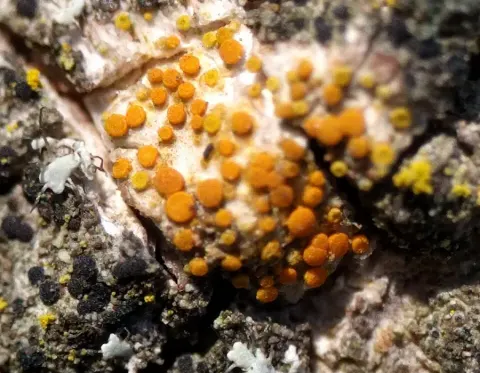
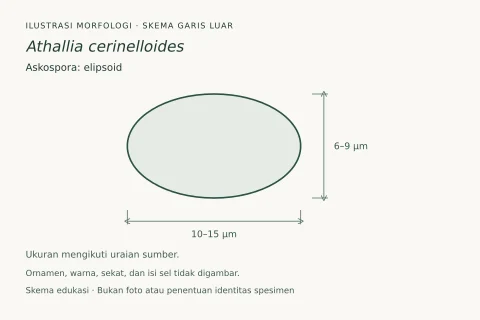
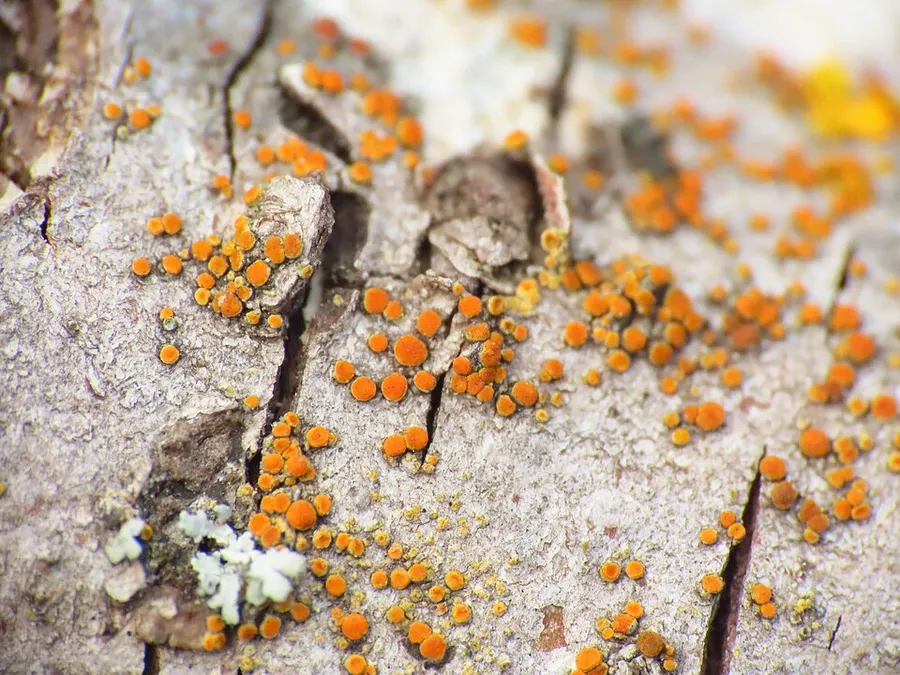
Athallia pyracea forms a very thin, crustose thallus on bark that is sometimes partly immersed in the substrate. The surface is flat to slightly warty () and often cracked () into small areoles about 50–200 μm in diameter. Its colour ranges from pale greyish or greyish yellow to orange-yellow or orange; many thalli show a greyish background with scattered yellow-to-orange spots. A thin, grey may be visible at the margins. The is usually weakly developed, consisting of an amorphous layer of indistinct, roughly isodiametric cells. Apothecia are usually abundant, scattered to crowded (rarely touching), and sit to on the thallus. They are round to somewhat irregular and typically 0.3–1.0 mm across, with an orange that is flat to slightly convex. A is generally present, though it can become excluded in some apothecia. The is usually 35–50 μm thick and may be slightly raised or level with the disc; the is orange and granular. Microscopically, the hymenium is colourless and about 70–90 μm thick, with a hyaline (about 70–100 μm thick) that is sometimes oil-inspersed. Paraphyses are unbranched or branched near the tips, with the upper cells swollen to about 4–7 μm in diameter; the asci contain eight spores. The ascospores are ellipsoid to broadly ellipsoid, typically 10–15.5 × 5.5–8 μm, and (two-celled with a thickened septum), with the septum usually 3.8–5.5 μm thick (often about one-third to one-half of the spore length). The yellow parts of the thallus and the apothecia give a K+ (purple) reaction (turning purple with potassium hydroxide).

Sebagian uraian ditampilkan dalam bahasa sumber; terjemahannya belum tersedia atau belum lolos pemeriksaan.

Rujukan: [1]

Pengukuran mengikuti objek, spesimen atau kultur, dan metode yang disebutkan sumber. Baca uraian asli untuk konteks lengkap.

02 / Kehidupan

Habitat dan peran ekologis

Athallia pyracea occurs in temperate parts of the Northern Hemisphere, with records from Europe, North America, and parts of Asia. In Great Britain it is recorded across the country and is especially frequent in the north (e.g. parts of Scotland). This lichen grows predominantly on the bark of nutrient-enriched, base-rich deciduous trees such as aspen, poplars, and ash. It only very rarely colonizes other substrates, with isolated reports of A. pyracea growing on lignum (dead wood) or even on calcareous rock outcrops. Athallia pyracea is an epiphytic lichen that grows in nitrogen-rich environments, and it is considered a nitrophilous species preferring nutrient-enriched substrata. In Europe it often co-occurs with the similar bark-dwelling lichen Athallia cerinelloides in nitrophilous tree-bark communities. Several lichenicolous (lichen-dwelling) fungi have been documented on A. pyracea. The widespread fungus Lichenodiplis lecanorae is known to grow on the apothecia of A. pyracea. The species Trichoconis hafellneri was described in 2016 from specimens growing on A. pyracea (as well as on Xanthoria parietina).

Sebagian uraian ditampilkan dalam bahasa sumber; terjemahannya belum tersedia atau belum lolos pemeriksaan.

Rujukan: [1]

Habitat atau konteks temuan
Informasi belum tersedia pada sumber rilis ini.
Substrat
Informasi belum tersedia pada sumber rilis ini.
Peran atau konteks
Pembentuk liken
Temukan hubungan serupa
03 / Siklus hidup

Reproduksi

Apothecia are usually abundant, scattered to crowded (rarely touching), and sit to on the thallus. They are round to somewhat irregular and typically 0.3–1.0 mm across, with an orange that is flat to slightly convex. A is generally present, though it can become excluded in some apothecia. The is usually 35–50 μm thick and may be slightly raised or level with the disc; the is orange and granular. Microscopically, the hymenium is colourless and about 70–90 μm thick, with a hyaline (about 70–100 μm thick) that is sometimes oil-inspersed. Paraphyses are unbranched or branched near the tips, with the upper cells swollen to about 4–7 μm in diameter; the asci contain eight spores. The ascospores are ellipsoid to broadly ellipsoid, typically 10–15.5 × 5.5–8 μm, and (two-celled with a thickened septum), with the septum usually 3.8–5.5 μm thick (often about one-third to one-half of the spore length).

Sebagian uraian ditampilkan dalam bahasa sumber; terjemahannya belum tersedia atau belum lolos pemeriksaan.

Rujukan: [1]

Sinonim menurut acuan taksonomi rilis: Biatora aurantiaca pyracea; Biatora aurantiaca var. pyracea; Biatora luteoalba var. pyracea; Biatora rupestris var. pyrithroma; Callopisma cerinum var. pyrithroma; Callopisma luteoalbum var. pyrithroma; Callopisma pyraceum; Callopisma pyraceum f. pyrithroma; Callopisma pyraceum var. pyrithroma; Caloplaca holocarpa var. pyrithroma; Caloplaca lithophila var. pyrithroma; Caloplaca pyracea; Caloplaca pyracea f. pyrithroma; Caloplaca pyracea var. pyrithroma; Lecanora cerina f. pyracea; Lecanora cerina var. pyracea; Lecanora luteoalba var. pyracea; Lecanora pyracea; Lecanora pyracea f. pyrithroma; Lecanora pyracea subsp. pyrithroma; Lecanora pyracea subvar. pyrithroma; Lecanora pyracea var. pyrithroma; Lecanora pyrithroma; Lecidea luteoalba var. pyracea; Lecidea pyracea; Lecidea rupestris var. pyrithroma; Lichen luteoalbus pyracea; Lichen rupestris pyrithroma; Parmelia cerina f. pyracea; Parmelia cerina var. pyracea; Placodium cerinum f. pyraceum; Placodium cerinum var. pyraceum; Placodium cerinum var. pyrithroma; Placodium pyraceum; Placodium pyraceum var. pyrithromum; Zeora cerina var. pyracea
04 / Batas informasi

Catatan identitas dan cakupan

  • Nama diterima mengikuti Catalogue of Life Base2026-09-11; uraian mempertahankan konsep dan nama sumber aslinya.
  • Original geographic, specimen and life-cycle scope retained; source import awaits individual editorial review.
  • Impor dan terjemahan otomatis belum diperiksa editorial per profil. Struktur reproduktif yang disebutkan tidak membuktikan seluruh siklus hidup diketahui.
  • Pengukuran pada uraian mengikuti spesimen, kultur, dan metode sumber; angka tidak diperluas ke semua populasi.

Catatan distribusi dalam narasi mengikuti sumbernya. Dokumentasi spesimen atau foto mengikuti catatan sumber. Bukti wilayah Indonesia dan penilaian konservasi tidak disimpulkan dari gambar.

05 / Dokumentasi

Melihat dengan konteks

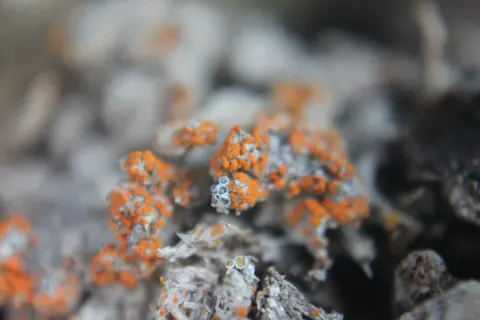
Dokumentasi Athallia pyracea dari Wikimedia Commons. Athallia pyracea Identifikasi mengikuti record berkas sumber.

Jenis
Fotografi
Kredit
Emanuele
Sumber media
Buka entri sumber

Gambar menunjukkan objek menurut identifikasi sumber, bukan verifikasi independen spesimen oleh Fungi. Tidak ada skala baru yang ditambahkan.

06 / Rujukan

Sumber profil

  1. [1] Athallia pyracea — Wikipedia (en)Bagian sumber: Frozen revision 1376961344
    Tanggal penghimpunan sumber: 2026-10-12
    Teks sumber: CC BY-SA4.0 · Wikipedia contributors
  2. [2] Catalogue of Life Base2026-09-11 — Athallia pyraceaBagian sumber: ColDP NameUsage.tsv ID J9LZ; accepted species; source 2073
    Tanggal penghimpunan sumber: 2026-10-12
  3. [3] Dokumentasi visual — Athallia pyraceaBagian sumber: Individual media record; identification follows the source, not independent determination
    Tanggal penghimpunan sumber: 2026-10-12
    Media sumber: CC BY-SA 4.0 · Emanuele

Adaptasi teks: CC BY-SA 4.0. Wikipedia contributors — Athallia pyracea — Wikipedia (en)

Uraian asli dan riwayat sumber

Riwayat atau halaman sumber

Ringkasan sumber

Athallia pyracea is a species of crustose lichen in the family Teloschistaceae. It forms a very thin, often inconspicuous greyish crust on bark, with scattered to crowded orange fruiting bodies typically 0.3–1.0 mm across. The species grows mainly on the nutrient-enriched bark of deciduous trees such as aspen, poplar, and ash and is considered a nitrophilous (nitrogen-loving) lichen. It is widespread in temperate regions of the Northern Hemisphere, occurring across Europe, North America, and parts of Asia.

Revisi sumber

Morfologi sumber

Athallia pyracea forms a very thin, crustose thallus on bark that is sometimes partly immersed in the substrate. The surface is flat to slightly warty () and often cracked () into small areoles about 50–200 μm in diameter. Its colour ranges from pale greyish or greyish yellow to orange-yellow or orange; many thalli show a greyish background with scattered yellow-to-orange spots. A thin, grey may be visible at the margins. The is usually weakly developed, consisting of an amorphous layer of indistinct, roughly isodiametric cells. Apothecia are usually abundant, scattered to crowded (rarely touching), and sit to on the thallus. They are round to somewhat irregular and typically 0.3–1.0 mm across, with an orange that is flat to slightly convex. A is generally present, though it can become excluded in some apothecia. The is usually 35–50 μm thick and may be slightly raised or level with the disc; the is orange and granular. Microscopically, the hymenium is colourless and about 70–90 μm thick, with a hyaline (about 70–100 μm thick) that is sometimes oil-inspersed. Paraphyses are unbranched or branched near the tips, with the upper cells swollen to about 4–7 μm in diameter; the asci contain eight spores. The ascospores are ellipsoid to broadly ellipsoid, typically 10–15.5 × 5.5–8 μm, and (two-celled with a thickened septum), with the septum usually 3.8–5.5 μm thick (often about one-third to one-half of the spore length). The yellow parts of the thallus and the apothecia give a K+ (purple) reaction (turning purple with potassium hydroxide).

Revisi sumber

Ekologi sumber

Athallia pyracea occurs in temperate parts of the Northern Hemisphere, with records from Europe, North America, and parts of Asia. In Great Britain it is recorded across the country and is especially frequent in the north (e.g. parts of Scotland). This lichen grows predominantly on the bark of nutrient-enriched, base-rich deciduous trees such as aspen, poplars, and ash. It only very rarely colonizes other substrates, with isolated reports of A. pyracea growing on lignum (dead wood) or even on calcareous rock outcrops. Athallia pyracea is an epiphytic lichen that grows in nitrogen-rich environments, and it is considered a nitrophilous species preferring nutrient-enriched substrata. In Europe it often co-occurs with the similar bark-dwelling lichen Athallia cerinelloides in nitrophilous tree-bark communities. Several lichenicolous (lichen-dwelling) fungi have been documented on A. pyracea. The widespread fungus Lichenodiplis lecanorae is known to grow on the apothecia of A. pyracea. The species Trichoconis hafellneri was described in 2016 from specimens growing on A. pyracea (as well as on Xanthoria parietina).

Revisi sumber

Struktur reproduksi sumber

Apothecia are usually abundant, scattered to crowded (rarely touching), and sit to on the thallus. They are round to somewhat irregular and typically 0.3–1.0 mm across, with an orange that is flat to slightly convex. A is generally present, though it can become excluded in some apothecia. The is usually 35–50 μm thick and may be slightly raised or level with the disc; the is orange and granular. Microscopically, the hymenium is colourless and about 70–90 μm thick, with a hyaline (about 70–100 μm thick) that is sometimes oil-inspersed. Paraphyses are unbranched or branched near the tips, with the upper cells swollen to about 4–7 μm in diameter; the asci contain eight spores. The ascospores are ellipsoid to broadly ellipsoid, typically 10–15.5 × 5.5–8 μm, and (two-celled with a thickened septum), with the septum usually 3.8–5.5 μm thick (often about one-third to one-half of the spore length).

Revisi sumber

Rujukan halaman ini

Fungi. Athallia pyracea. Rilis data fungi-2026-10-12-expansion-2. https://fungi-atlas.mgadib.chatgpt.site/jamur/athallia-pyracea/.

Status: impor sumber; pemeriksaan editorial per profil belum selesai. Untuk klaim biologis, gunakan rujukan pada bagian terkait dan periksa konteks sumber aslinya.