Ciri dan struktur
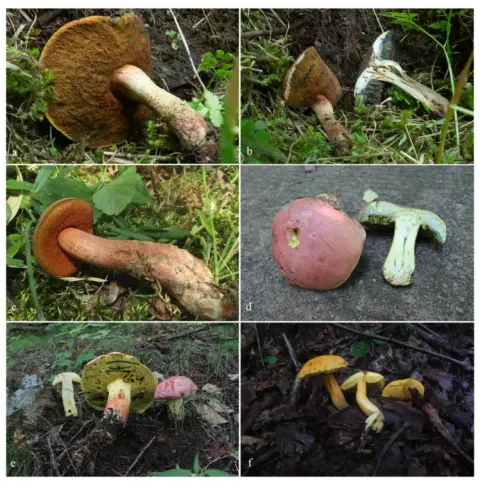
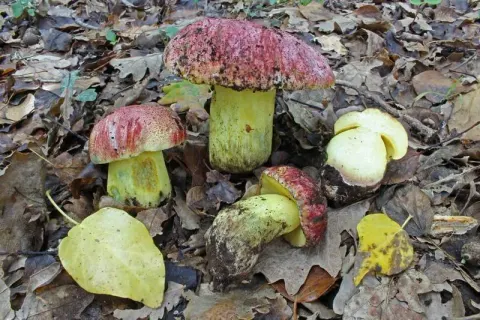
Butyriboletus fuscoroseus produces a robust basidiocarp with a convex cap (pileus) up to 20 cm across. Young caps are hemispherical before flattening, and display colours ranging from violet-brown to reddish-brown, occasionally dull red; older specimens often fade to beige with a faint pink tint. The margin typically retains remnants of the partial veil (appendiculate). Beneath the cap, the tubes measure up to 1.5 cm long and are bright yellow, developing an olive tinge with age; both tubes and pores bruise blue when handled. The stipe is stout, up to 10 cm long and 3 cm thick, cylindrical to club-shaped, yellow near the apex and tinged pink to red towards the base, usually with a well-developed reticulation of the same colour; it too bruises blue on handling. The context (flesh) is whitish in the cap and lemon yellow in the stipe, shading to clay pink at the stipe base and turning blue on exposure. The odour is indistinct in young fruit bodies but in maturity may become medicinal or paint-like, and when dried can resemble smoked meat or chicory; taste is mild to slightly acidic. Microscopically, the spores are ellipsoid, measuring about 10–14.5 × 4–5.5 micrometres (μm), each containing one to three large oil droplets. The basidia (spore-bearing cells) are club-shaped and four-spored, and the cystidia measure roughly 36–52 × 9–14.5 μm. The cap surface (pileipellis) is a trichoderm of interwoven, slightly incrusted hyphae with rounded terminal cells. Chemical spot tests produce only slight reactions with ammonia (NH4OH) and potassium hydroxide (KOH) solution, and no change with iron(II) sulphate (FeSO4) or Melzer's reagent.
Habitat dan peran ekologis
The fruiting bodies of Butyriboletus fuscoroseus develop in warm, dry to moderately moist broadleaf woodlands, most often under oak (Quercus spp.), and frequently on calcareous soils at elevations from near sea level up to about 800 m. In Bulgaria, it typically appears from June through September, corresponding with the summer season. Within Bulgaria, confirmed localities extend along the Southern Black Sea coast, the Eastern Forebalkan, the western and eastern flanks of the Stara Planina mountains, the Sofia region and the Eastern Rhodope range. Beyond Bulgaria, it occurs across much of southern and central Europe—including Austria, Belgium, Czech Republic, France, Greece, Hungary, Italy, Spain and the Balkan states—and its range reaches into Turkey.
- Habitat atau konteks temuan
- Informasi belum tersedia pada sumber rilis ini.
- Substrat
- Informasi belum tersedia pada sumber rilis ini.
- Peran atau konteks
- Belum dikategorikan pada rilis ini.
Reproduksi
Butyriboletus fuscoroseus produces a robust basidiocarp with a convex cap (pileus) up to 20 cm across. Young caps are hemispherical before flattening, and display colours ranging from violet-brown to reddish-brown, occasionally dull red; older specimens often fade to beige with a faint pink tint. The margin typically retains remnants of the partial veil (appendiculate). Microscopically, the spores are ellipsoid, measuring about 10–14.5 × 4–5.5 micrometres (μm), each containing one to three large oil droplets. The basidia (spore-bearing cells) are club-shaped and four-spored, and the cystidia measure roughly 36–52 × 9–14.5 μm. The cap surface (pileipellis) is a trichoderm of interwoven, slightly incrusted hyphae with rounded terminal cells.
Catatan identitas dan cakupan
- Nama diterima mengikuti Catalogue of Life Base2026-09-11; uraian mempertahankan konsep dan nama sumber aslinya.
- Original geographic, specimen and life-cycle scope retained; source import awaits individual editorial review.
- Impor dan terjemahan otomatis belum diperiksa editorial per profil. Struktur reproduktif yang disebutkan tidak membuktikan seluruh siklus hidup diketahui.
- Pengukuran pada uraian mengikuti spesimen, kultur, dan metode sumber; angka tidak diperluas ke semua populasi.
Catatan distribusi dalam narasi mengikuti sumbernya. Dokumentasi spesimen atau foto mengikuti catatan sumber. Bukti wilayah Indonesia dan penilaian konservasi tidak disimpulkan dari gambar.
Melihat dengan konteks
Dokumentasi Butyriboletus fuscoroseus menurut asosiasi foto pada record takson iNaturalist. Kredit: Davide Puddu. Identitas mengikuti sumber; bukan penentuan spesimen independen.
- Jenis
- Fotografi
- Kredit
- (c) Davide Puddu, some rights reserved (CC BY), uploaded by Davide Puddu
- Lisensi
- CC BY 4.0
- Sumber media
- Buka entri sumber
Dokumentasi tambahan
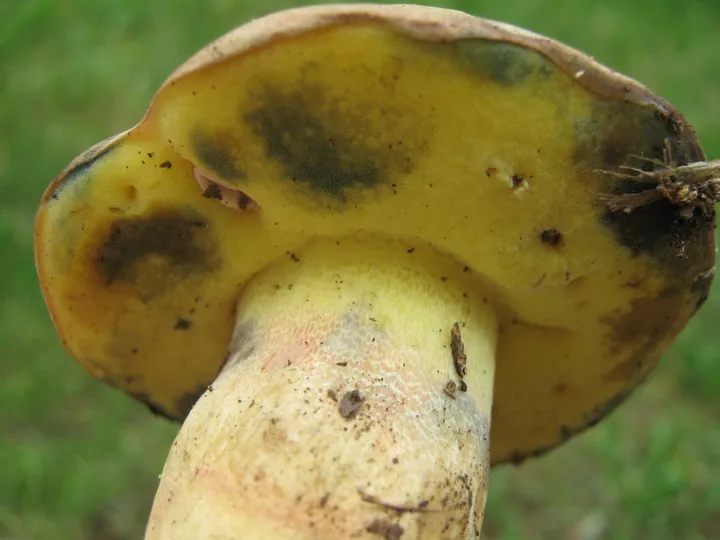
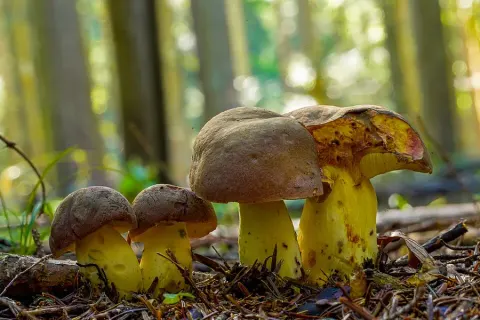
Foto yang diasosiasikan dengan Butyriboletus fuscoroseus pada iNaturalist. Identifikasi mengikuti sumber; bukan penentuan spesimen independen.
Kredit dan penggunaan
(c) GLJIVARSKO DRUSTVO NIS, some rights reserved (CC BY)
Ukuran dan format gambar disesuaikan tanpa pemotongan, retus, atau penambahan skala. Lisensi sumber dipertahankan.
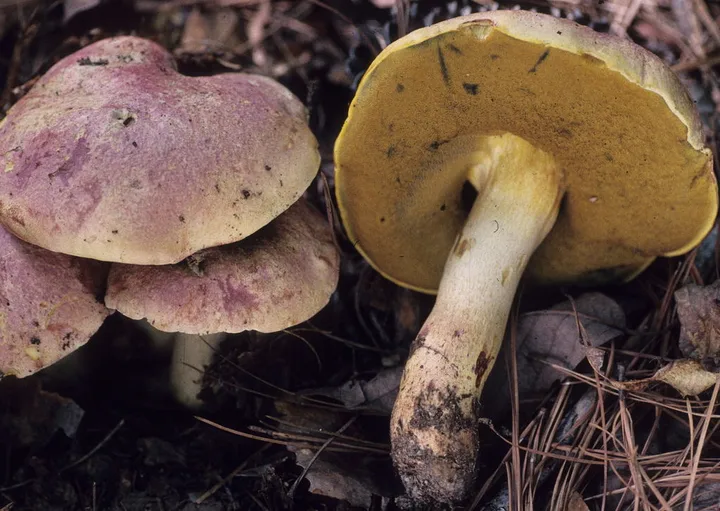
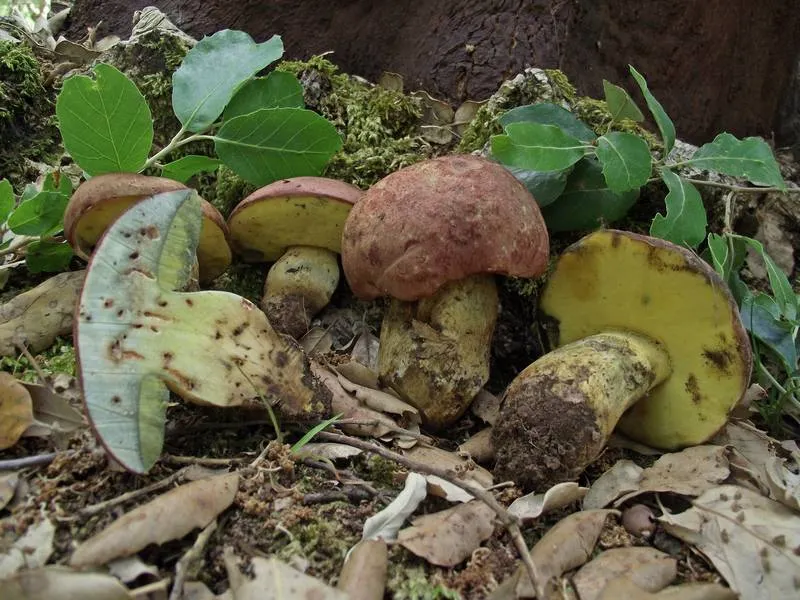
Foto yang diasosiasikan dengan Butyriboletus fuscoroseus pada iNaturalist. Identifikasi mengikuti sumber; bukan penentuan spesimen independen.
Kredit dan penggunaan
(c) mycowalt, some rights reserved (CC BY-SA), uploaded by mycowalt
Ukuran dan format gambar disesuaikan tanpa pemotongan, retus, atau penambahan skala. Lisensi sumber dipertahankan.
Sumber profil
- [1] Butyriboletus fuscoroseus — Wikipedia (en)
- [2] Catalogue of Life Base2026-09-11 — Butyriboletus fuscoroseus
- [3] Dokumentasi visual — Butyriboletus fuscoroseus
- [4] Dokumentasi visual — Butyriboletus fuscoroseus
- [5] Dokumentasi visual — Butyriboletus fuscoroseus
Rujukan halaman ini
Fungi. Butyriboletus fuscoroseus. Rilis data fungi-2026-10-12-expansion-2. https://fungi-atlas.mgadib.chatgpt.site/jamur/butyriboletus-fuscoroseus/.
Status: impor sumber; pemeriksaan editorial per profil belum selesai. Untuk klaim biologis, gunakan rujukan pada bagian terkait dan periksa konteks sumber aslinya.