Ciri dan struktur
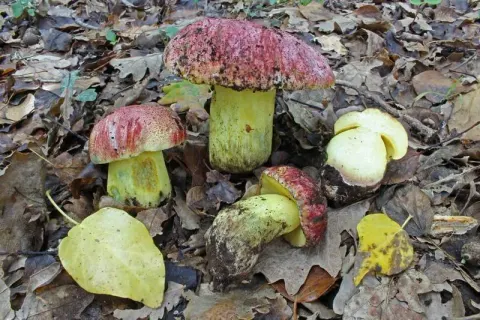
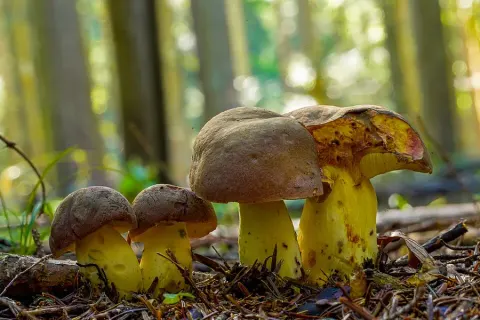
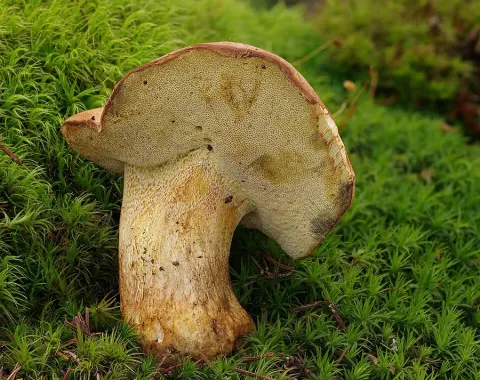
Notes: Butyriboletus pseudoroseoflavus is characterized by a pink to greyish rose pileus, greenish yellow pores changing to greenish blue when bruised, a stipe surface almost wholly covered with yellow reticulation, a stipe of unchanging color when injured, and large and narrow basidiospores. Morphologically and phylogenetically, Bu. pseudoroseoflavus is similar to Bu. roseoflavus (Hai B. Li & Hai L. Wei) D. Arora & J.L. Frank, which was initially described in specimens from eastern China (Zhejiang province) and southwestern China (Yunnan province) by Li et al. [ 67 ]. However, Bu. pseudoroseoflavus differs from Bu. roseoflavus in its adnate to decurrent hymenophore and its relatively larger and narrower basidiospores, with a more considerable Q value and pleurocystidia larger than cheilocystidia [ 5 ]. In morphological features, Bu. pseudoroseoflavus is also similar to Bu. cepaeodoratus (Taneyama & Har. Takah.) Vizzini & Gelardi, Bu. roseogriseus (Šutara, M. Graca, M. Kolařík, Janda & Kříž) Vizzini & Gelardi, Bu. primiregius D. Arora & J.L. Frank, Bu. regius (Krombh.) D. Arora & J.L. Frank., and Bu. fuscoroseus (Smotl.) Vizzini & Gelardi, but the pileus of Bu. cepaeodoratus always has a duller color, its stipe stains blue when injured, and its basidiospores are broader than those of Bu. pseudoroseoflavus [ 68 ]. Both stipe and context of Bu. roseogriseus and Bu. primiregius turn blue when injured, and have broader basidiospores, Q = (1.95) 2.20–2.42 (2.57) and Q = 3.5, respectively [ 32, 56 ]. The pores of Bu. regius are unchanging to blue when bruised; the stipe is usually ventricose when young, showing at the base rare faintly reddish or purplish spots, with basidiospores weakly dextrinoid [ 69 ].
Habitat dan peran ekologis
Habitat: solitary or scattered on a dark-brown soil of Quercus mongolica forest.
- Habitat atau konteks temuan
- hutan
- Substrat
- Informasi belum tersedia pada sumber rilis ini.
- Peran atau konteks
- Belum dikategorikan pada rilis ini.
Reproduksi
Notes: Butyriboletus pseudoroseoflavus is characterized by a pink to greyish rose pileus, greenish yellow pores changing to greenish blue when bruised, a stipe surface almost wholly covered with yellow reticulation, a stipe of unchanging color when injured, and large and narrow basidiospores. Morphologically and phylogenetically, Bu. pseudoroseoflavus is similar to Bu. roseoflavus (Hai B. Li & Hai L. Wei) D. Arora & J.L. Frank, which was initially described in specimens from eastern China (Zhejiang province) and southwestern China (Yunnan province) by Li et al. [ 67 ]. However, Bu. pseudoroseoflavus differs from Bu. roseoflavus in its adnate to decurrent hymenophore and its relatively larger and narrower basidiospores, with a more considerable Q value and pleurocystidia larger than cheilocystidia [ 5 ].
Catatan identitas dan cakupan
- Nama diterima mengikuti Catalogue of Life Base2026-09-11; uraian mempertahankan konsep dan nama sumber aslinya.
- Preserve original treatment localities, hosts and substrate scope. Materials examined describe documented specimens, not the full global range.
- Impor dan terjemahan otomatis belum diperiksa editorial per profil. Struktur reproduktif yang disebutkan tidak membuktikan seluruh siklus hidup diketahui.
- Pengukuran pada uraian mengikuti spesimen, kultur, dan metode sumber; angka tidak diperluas ke semua populasi.
Catatan distribusi dalam narasi mengikuti sumbernya. Dokumentasi spesimen atau foto mengikuti catatan sumber. Bukti wilayah Indonesia dan penilaian konservasi tidak disimpulkan dari gambar.
Melihat dengan konteks
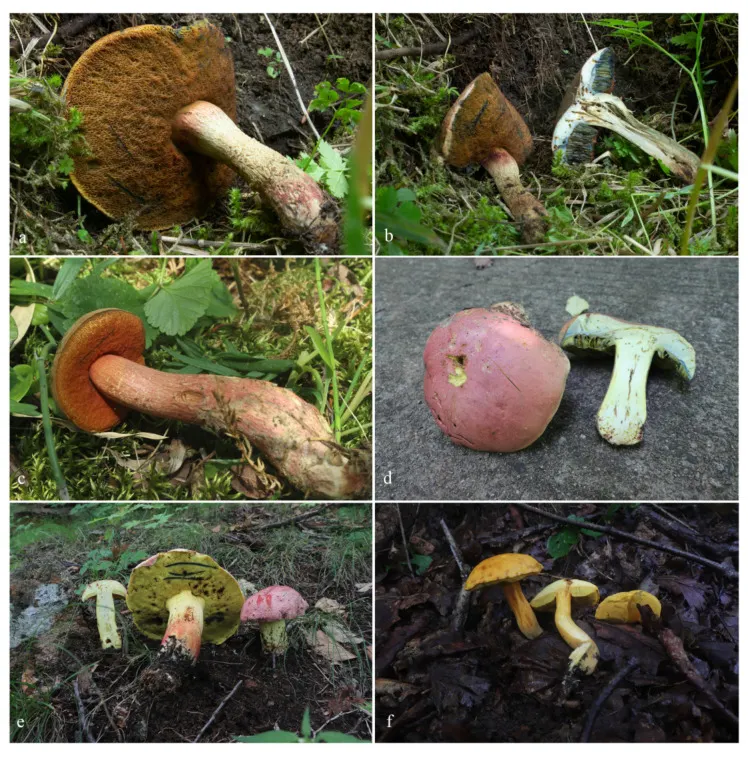
Basidiomata of boletes. (a – c) Suillellus lacrymibasidiatus; (d) Butyriboletus subregius; (e) Butyriboletus pseudoroseoflavus (e from HMJAU 59470); (f) Tengioboletus subglutinosus (f from HMJAU 59037). (a – c) Photos by Yang Wang; (d – f) Photos by Yong-Lan Tuo.
- Jenis
- Pelat ilmiah
- Kredit
- © 2022 by the authors.
- Lisensi
- CC BY 4.0
- Sumber media
- Buka entri sumber
Dokumentasi tambahan
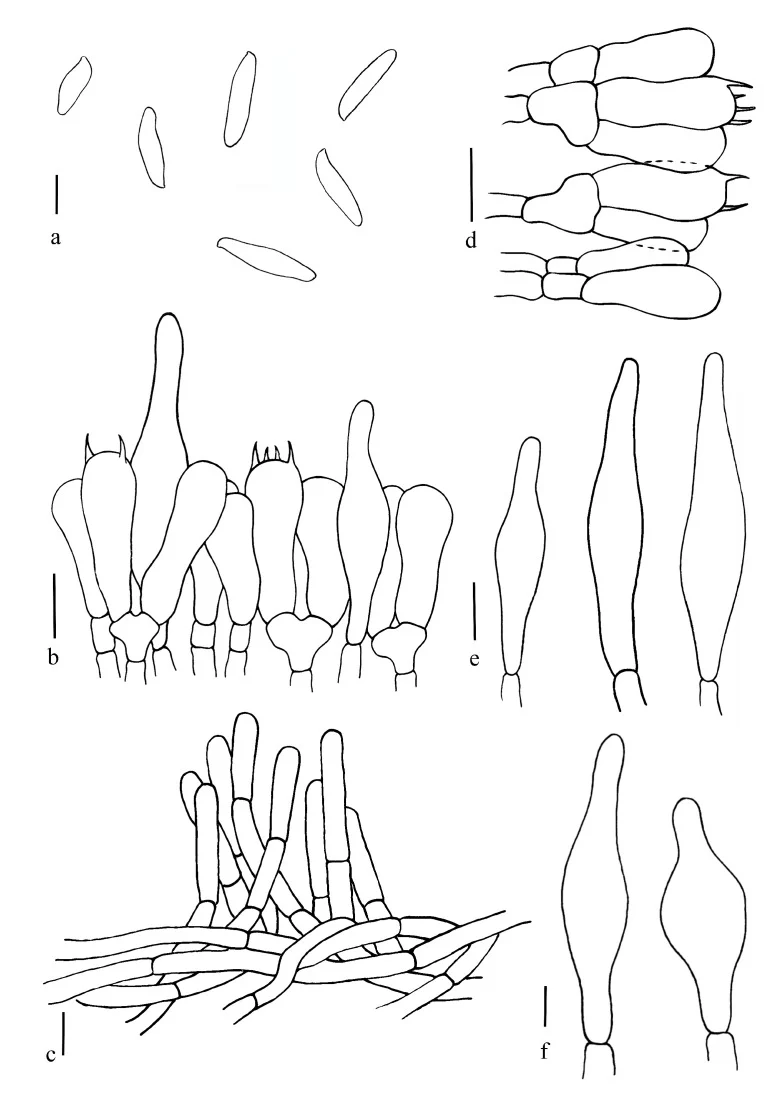
Butyriboletus pseudoroseoflavus. (a) Basidiospores; (b) Basidia and pleurocystidia; (c) Pileipellis; (d) Stipitipellis; (e) Pleurocystidia; (f) Cheilocystidia. Scale bars: (b – e) =10 μm; (a, f) =5 μm.
Kredit dan penggunaan
© 2022 by the authors.
Ukuran dan format gambar disesuaikan tanpa pemotongan, retus, atau penambahan skala. Lisensi sumber dipertahankan.
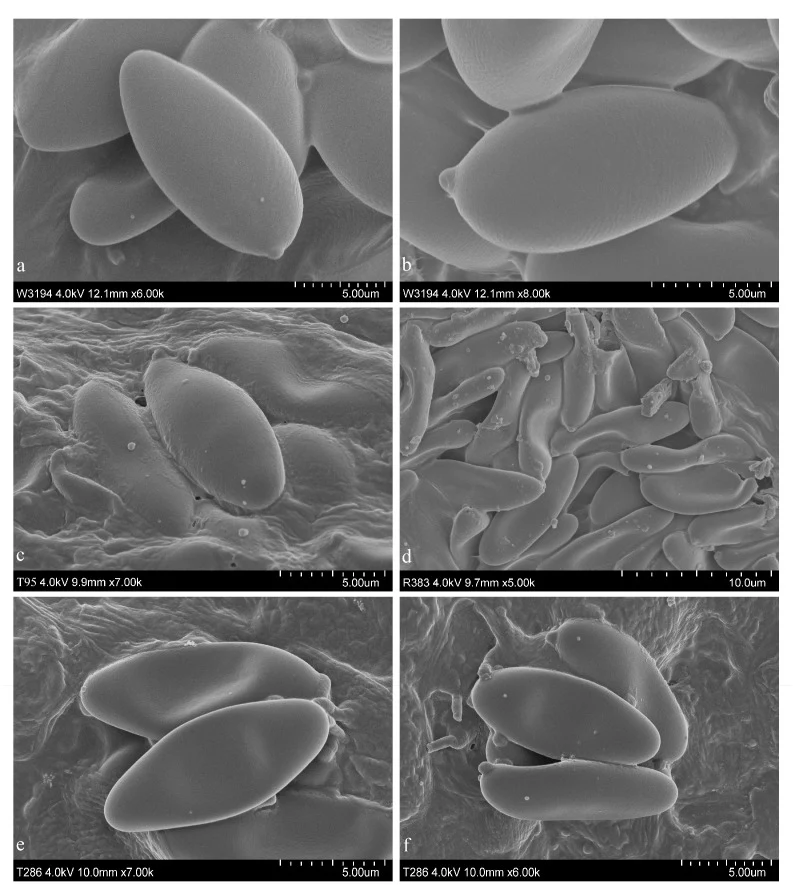
Basidiospores observed in the SEM. (a, b) Suillellus lacrymibasidiatus; (c) Butyriboletus subregius; (d) Butyriboletus pseudoroseoflavus; (e, f) Tengioboletus subglutinosus.
Kredit dan penggunaan
© 2022 by the authors.
Ukuran dan format gambar disesuaikan tanpa pemotongan, retus, atau penambahan skala. Lisensi sumber dipertahankan.
Sumber profil
- [1] Exploring the Relationships between Four New Species of Boletoid Fungi from Northern China and Their Related Species — Butyriboletus pseudoroseoflavus
- [2] Catalogue of Life Base2026-09-11 — Butyriboletus pseudoroseoflavus
- [3] Dokumentasi visual — Butyriboletus pseudoroseoflavus
- [4] Dokumentasi visual — Butyriboletus pseudoroseoflavus
- [5] Dokumentasi visual — Butyriboletus pseudoroseoflavus
Rujukan halaman ini
Fungi. Butyriboletus pseudoroseoflavus. Rilis data fungi-2026-10-12-expansion-2. https://fungi-atlas.mgadib.chatgpt.site/jamur/butyriboletus-pseudoroseoflavus/.
Status: impor sumber; pemeriksaan editorial per profil belum selesai. Untuk klaim biologis, gunakan rujukan pada bagian terkait dan periksa konteks sumber aslinya.