01 / Morfologi

Ciri dan struktur

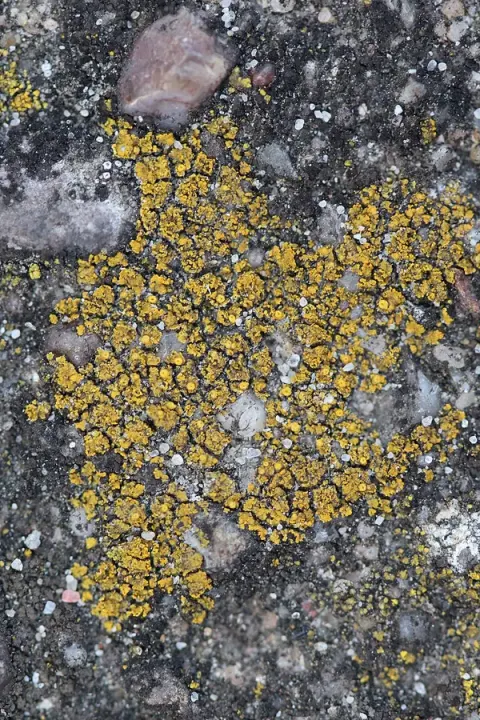
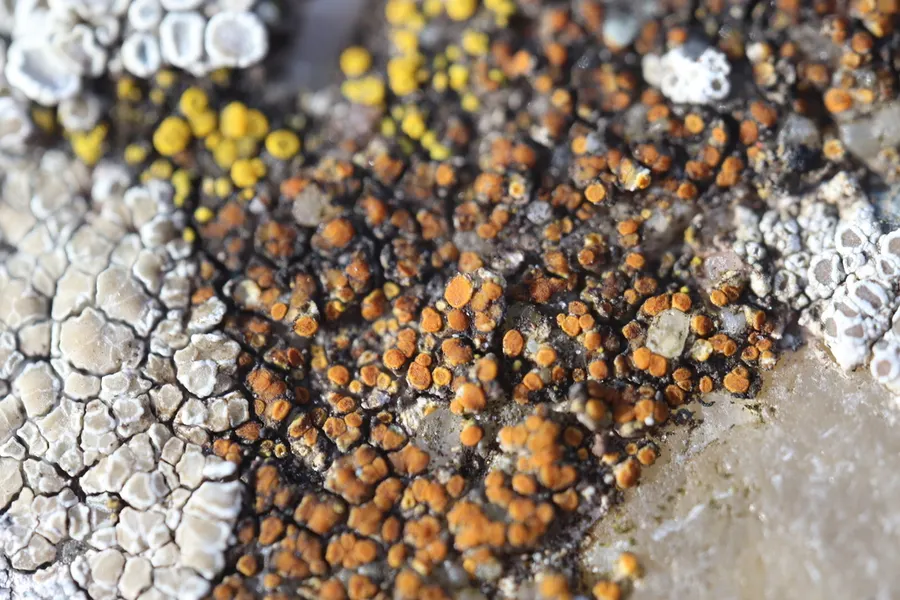
The lichen Flavoplaca oasis has a typically visible yet thin thallus, characterised by small or , particularly noticeable at the . The thallus presents a pale yellow hue. It features an (honeycomb-like) cortex, and its is distinctly separated by fungal hyphae. This species lacks a prothallus and does not produce vegetative propagules such as isidia, soredia, and . The medulla of the thallus is white. Apothecia (fruiting bodies) in Flavoplaca oasis are abundant and are either or in form. They are sessile with a round or elliptical shape, measuring 0.1–0.5 mm in diameter. The apothecial are slightly convex, ranging in colour from orange to dark orange, and are not (dusty or frosted in appearance). The of the apothecia is very thin and slightly raised, appearing paler than the disc. The (outer layer of the apothecia) is somewhat reduced and contains numerous algae, with a poorly developed cortex. The (outermost hymenium layer) is and yellow, while the hymenium (tissue layer containing the asci) itself is hyaline (translucent) and measures 75–85 μm in height. Paraphyses (filamentous structures in the hymenium) are simple or slightly branched above, with 1–2 apical cells thickened, extending up to 7 μm wide. The (the tissue layer below the hymenium) is either hyaline or , consisting of thin-walled roundish cells measuring 53–125 μm. This layer lacks crystals or oil droplets and features irregular, prosoplectenchymatous hyphae that are 40–50 μm high. The (outer rim of the apothecia) consists of thin-walled oval to polygonal cells, with the upper side measuring 38–50 μm. Paraphyses are mostly , occasionally forked, with swollen tip cells measuring 4.5–5.3 μm in width.

Sebagian uraian ditampilkan dalam bahasa sumber; terjemahannya belum tersedia atau belum lolos pemeriksaan.

Rujukan: [1]

Pengukuran mengikuti objek, spesimen atau kultur, dan metode yang disebutkan sumber. Baca uraian asli untuk konteks lengkap.

02 / Kehidupan

Habitat dan peran ekologis

Flavoplaca oasis has established a widespread presence across Europe, and has been reported in Western Asia and North Africa. The typical habitats for Flavoplaca oasis are such as pure limestone, concrete, and mortar, indicating the species' preference for alkaline environments often found in man-made structures. Additionally, Flavoplaca oasis has a versatile ecological role, as it can grow both as a free-living lichen and as a parasitic lichen. In its parasitic form, it grows on species (i.e., crustose lichens that grow in the interior of rocks) of the genus Verrucaria. The known distribution of the lichen was expanded in 2018 to include China.

Sebagian uraian ditampilkan dalam bahasa sumber; terjemahannya belum tersedia atau belum lolos pemeriksaan.

Rujukan: [1]

Habitat atau konteks temuan
Informasi belum tersedia pada sumber rilis ini.
Substrat
Informasi belum tersedia pada sumber rilis ini.
Peran atau konteks
Pembentuk liken
Temukan hubungan serupa
03 / Siklus hidup

Reproduksi

The lichen Flavoplaca oasis has a typically visible yet thin thallus, characterised by small or , particularly noticeable at the . The thallus presents a pale yellow hue. It features an (honeycomb-like) cortex, and its is distinctly separated by fungal hyphae. This species lacks a prothallus and does not produce vegetative propagules such as isidia, soredia, and . The medulla of the thallus is white. Apothecia (fruiting bodies) in Flavoplaca oasis are abundant and are either or in form. They are sessile with a round or elliptical shape, measuring 0.1–0.5 mm in diameter. The apothecial are slightly convex, ranging in colour from orange to dark orange, and are not (dusty or frosted in appearance).

Sebagian uraian ditampilkan dalam bahasa sumber; terjemahannya belum tersedia atau belum lolos pemeriksaan.

Rujukan: [1]

Sinonim menurut acuan taksonomi rilis: Callopisma aurantiacum f. oasis; Callopisma aurantiacum oasis; Callopisma aurantiacum var. oasis; Caloplaca aurantiaca f. oasis; Caloplaca erythrella var. oasis; Caloplaca oasis; Caloplaca oasis f. rohlenae; Caloplaca oasis subsp. rohlenae; Caloplaca pyracea var. rohlenae; Caloplaca velana var. oasis; Lecanora aurantiaca var. oasis; Placodium oasis
04 / Batas informasi

Catatan identitas dan cakupan

  • Nama diterima mengikuti Catalogue of Life Base2026-09-11; uraian mempertahankan konsep dan nama sumber aslinya.
  • Original geographic, specimen and life-cycle scope retained; source import awaits individual editorial review.
  • Impor dan terjemahan otomatis belum diperiksa editorial per profil. Struktur reproduktif yang disebutkan tidak membuktikan seluruh siklus hidup diketahui.
  • Pengukuran pada uraian mengikuti spesimen, kultur, dan metode sumber; angka tidak diperluas ke semua populasi.

Catatan distribusi dalam narasi mengikuti sumbernya. Dokumentasi spesimen atau foto mengikuti catatan sumber. Bukti wilayah Indonesia dan penilaian konservasi tidak disimpulkan dari gambar.

05 / Dokumentasi

Melihat dengan konteks

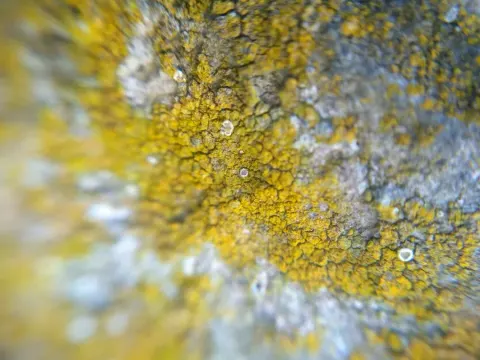
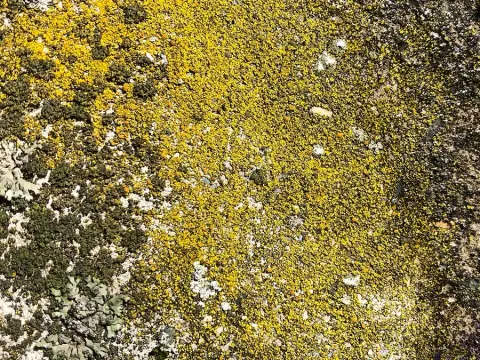
Dokumentasi Flavoplaca oasis menurut asosiasi foto pada record takson iNaturalist. Kredit: Michel Langeveld. Identitas mengikuti sumber; bukan penentuan spesimen independen.

Jenis
Fotografi
Kredit
(c) Michel Langeveld, some rights reserved (CC BY), uploaded by Michel Langeveld
Lisensi
CC BY 4.0
Sumber media
Buka entri sumber

Gambar menunjukkan objek menurut identifikasi sumber, bukan verifikasi independen spesimen oleh Fungi. Tidak ada skala baru yang ditambahkan.

06 / Rujukan

Sumber profil

  1. [1] Flavoplaca oasis — Wikipedia (en)Bagian sumber: Frozen revision 1296392442
    Tanggal penghimpunan sumber: 2026-10-12
    Teks sumber: CC BY-SA4.0 · Wikipedia contributors
  2. [2] Catalogue of Life Base2026-09-11 — Flavoplaca oasisBagian sumber: ColDP NameUsage.tsv ID 6J9BR; accepted species; source 2073
    Tanggal penghimpunan sumber: 2026-10-12
  3. [3] Dokumentasi visual — Flavoplaca oasisBagian sumber: Individual media record; identification follows the source, not independent determination
    Tanggal penghimpunan sumber: 2026-10-12
    Media sumber: CC BY 4.0 · (c) Michel Langeveld, some rights reserved (CC BY), uploaded by Michel Langeveld

Adaptasi teks: CC BY-SA 4.0. Wikipedia contributors — Flavoplaca oasis — Wikipedia (en)

Uraian asli dan riwayat sumber

Riwayat atau halaman sumber

Ringkasan sumber

Flavoplaca oasis is a species of saxicolous (rock-dwelling), crustose lichen in the family Teloschistaceae. It is widely distributed across Europe, and has been reported in Western Asia, China, and North Africa.

Revisi sumber

Morfologi sumber

The lichen Flavoplaca oasis has a typically visible yet thin thallus, characterised by small or , particularly noticeable at the . The thallus presents a pale yellow hue. It features an (honeycomb-like) cortex, and its is distinctly separated by fungal hyphae. This species lacks a prothallus and does not produce vegetative propagules such as isidia, soredia, and . The medulla of the thallus is white. Apothecia (fruiting bodies) in Flavoplaca oasis are abundant and are either or in form. They are sessile with a round or elliptical shape, measuring 0.1–0.5 mm in diameter. The apothecial are slightly convex, ranging in colour from orange to dark orange, and are not (dusty or frosted in appearance). The of the apothecia is very thin and slightly raised, appearing paler than the disc. The (outer layer of the apothecia) is somewhat reduced and contains numerous algae, with a poorly developed cortex. The (outermost hymenium layer) is and yellow, while the hymenium (tissue layer containing the asci) itself is hyaline (translucent) and measures 75–85 μm in height. Paraphyses (filamentous structures in the hymenium) are simple or slightly branched above, with 1–2 apical cells thickened, extending up to 7 μm wide. The (the tissue layer below the hymenium) is either hyaline or , consisting of thin-walled roundish cells measuring 53–125 μm. This layer lacks crystals or oil droplets and features irregular, prosoplectenchymatous hyphae that are 40–50 μm high. The (outer rim of the apothecia) consists of thin-walled oval to polygonal cells, with the upper side measuring 38–50 μm. Paraphyses are mostly , occasionally forked, with swollen tip cells measuring 4.5–5.3 μm in width.

Revisi sumber

Ekologi sumber

Flavoplaca oasis has established a widespread presence across Europe, and has been reported in Western Asia and North Africa. The typical habitats for Flavoplaca oasis are such as pure limestone, concrete, and mortar, indicating the species' preference for alkaline environments often found in man-made structures. Additionally, Flavoplaca oasis has a versatile ecological role, as it can grow both as a free-living lichen and as a parasitic lichen. In its parasitic form, it grows on species (i.e., crustose lichens that grow in the interior of rocks) of the genus Verrucaria. The known distribution of the lichen was expanded in 2018 to include China.

Revisi sumber

Struktur reproduksi sumber

The lichen Flavoplaca oasis has a typically visible yet thin thallus, characterised by small or , particularly noticeable at the . The thallus presents a pale yellow hue. It features an (honeycomb-like) cortex, and its is distinctly separated by fungal hyphae. This species lacks a prothallus and does not produce vegetative propagules such as isidia, soredia, and . The medulla of the thallus is white. Apothecia (fruiting bodies) in Flavoplaca oasis are abundant and are either or in form. They are sessile with a round or elliptical shape, measuring 0.1–0.5 mm in diameter. The apothecial are slightly convex, ranging in colour from orange to dark orange, and are not (dusty or frosted in appearance).

Revisi sumber

Rujukan halaman ini

Fungi. Flavoplaca oasis. Rilis data fungi-2026-10-12-expansion-2. https://fungi-atlas.mgadib.chatgpt.site/jamur/flavoplaca-oasis/.

Status: impor sumber; pemeriksaan editorial per profil belum selesai. Untuk klaim biologis, gunakan rujukan pada bagian terkait dan periksa konteks sumber aslinya.