01 / Morfologi

Ciri dan struktur

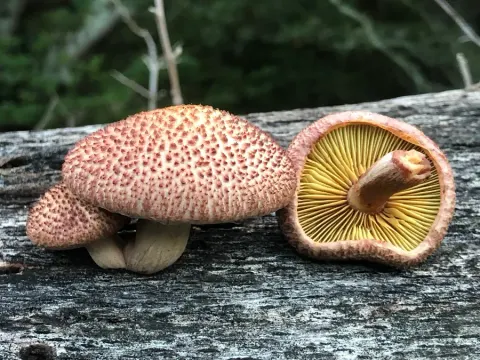
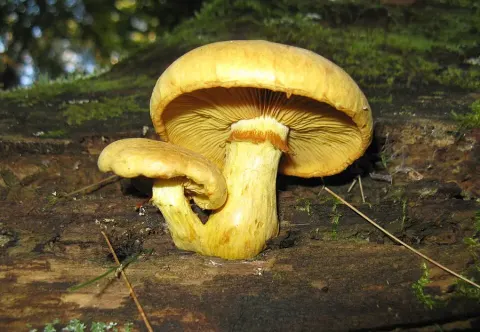
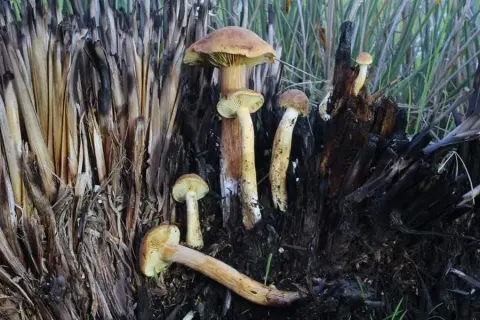
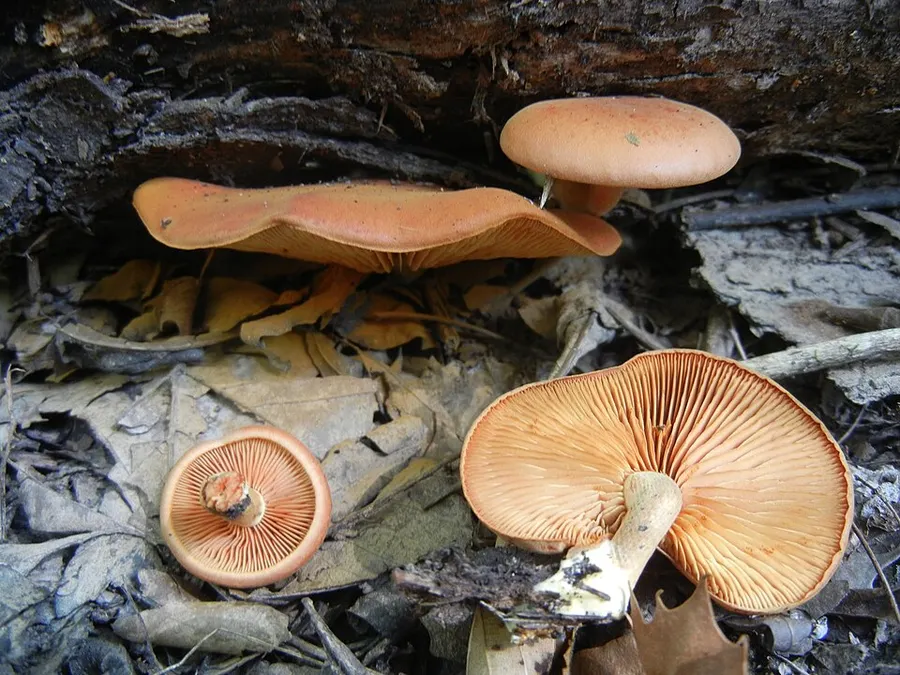
Cap: 2–8 cm in diameter; initially convex, becoming nearly plane to nearly umbonate in age, dry, smooth, rusty brown to orange color, margin even, at length striatulate (with marked by small lines, grooves or ridges), cracking slightly in age, flesh pale yellow to pale orange. Gills: Close to crowded; broad, edges fimbriate, yellowish or pale orange, eventually orange; sometimes with reddish brown spots. Spore print: Rusty orange. Stipe: 3–7 cm long; 3—8 mm thick; more or less equal, or tapering in either direction; sometimes slightly, even to off-center; smooth or finely fibrous; whitish to pale orange; yellowish or rusty colored mycelium at the base of the stalk. No partial veil. Taste: Bitter Odor: Mild or sometimes like raw potatoes Microscopic features: Spores 7—8.5 x 4—5.5 μm, elliptical; pleurocystidia (inconspicuous), cheilocystidia, pileocystidia and caulocystidia present.

Sebagian uraian ditampilkan dalam bahasa sumber; terjemahannya belum tersedia atau belum lolos pemeriksaan.

Rujukan: [1]

Pengukuran mengikuti objek, spesimen atau kultur, dan metode yang disebutkan sumber. Baca uraian asli untuk konteks lengkap.

02 / Kehidupan

Habitat dan peran ekologis

Gymnopilus liquiritiae adalah jamur kayu yang banyak tersebar, subcaespitose pada konifer, tampaknya lebih memilih kayu keras mati di wilayah selatan.

Rujukan: [1]

Habitat atau konteks temuan
Informasi belum tersedia pada sumber rilis ini.
Substrat
Informasi belum tersedia pada sumber rilis ini.
Peran atau konteks
Belum dikategorikan pada rilis ini.
Temukan hubungan serupa
03 / Siklus hidup

Reproduksi

Cap: 2–8 cm in diameter; initially convex, becoming nearly plane to nearly umbonate in age, dry, smooth, rusty brown to orange color, margin even, at length striatulate (with marked by small lines, grooves or ridges), cracking slightly in age, flesh pale yellow to pale orange. Gills: Close to crowded; broad, edges fimbriate, yellowish or pale orange, eventually orange; sometimes with reddish brown spots. Spore print: Rusty orange. Stipe: 3–7 cm long; 3—8 mm thick; more or less equal, or tapering in either direction; sometimes slightly, even to off-center; smooth or finely fibrous; whitish to pale orange; yellowish or rusty colored mycelium at the base of the stalk. No partial veil. Taste: Bitter Odor: Mild or sometimes like raw potatoes Microscopic features: Spores 7—8.5 x 4—5.5 μm, elliptical; pleurocystidia (inconspicuous), cheilocystidia, pileocystidia and caulocystidia present.

Sebagian uraian ditampilkan dalam bahasa sumber; terjemahannya belum tersedia atau belum lolos pemeriksaan.

Rujukan: [1]

Sinonim menurut acuan taksonomi rilis: Agaricus liquiritiae; Dryophila liquiritiae; Flammula liquiritiae; Gymnopus liquiritiae; Naucoria liquiritiae
04 / Batas informasi

Catatan identitas dan cakupan

  • Nama diterima mengikuti Catalogue of Life Base2026-09-11; uraian mempertahankan konsep dan nama sumber aslinya.
  • Original geographic, specimen and life-cycle scope retained; source import awaits individual editorial review.
  • Impor dan terjemahan otomatis belum diperiksa editorial per profil. Struktur reproduktif yang disebutkan tidak membuktikan seluruh siklus hidup diketahui.
  • Pengukuran pada uraian mengikuti spesimen, kultur, dan metode sumber; angka tidak diperluas ke semua populasi.

Catatan distribusi dalam narasi mengikuti sumbernya. Dokumentasi spesimen atau foto mengikuti catatan sumber. Bukti wilayah Indonesia dan penilaian konservasi tidak disimpulkan dari gambar.

05 / Dokumentasi

Melihat dengan konteks

Dokumentasi Gymnopilus liquiritiae dari Wikimedia Commons. For more information about this, see the observation page at Mushroom Observer. Identifikasi mengikuti record berkas sumber.

Jenis
Fotografi
Kredit
This image was created by user David Tate (DavidTate) at Mushroom Observer , a source for mycological images. You can contact this user here .
Sumber media
Buka entri sumber

Gambar menunjukkan objek menurut identifikasi sumber, bukan verifikasi independen spesimen oleh Fungi. Tidak ada skala baru yang ditambahkan.

06 / Rujukan

Sumber profil

  1. [1] Gymnopilus liquiritiae — Wikipedia (en)Bagian sumber: Frozen revision 1355311621
    Tanggal penghimpunan sumber: 2026-10-12
    Teks sumber: CC BY-SA4.0 · Wikipedia contributors
  2. [2] Catalogue of Life Base2026-09-11 — Gymnopilus liquiritiaeBagian sumber: ColDP NameUsage.tsv ID 3HTDQ; accepted species; source 2073
    Tanggal penghimpunan sumber: 2026-10-12
  3. [3] Dokumentasi visual — Gymnopilus liquiritiaeBagian sumber: Individual media record; identification follows the source, not independent determination
    Tanggal penghimpunan sumber: 2026-10-12
    Media sumber: CC BY-SA 3.0 · This image was created by user David Tate (DavidTate) at Mushroom Observer , a source for mycological images. You can contact this user here .

Adaptasi teks: CC BY-SA 4.0. Wikipedia contributors — Gymnopilus liquiritiae — Wikipedia (en)

Uraian asli dan riwayat sumber

Riwayat atau halaman sumber

Ringkasan sumber

Gymnopilus liquiritiae is a mushroom in the family Hymenogastraceae. The mushroom is widely distributed and grows in dense clusters on dead conifer wood. It has a rusty orange spore print, a bitter taste, and does not contain the hallucinogen psilocybin. One of its key distinguishing features is the lack of partial veil.

Revisi sumber

Morfologi sumber

Cap: 2–8 cm in diameter; initially convex, becoming nearly plane to nearly umbonate in age, dry, smooth, rusty brown to orange color, margin even, at length striatulate (with marked by small lines, grooves or ridges), cracking slightly in age, flesh pale yellow to pale orange. Gills: Close to crowded; broad, edges fimbriate, yellowish or pale orange, eventually orange; sometimes with reddish brown spots. Spore print: Rusty orange. Stipe: 3–7 cm long; 3—8 mm thick; more or less equal, or tapering in either direction; sometimes slightly, even to off-center; smooth or finely fibrous; whitish to pale orange; yellowish or rusty colored mycelium at the base of the stalk. No partial veil. Taste: Bitter Odor: Mild or sometimes like raw potatoes Microscopic features: Spores 7—8.5 x 4—5.5 μm, elliptical; pleurocystidia (inconspicuous), cheilocystidia, pileocystidia and caulocystidia present.

Revisi sumber

Ekologi sumber

Gymnopilus liquiritiae is a widely distributed wood rotting mushroom, subcaespitose on conifer, seems to prefer dead hardwood in the southern regions.

Revisi sumber

Struktur reproduksi sumber

Cap: 2–8 cm in diameter; initially convex, becoming nearly plane to nearly umbonate in age, dry, smooth, rusty brown to orange color, margin even, at length striatulate (with marked by small lines, grooves or ridges), cracking slightly in age, flesh pale yellow to pale orange. Gills: Close to crowded; broad, edges fimbriate, yellowish or pale orange, eventually orange; sometimes with reddish brown spots. Spore print: Rusty orange. Stipe: 3–7 cm long; 3—8 mm thick; more or less equal, or tapering in either direction; sometimes slightly, even to off-center; smooth or finely fibrous; whitish to pale orange; yellowish or rusty colored mycelium at the base of the stalk. No partial veil. Taste: Bitter Odor: Mild or sometimes like raw potatoes Microscopic features: Spores 7—8.5 x 4—5.5 μm, elliptical; pleurocystidia (inconspicuous), cheilocystidia, pileocystidia and caulocystidia present.

Revisi sumber

Rujukan halaman ini

Fungi. Gymnopilus liquiritiae. Rilis data fungi-2026-10-12-expansion-2. https://fungi-atlas.mgadib.chatgpt.site/jamur/gymnopilus-liquiritiae/.

Status: impor sumber; pemeriksaan editorial per profil belum selesai. Untuk klaim biologis, gunakan rujukan pada bagian terkait dan periksa konteks sumber aslinya.