Ciri dan struktur
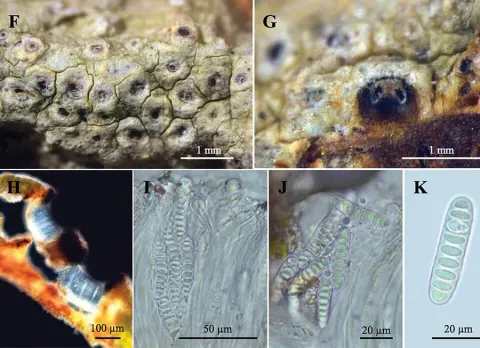
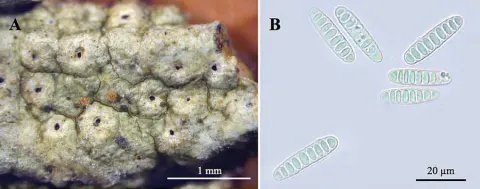
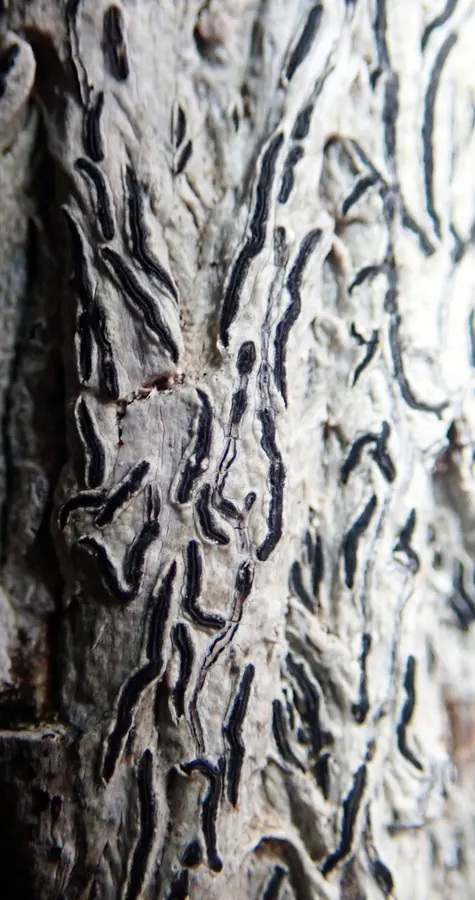
Halegrapha mucronata is a bark-dwelling crustose lichen forming a continuous thallus that is typically white-grey, with a smooth to uneven surface and no . Thalli form diffuse patches up to about 10 cm wide that often fuse into extensive colonies; the thallus is typically about 30–120 μm thick. Calcium oxalate crystals are abundant, especially between the and the . In section it has a firm, upper cortex, an uneven photobiont layer, and conspicuous clusters of crystals in the thallus. The fruiting bodies are black that are dense and , usually only sparsely branched, and immersed to . The black lirellae are scattered to crowded, usually simple or only sparsely branched, and straight to sinuous; they are about 0.8–4 mm long and 0.2–0.3 mm wide, with a thin basal and a usually concealed black disc. The is usually concealed but can be slightly exposed, and the lips () are black and remain entire. Microscopically, the is mainly along the sides (sometimes converging beneath the hymenium), and the hymenium is colourless and clear (not ). The asci produce eight brown ascospores. Ascospores are transversely 7–12-septate and (30–)34–57(–64) × 7–11(–11.5) μm; they begin hyaline, become pale brown, and may become deep brown and somewhat deformed with age. A hyaline extension about 2–5 μm long occurs at both ends, or sometimes only at the distal end. Thin-layer chromatography (TLC) detected norstictic acid as the major lichen substance (with connorstictic acid as a minor component), and thallus sections show a K+ (yellow) reaction that forms red needle-shaped crystals under the microscope.
Habitat dan peran ekologis
Halegrapha mucronata is corticolous, growing on bark. In Tasmania it is very common and widespread in coastal districts (including the Bass Strait islands), and it often becomes the dominant epiphyte in coastal scrub dominated by Acacia longifolia subsp. sophorae, where it can form extensive thalli alongside Lecanora flavopallida and Flavoparmelia rutidota. Inland it is less frequent, where it has been recorded on garden trees and in dry and wet sclerophyll forest and heathland, and it has been collected rarely from canopy branches in rainforest. More broadly, the species is reported from Australia and New Zealand. In the 2011 revision that established Halegrapha, the nomenclatural types discussed for H. mucronata were from New South Wales, including collections from the Riverina district and the Nepean River area. In Tasmanian literature it has also been treated under the name Phaeographis australiensis.
- Habitat atau konteks temuan
- hutan
- Substrat
- kulit kayu
- Peran atau konteks
- Pembentuk liken
Reproduksi
The fruiting bodies are black that are dense and , usually only sparsely branched, and immersed to . The black lirellae are scattered to crowded, usually simple or only sparsely branched, and straight to sinuous; they are about 0.8–4 mm long and 0.2–0.3 mm wide, with a thin basal and a usually concealed black disc. The is usually concealed but can be slightly exposed, and the lips () are black and remain entire. Microscopically, the is mainly along the sides (sometimes converging beneath the hymenium), and the hymenium is colourless and clear (not ). The asci produce eight brown ascospores. Ascospores are transversely 7–12-septate and (30–)34–57(–64) × 7–11(–11.5) μm; they begin hyaline, become pale brown, and may become deep brown and somewhat deformed with age.
Catatan identitas dan cakupan
- Nama diterima mengikuti Catalogue of Life Base2026-09-11; uraian mempertahankan konsep dan nama sumber aslinya.
- Original geographic, specimen and life-cycle scope retained; source import awaits individual editorial review.
- Impor dan terjemahan otomatis belum diperiksa editorial per profil. Struktur reproduktif yang disebutkan tidak membuktikan seluruh siklus hidup diketahui.
- Pengukuran pada uraian mengikuti spesimen, kultur, dan metode sumber; angka tidak diperluas ke semua populasi.
Catatan distribusi dalam narasi mengikuti sumbernya. Dokumentasi spesimen atau foto mengikuti catatan sumber. Bukti wilayah Indonesia dan penilaian konservasi tidak disimpulkan dari gambar.
Melihat dengan konteks
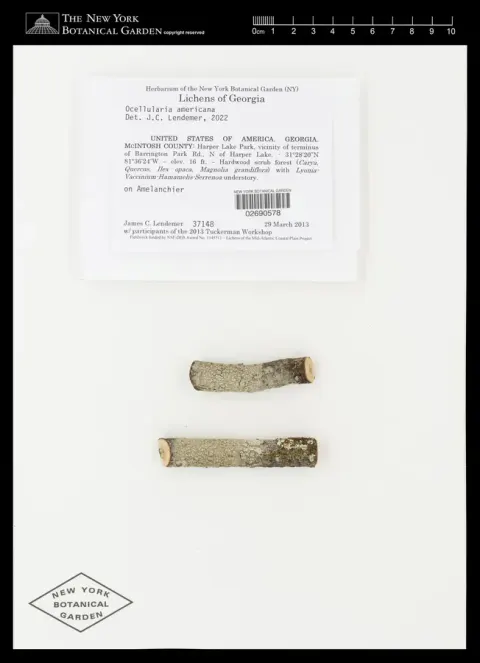
Dokumentasi Halegrapha mucronata menurut asosiasi foto pada record takson iNaturalist. Kredit: Peter de Lange. Identitas mengikuti sumber; bukan penentuan spesimen independen.
- Jenis
- Fotografi
- Kredit
- no rights reserved, uploaded by Peter de Lange
- Lisensi
- CC0 1.0
- Sumber media
- Buka entri sumber
Dokumentasi tambahan
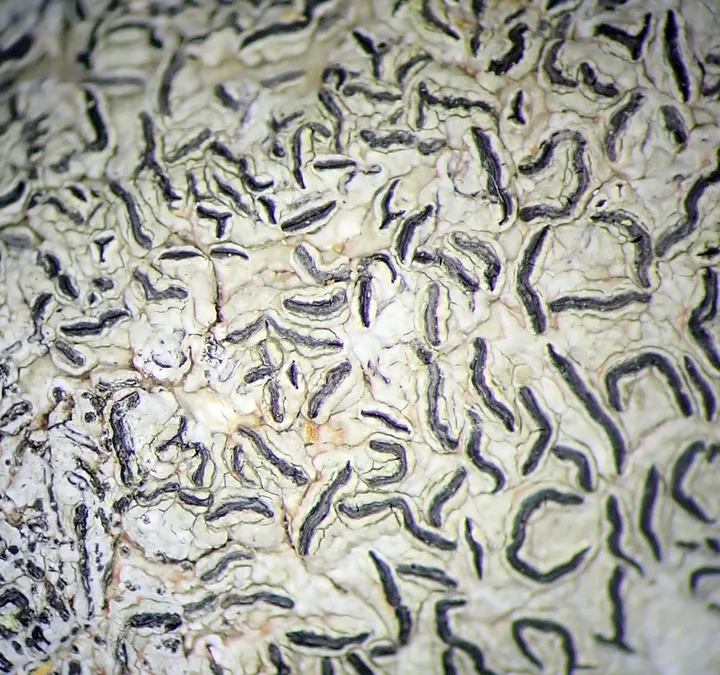
Foto yang diasosiasikan dengan Halegrapha mucronata pada iNaturalist. Identifikasi mengikuti sumber; bukan penentuan spesimen independen.
Kredit dan penggunaan
no rights reserved, uploaded by Peter de Lange
Ukuran dan format gambar disesuaikan tanpa pemotongan, retus, atau penambahan skala. Lisensi sumber dipertahankan.
Sumber profil
- [1] Halegrapha mucronata — Wikipedia (en)
- [2] Catalogue of Life Base2026-09-11 — Halegrapha mucronata
- [3] Dokumentasi visual — Halegrapha mucronata
- [4] Dokumentasi visual — Halegrapha mucronata
Rujukan halaman ini
Fungi. Halegrapha mucronata. Rilis data fungi-2026-10-12-expansion-2. https://fungi-atlas.mgadib.chatgpt.site/jamur/halegrapha-mucronata/.
Status: impor sumber; pemeriksaan editorial per profil belum selesai. Untuk klaim biologis, gunakan rujukan pada bagian terkait dan periksa konteks sumber aslinya.