Ciri dan struktur
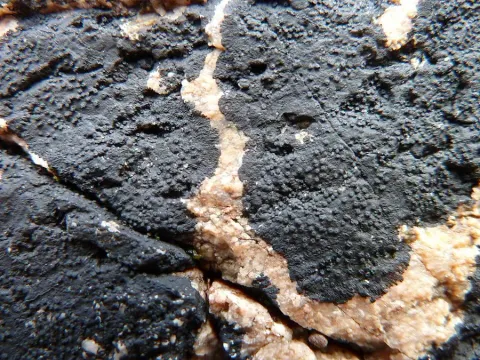
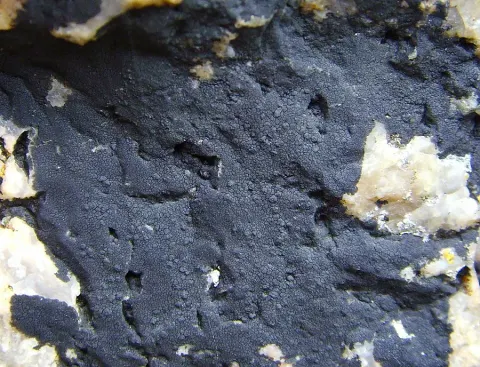
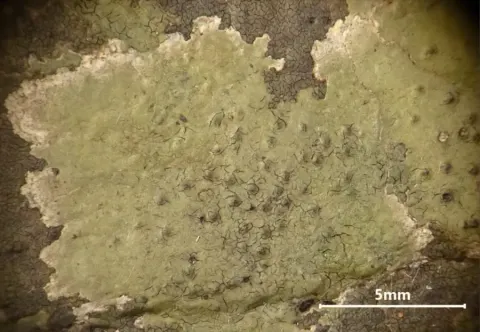
Hydropunctaria symbalana is a crustose lichen that grows on the surface of its substrate (episubstratic). It displays a dark olive-brown to olive-black colouration and becomes somewhat gelatinous when wet. The thallus (main body of the lichen) appears continuous or cracked (), with a surface that is either smooth or, more commonly, covered with slightly raised, (dot-like) black warts or short ridges. The (outer protective layer) of the thallus is barely differentiated and contains a brown pigment that shows no reaction when treated with potassium hydroxide solution (K-). The cells (the algal partner in the lichen symbiosis) are arranged in vertical rows throughout the thallus. The medulla (inner layer) features distinctive pillars of dark brown to black tissue that often extend to the thallus surface. The reproductive structures of H. symbalana are perithecia, which appear as black, largely immersed bodies within measuring up to 0.45 mm wide. These perithecia project from the surface with a characteristic crater-like ostiolar region (opening). Each perithecium has a thick (protective covering) that extends to the base-level, and a black, roughly spherical (inner wall) measuring 0.16–0.22 mm across. The (sterile tissue among the asci) consists of and , with interascal filaments absent. The hymenial gel (the matrix in which the asci develop) stains blue when treated with iodine (I+ blue), indicating an amyloid reaction. The asci (spore-producing structures) are eight-spored and club-shaped () in form. They do not react with iodine (I-) and are , meaning they have a specialised double-wall structure that aids in spore discharge.
Habitat dan peran ekologis
Hydropunctaria symbalana is a crustose lichen that grows on the surface of its substrate (episubstratic). It displays a dark olive-brown to olive-black colouration and becomes somewhat gelatinous when wet. The thallus (main body of the lichen) appears continuous or cracked (), with a surface that is either smooth or, more commonly, covered with slightly raised, (dot-like) black warts or short ridges.
- Habitat atau konteks temuan
- Informasi belum tersedia pada sumber rilis ini.
- Substrat
- Informasi belum tersedia pada sumber rilis ini.
- Peran atau konteks
- Pembentuk liken
Reproduksi
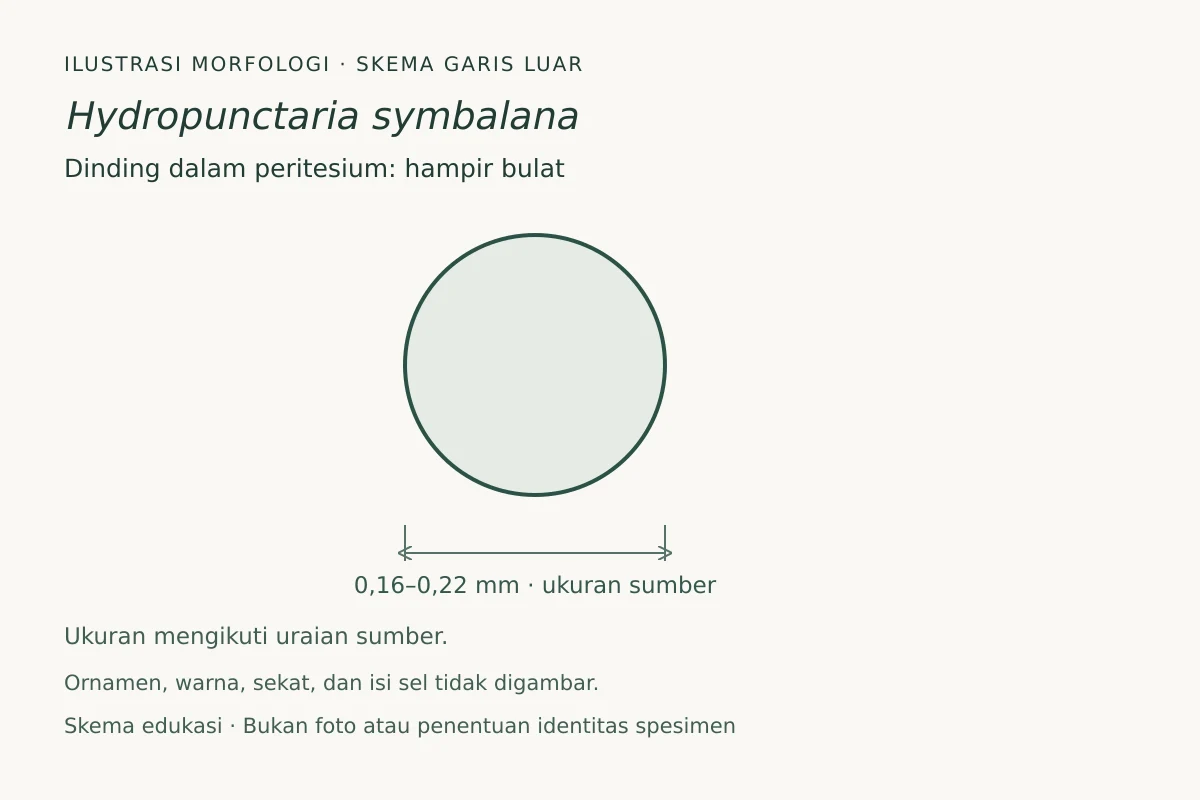
The reproductive structures of H. symbalana are perithecia, which appear as black, largely immersed bodies within measuring up to 0.45 mm wide. These perithecia project from the surface with a characteristic crater-like ostiolar region (opening). Each perithecium has a thick (protective covering) that extends to the base-level, and a black, roughly spherical (inner wall) measuring 0.16–0.22 mm across. The (sterile tissue among the asci) consists of and , with interascal filaments absent. The hymenial gel (the matrix in which the asci develop) stains blue when treated with iodine (I+ blue), indicating an amyloid reaction. The asci (spore-producing structures) are eight-spored and club-shaped () in form.
Catatan identitas dan cakupan
- Nama diterima mengikuti Catalogue of Life Base2026-09-11; uraian mempertahankan konsep dan nama sumber aslinya.
- Original geographic, specimen and life-cycle scope retained; source import awaits individual editorial review.
- Impor dan terjemahan otomatis belum diperiksa editorial per profil. Struktur reproduktif yang disebutkan tidak membuktikan seluruh siklus hidup diketahui.
- Pengukuran pada uraian mengikuti spesimen, kultur, dan metode sumber; angka tidak diperluas ke semua populasi.
Catatan distribusi dalam narasi mengikuti sumbernya. Dokumentasi spesimen atau foto mengikuti catatan sumber. Bukti wilayah Indonesia dan penilaian konservasi tidak disimpulkan dari gambar.
Melihat dengan konteks
Ilustrasi skematis garis luar dinding dalam peritesium Hydropunctaria symbalana, berdasarkan uraian sumber; ukuran yang dilaporkan 0,16–0,22 mm. Proporsi disederhanakan, bukan salinan satu spesimen. Ornamen permukaan, warna, sekat, dan isi sel tidak direkonstruksi. Garis luar dinding dalam peritesium yang hampir bulat, lebar 0,16–0,22 mm. Ketebalan dinding dan kawah ostiol pada struktur luar tidak direkonstruksi. Ornamen, warna, sekat, dan isi sel tidak digambar. Skema edukasi, bukan alat identifikasi.
- Jenis
- Ilustrasi skematis
- Kredit
- Fungi, ilustrasi orisinal (2026); fakta morfologi berdasarkan Wikipedia contributors
- Lisensi
- CC BY-SA 4.0
- Sumber media
- Buka entri sumber
Sumber profil
- [1] Hydropunctaria symbalana — Wikipedia (en)
- [2] Catalogue of Life Base2026-09-11 — Hydropunctaria symbalana
Rujukan halaman ini
Fungi. Hydropunctaria symbalana. Rilis data fungi-2026-10-12-expansion-2. https://fungi-atlas.mgadib.chatgpt.site/jamur/hydropunctaria-symbalana/.
Status: impor sumber; pemeriksaan editorial per profil belum selesai. Untuk klaim biologis, gunakan rujukan pada bagian terkait dan periksa konteks sumber aslinya.