Ciri dan struktur
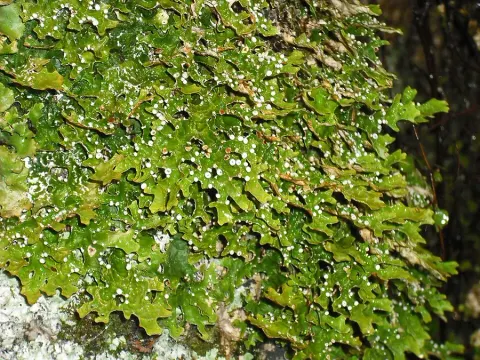
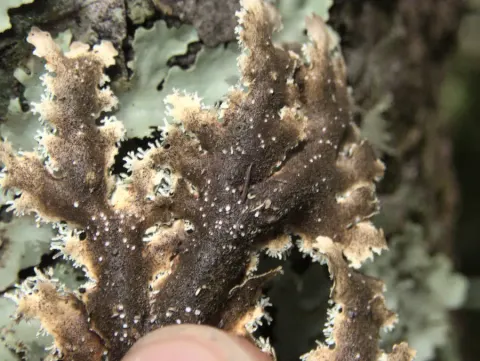
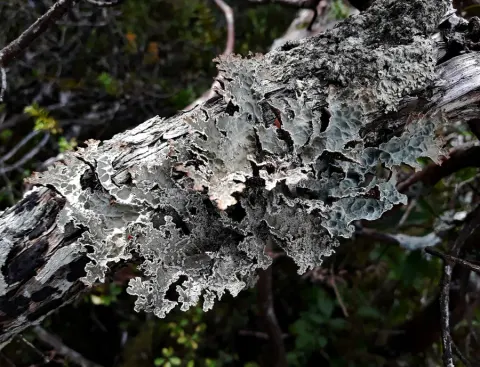
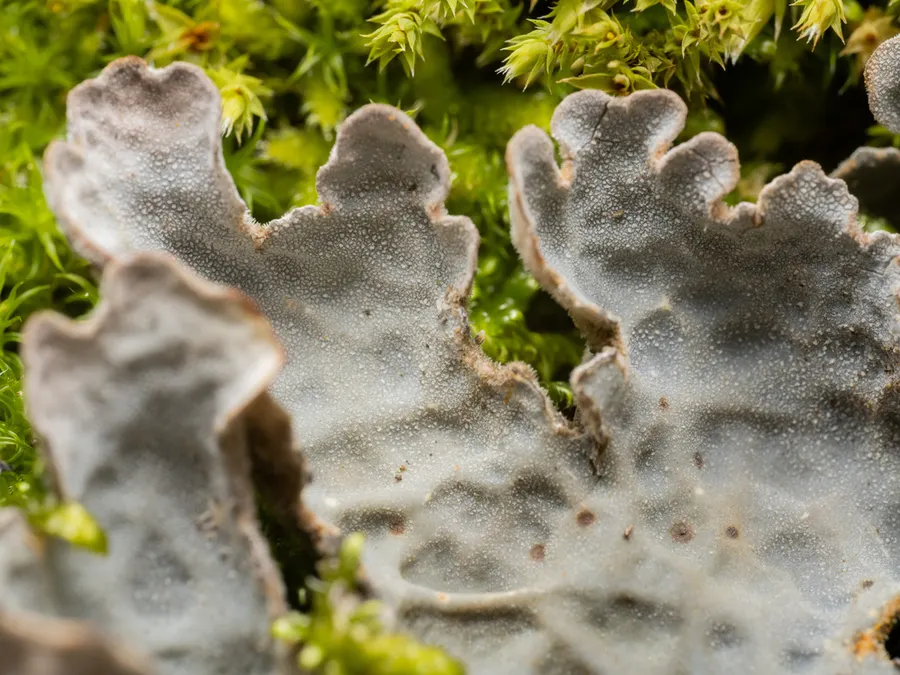
The thallus of L. scrobiculata has broad, concave and rounded lobes, rather wider than in Lobaria pulmonaria. The upper surface has large shallow depressions (scrobiculate, hence the specific name). Blue-grey soredia, the asexual reproductive bodies, are always present along ridges and on the margins. The thallus has a blue-grey colour and pliable texture when hydrated but assumes a light grey or yellow-grey colour and papery texture when dehydrated. The underside is covered by light brown tomentum and rhizines except on raised areas that correspond to the depressions on the upper surface. Fungal fruit bodies (ascocarps), rarely present, are small dark red discs with a thick inflexed margin. Thallus lobes grow away from the substrate in irregular patches as in L. pulmonaria but unlike the more regular rounded and flattened colonies of L. quercizans, L. amplissima and L. virens. The algal symbiont is the cyanobacterium Nostoc, in contrast to the green algae in most other species of Lobaria.
Habitat dan peran ekologis
Lobaria scrobiculata sebagian besar ditemukan di iklim tempuh (Köppen iklim klasifikasi Cf and Df climates, terutama Cfb and Dfb) yang memiliki curah hujan tinggi, terutama daerah pesisir di Eropa barat laut, timur laut utara America and barat laut Amerika Utara, tetapi ada juga beberapa kejadian yang diketahui di negara-negara yang lebih hangat seperti Kenya. The distribution records are possibly very incomplete and biased towards Europe and North America. Data peta di www.discoverlife.org menunjukkan distribusi di seluruh dunia dari beberapa lokasi yang tercatat untuk L. scrobiculata. Di selatan Inggris, yang mungkin mewakili dataran rendah Eropa Barat, Lobaria species sangat terbatas dalam distribusi mereka, sebagian karena sejarah polusi udara, hilangnya hutan dan fragmentasi tetapi juga karena iklim tidak optimal dengan curah hujan yang relatif rendah. Sebaliknya, daerah dingin, lembab dan pegunungan barat laut Scotland have memiliki frekuensi yang relatif tinggi L. scrobiculata pada pohon yang cocok. Di Iceland it hanya ditemukan di satu lokasi di Snæfellsnes terluar Peninsula and terdaftar sebagai terancam punah (CR). Lobarias are terutama ditemukan tumbuh di kulit pohon. The type of tree is important with deciduous angiosperms strongly preferred to gymnosperms.
- Habitat atau konteks temuan
- Informasi belum tersedia pada sumber rilis ini.
- Substrat
- Informasi belum tersedia pada sumber rilis ini.
- Peran atau konteks
- Pembentuk liken
Reproduksi
The thallus of L. scrobiculata has broad, concave and rounded lobes, rather wider than in Lobaria pulmonaria. The upper surface has large shallow depressions (scrobiculate, hence the specific name). Blue-grey soredia, the asexual reproductive bodies, are always present along ridges and on the margins. The thallus has a blue-grey colour and pliable texture when hydrated but assumes a light grey or yellow-grey colour and papery texture when dehydrated. The underside is covered by light brown tomentum and rhizines except on raised areas that correspond to the depressions on the upper surface. Fungal fruit bodies (ascocarps), rarely present, are small dark red discs with a thick inflexed margin.
Catatan identitas dan cakupan
- Nama diterima mengikuti Catalogue of Life Base2026-09-11; uraian mempertahankan konsep dan nama sumber aslinya.
- Original geographic, specimen and life-cycle scope retained; source import awaits individual editorial review.
- Impor dan terjemahan otomatis belum diperiksa editorial per profil. Struktur reproduktif yang disebutkan tidak membuktikan seluruh siklus hidup diketahui.
- Pengukuran pada uraian mengikuti spesimen, kultur, dan metode sumber; angka tidak diperluas ke semua populasi.
Catatan distribusi dalam narasi mengikuti sumbernya. Dokumentasi spesimen atau foto mengikuti catatan sumber. Bukti wilayah Indonesia dan penilaian konservasi tidak disimpulkan dari gambar.
Melihat dengan konteks
Dokumentasi Lobarina scrobiculata menurut asosiasi foto pada record takson iNaturalist. Kredit: Borja Fierro. Identitas mengikuti sumber; bukan penentuan spesimen independen.
- Jenis
- Fotografi
- Kredit
- (c) Borja Fierro, some rights reserved (CC BY), uploaded by Borja Fierro
- Lisensi
- CC BY 4.0
- Sumber media
- Buka entri sumber
Dokumentasi tambahan
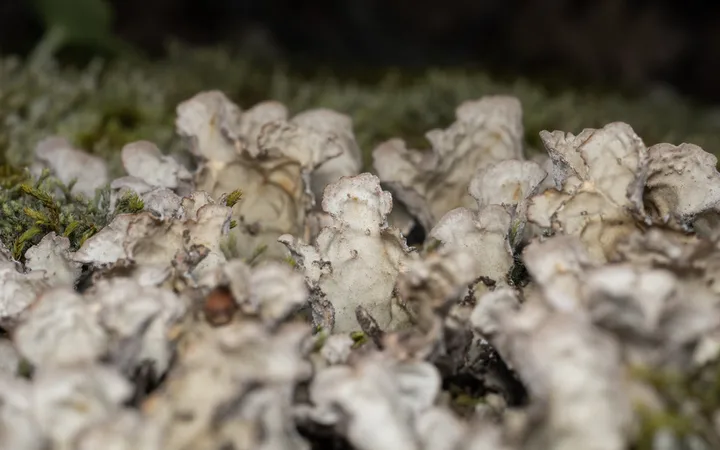
Foto yang diasosiasikan dengan Lobarina scrobiculata pada iNaturalist. Identifikasi mengikuti sumber; bukan penentuan spesimen independen.
Kredit dan penggunaan
(c) Borja Fierro, some rights reserved (CC BY), uploaded by Borja Fierro
Ukuran dan format gambar disesuaikan tanpa pemotongan, retus, atau penambahan skala. Lisensi sumber dipertahankan.
Sumber profil
- [1] Lobaria scrobiculata — Wikipedia (en)
- [2] Catalogue of Life Base2026-09-11 — Lobarina scrobiculata
- [3] Dokumentasi visual — Lobarina scrobiculata
- [4] Dokumentasi visual — Lobarina scrobiculata
Rujukan halaman ini
Fungi. Lobarina scrobiculata. Rilis data fungi-2026-10-12-expansion-2. https://fungi-atlas.mgadib.chatgpt.site/jamur/lobarina-scrobiculata/.
Status: impor sumber; pemeriksaan editorial per profil belum selesai. Untuk klaim biologis, gunakan rujukan pada bagian terkait dan periksa konteks sumber aslinya.