Ciri dan struktur
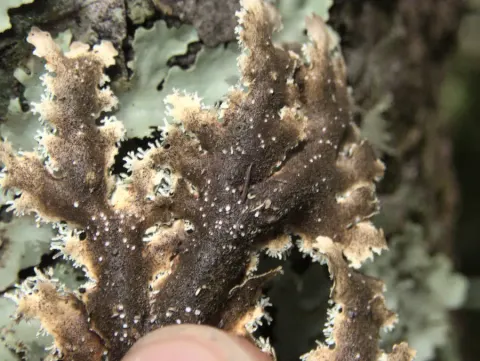
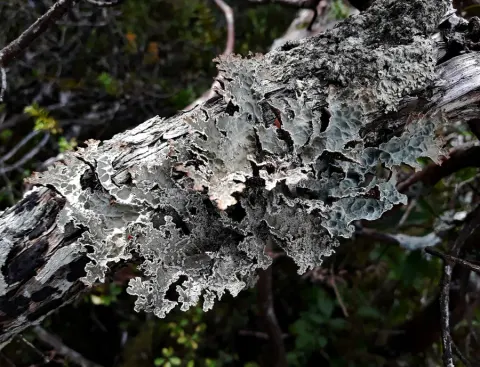
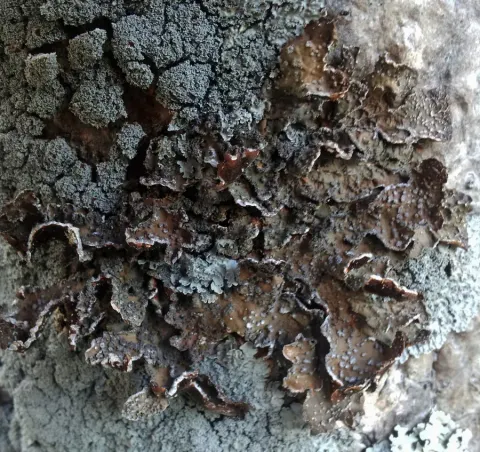
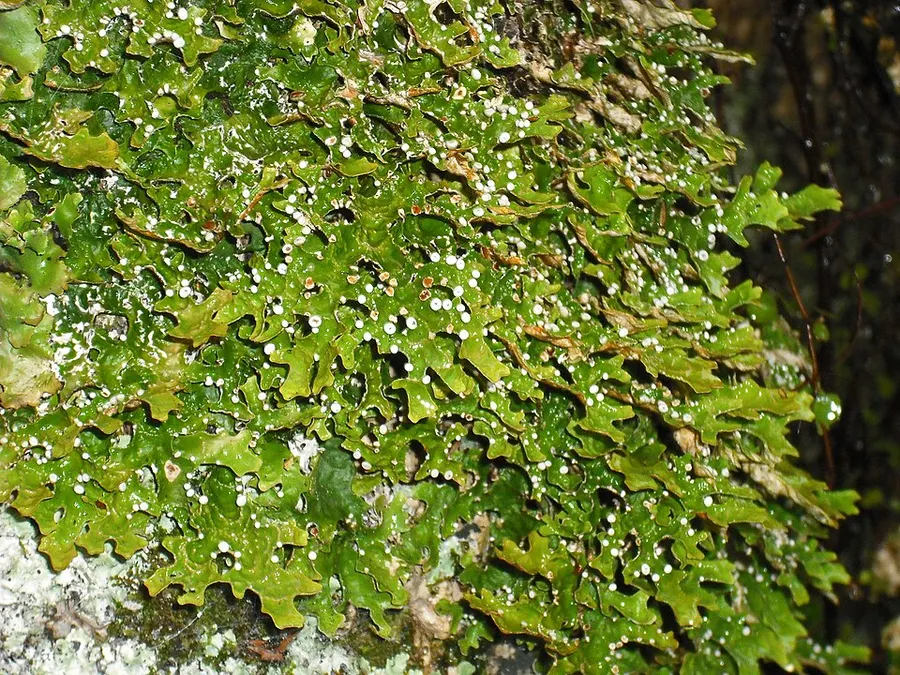
The thallus of Pseudocyphellaria carpoloma has a diameter ranging between 50 and 500 mm. This lichen presents itself in vast, sprawling arrays that resemble a loosely tangled growth. The of the lichen, measuring between 30–80 mm by 10–70 mm, have a distinct branching pattern – their formation subtly reminiscent of a dichotomy. Their margins are intact and delicately underlined with a yellow, wart-like structure known as pseudocyphellae. The lobes, when observed closely, display an array of colours. From a vivid lettuce-green or olive-green when wet to a pale greyish-green when dry, they often carry brownish undertones, particularly towards their tips. The lobes are strongly , meaning they have pits or depressions, giving the surface a somewhat dimpled appearance. The lichen does not produce , , , or –asexual reproductive propagules present in some other members of the genus. Pseudocyphellaria carpoloma has a white medulla (the inner layer), and it possesses a (photosynthesising partner), the green algal species Chlorella sphaerica. The lower surface ranges from a pale yellow margin to a buff, brownish or dark red-brown central region. This surface features a noticeable rim and has a silky, (blistered) texture that transitions to a slight hairiness towards the centre. The pseudocyphellae on this surface are less than 0.1 mm in diameter, scattered, wart-like, and adorn the ridges of the lichen. Minute (asexual reproductive structures) are spread across the upper surface, appearing as small, dome-like swellings with a minute, red-brown or black apical pore encircled by a pale zone.
Habitat dan peran ekologis
Pseudocyphellaria carpoloma occurs in New Zealand, most commonly in northern coastal forest, but also on the west coast of South Island, on Stewart Island, and in the Kermadec Islands. It has been recorded growing on the trunk of the endemic palm tree Rhopalostylis sapida.
- Habitat atau konteks temuan
- hutan
- Substrat
- Informasi belum tersedia pada sumber rilis ini.
- Peran atau konteks
- Pembentuk liken
Reproduksi
The lobes, when observed closely, display an array of colours. From a vivid lettuce-green or olive-green when wet to a pale greyish-green when dry, they often carry brownish undertones, particularly towards their tips. The lobes are strongly , meaning they have pits or depressions, giving the surface a somewhat dimpled appearance. The lichen does not produce , , , or –asexual reproductive propagules present in some other members of the genus. The pseudocyphellae on this surface are less than 0.1 mm in diameter, scattered, wart-like, and adorn the ridges of the lichen. Minute (asexual reproductive structures) are spread across the upper surface, appearing as small, dome-like swellings with a minute, red-brown or black apical pore encircled by a pale zone.
Catatan identitas dan cakupan
- Nama diterima mengikuti Catalogue of Life Base2026-09-11; uraian mempertahankan konsep dan nama sumber aslinya.
- Original geographic, specimen and life-cycle scope retained; source import awaits individual editorial review.
- Impor dan terjemahan otomatis belum diperiksa editorial per profil. Struktur reproduktif yang disebutkan tidak membuktikan seluruh siklus hidup diketahui.
- Pengukuran pada uraian mengikuti spesimen, kultur, dan metode sumber; angka tidak diperluas ke semua populasi.
Catatan distribusi dalam narasi mengikuti sumbernya. Dokumentasi spesimen atau foto mengikuti catatan sumber. Bukti wilayah Indonesia dan penilaian konservasi tidak disimpulkan dari gambar.
Melihat dengan konteks
Dokumentasi Pseudocyphellaria carpoloma dari Wikimedia Commons. Identifikasi mengikuti record berkas sumber.
- Jenis
- Fotografi
- Kredit
- Ewen Cameron — Auckland Museum
- Lisensi
- CC BY 4.0
- Sumber media
- Buka entri sumber
Sumber profil
- [1] Pseudocyphellaria carpoloma — Wikipedia (en)
- [2] Catalogue of Life Base2026-09-11 — Pseudocyphellaria carpoloma
- [3] Dokumentasi visual — Pseudocyphellaria carpoloma
Rujukan halaman ini
Fungi. Pseudocyphellaria carpoloma. Rilis data fungi-2026-10-12-expansion-2. https://fungi-atlas.mgadib.chatgpt.site/jamur/pseudocyphellaria-carpoloma/.
Status: impor sumber; pemeriksaan editorial per profil belum selesai. Untuk klaim biologis, gunakan rujukan pada bagian terkait dan periksa konteks sumber aslinya.