01 / Morfologi

Ciri dan struktur

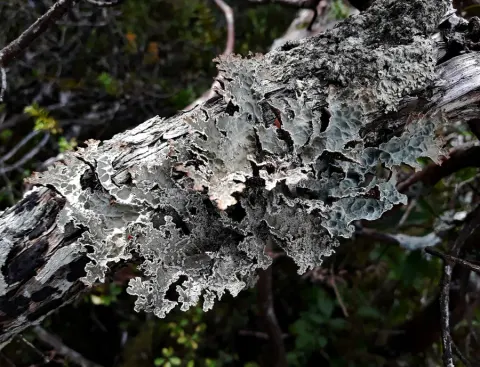
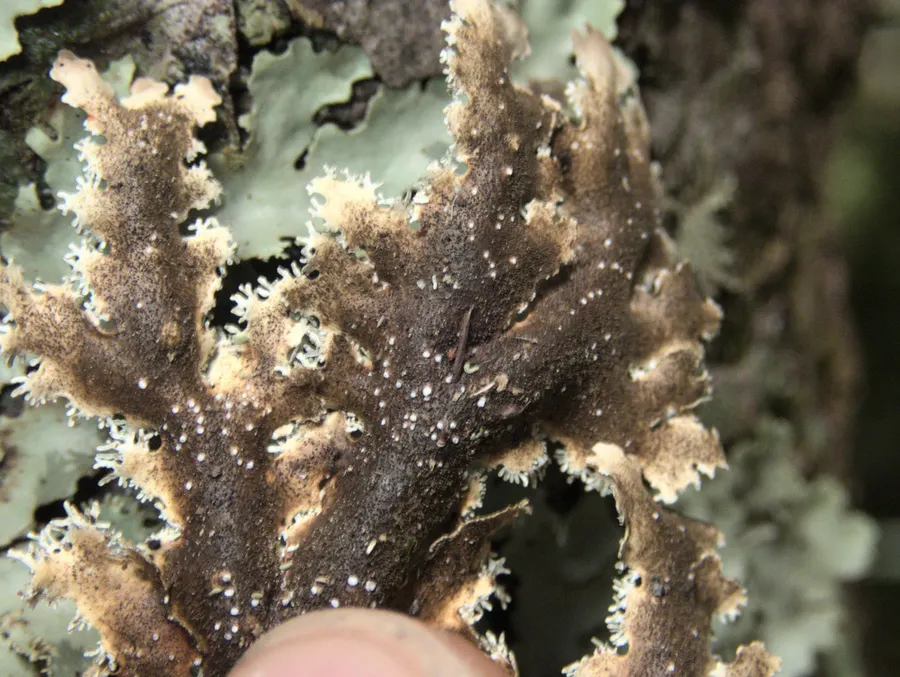
Pseudocyphellaria glabra is a species of corticolous (bark-dwelling), foliose lichen in the family Peltigeraceae. It has a pale-green upper thallus surface, a white medulla and white pseudocyphellae (tiny pores for gas exchange). Pseudocyphellaria glabra has a disjunct distribution that is separated by the Tasman Sea and the Pacific Ocean. The lichen is found in southeastern Australia (including Tasmania), New Zealand, Argentina, Chile, Lord Howe Island, Macquarie Island, and the subantarctic islands of New Zealand. Population genomic analyses suggest that lichens from these different locations are genetically distinct, but regular long-distance dispersal of spores during the Quaternary probably prevented the local populations from evolving into distinct species. Arthonia pseudocyphellariae is a lichenicolous fungus that has been recorded parasitising Pseudocyphellaria glabra. The fungus, first recorded from specimens collected in New Zealand, causes patches that are bordered by a necrotic zone measuring 1.5 – 8.5 mm in diameter, and usually located on the margins of the host thallus.

Sebagian uraian ditampilkan dalam bahasa sumber; terjemahannya belum tersedia atau belum lolos pemeriksaan.

Rujukan: [1]

Pengukuran mengikuti objek, spesimen atau kultur, dan metode yang disebutkan sumber. Baca uraian asli untuk konteks lengkap.

02 / Kehidupan

Habitat dan peran ekologis

Pseudocyphellaria glabra has a disjunct distribution that is separated by the Tasman Sea and the Pacific Ocean. The lichen is found in southeastern Australia (including Tasmania), New Zealand, Argentina, Chile, Lord Howe Island, Macquarie Island, and the subantarctic islands of New Zealand. Population genomic analyses suggest that lichens from these different locations are genetically distinct, but regular long-distance dispersal of spores during the Quaternary probably prevented the local populations from evolving into distinct species. Arthonia pseudocyphellariae is a lichenicolous fungus that has been recorded parasitising Pseudocyphellaria glabra. The fungus, first recorded from specimens collected in New Zealand, causes patches that are bordered by a necrotic zone measuring 1.5 – 8.5 mm in diameter, and usually located on the margins of the host thallus.

Sebagian uraian ditampilkan dalam bahasa sumber; terjemahannya belum tersedia atau belum lolos pemeriksaan.

Rujukan: [1]

Habitat atau konteks temuan
Informasi belum tersedia pada sumber rilis ini.
Substrat
Informasi belum tersedia pada sumber rilis ini.
Peran atau konteks
Pembentuk liken
Temukan hubungan serupa
03 / Siklus hidup

Reproduksi

Pseudocyphellaria glabra has a disjunct distribution that is separated by the Tasman Sea and the Pacific Ocean. The lichen is found in southeastern Australia (including Tasmania), New Zealand, Argentina, Chile, Lord Howe Island, Macquarie Island, and the subantarctic islands of New Zealand. Population genomic analyses suggest that lichens from these different locations are genetically distinct, but regular long-distance dispersal of spores during the Quaternary probably prevented the local populations from evolving into distinct species.

Sebagian uraian ditampilkan dalam bahasa sumber; terjemahannya belum tersedia atau belum lolos pemeriksaan.

Rujukan: [1]

Sinonim menurut acuan taksonomi rilis: Celidium dubium; Delisea pseudosticta; Homostegia dubia; Imbricaria borreri var. coralloidea; Lobaria freycinetii; Lobaria freycinetii var. tenuis; Lobaria fulvocinerea; Parmelia borreri var. coralloidea; Parmelia isabellina; Phanosticta freycinetii; Plectocarpon pseudosticta; Pseudocyphellaria delisea; Pseudocyphellaria freycinetii; Pseudocyphellaria freycinetii var. conjungens; Pseudocyphellaria freycinetii var. glabra; Sticta delisea; Sticta freycinetii; Sticta freycinetii f. angusta; Sticta freycinetii f. conjungens; Sticta freycinetii f. prolifera; Sticta freycinetii f. rugosa; Sticta freycinetii f. tenuis; Sticta freycinetii var. conjungens; Sticta freycinetii var. delisea; Sticta freycinetii var. fulvocinerea; Sticta freycinetii var. glabra; Sticta freycinetii var. prolifera; Sticta freycinetii var. tenuis; Sticta fulvocinerea; Sticta glabra
04 / Batas informasi

Catatan identitas dan cakupan

  • Nama diterima mengikuti Catalogue of Life Base2026-09-11; uraian mempertahankan konsep dan nama sumber aslinya.
  • Original geographic, specimen and life-cycle scope retained; source import awaits individual editorial review.
  • Impor dan terjemahan otomatis belum diperiksa editorial per profil. Struktur reproduktif yang disebutkan tidak membuktikan seluruh siklus hidup diketahui.
  • Pengukuran pada uraian mengikuti spesimen, kultur, dan metode sumber; angka tidak diperluas ke semua populasi.

Catatan distribusi dalam narasi mengikuti sumbernya. Dokumentasi spesimen atau foto mengikuti catatan sumber. Bukti wilayah Indonesia dan penilaian konservasi tidak disimpulkan dari gambar.

05 / Dokumentasi

Melihat dengan konteks

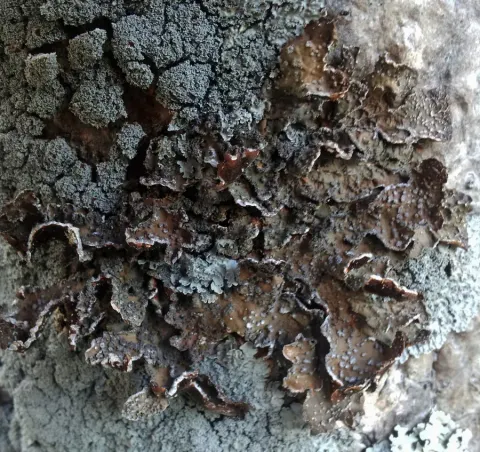
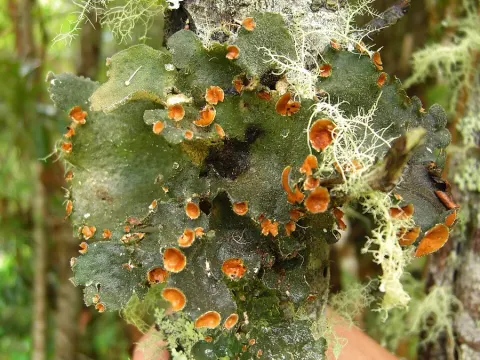
Dokumentasi Pseudocyphellaria glabra menurut asosiasi foto pada record takson iNaturalist. Kredit: Paul Bell-Butler. Identitas mengikuti sumber; bukan penentuan spesimen independen.

Jenis
Fotografi
Kredit
(c) Paul Bell-Butler, some rights reserved (CC BY), uploaded by Paul Bell-Butler
Lisensi
CC BY 4.0
Sumber media
Buka entri sumber

Gambar menunjukkan objek menurut identifikasi sumber, bukan verifikasi independen spesimen oleh Fungi. Tidak ada skala baru yang ditambahkan.

06 / Rujukan

Sumber profil

  1. [1] Pseudocyphellaria glabra — Wikipedia (en)Bagian sumber: Frozen revision 1109966438
    Tanggal penghimpunan sumber: 2026-10-12
    Teks sumber: CC BY-SA4.0 · Wikipedia contributors
  2. [2] Catalogue of Life Base2026-09-11 — Pseudocyphellaria glabraBagian sumber: ColDP NameUsage.tsv ID 4NVJD; accepted species; source 2073
    Tanggal penghimpunan sumber: 2026-10-12
  3. [3] Dokumentasi visual — Pseudocyphellaria glabraBagian sumber: Individual media record; identification follows the source, not independent determination
    Tanggal penghimpunan sumber: 2026-10-12
    Media sumber: CC BY 4.0 · (c) Paul Bell-Butler, some rights reserved (CC BY), uploaded by Paul Bell-Butler

Adaptasi teks: CC BY-SA 4.0. Wikipedia contributors — Pseudocyphellaria glabra — Wikipedia (en)

Uraian asli dan riwayat sumber

Riwayat atau halaman sumber

Ringkasan sumber

Pseudocyphellaria glabra is a species of corticolous (bark-dwelling), foliose lichen in the family Peltigeraceae. It has a pale-green upper thallus surface, a white medulla and white pseudocyphellae (tiny pores for gas exchange).

Revisi sumber

Morfologi sumber

Pseudocyphellaria glabra is a species of corticolous (bark-dwelling), foliose lichen in the family Peltigeraceae. It has a pale-green upper thallus surface, a white medulla and white pseudocyphellae (tiny pores for gas exchange). Pseudocyphellaria glabra has a disjunct distribution that is separated by the Tasman Sea and the Pacific Ocean. The lichen is found in southeastern Australia (including Tasmania), New Zealand, Argentina, Chile, Lord Howe Island, Macquarie Island, and the subantarctic islands of New Zealand. Population genomic analyses suggest that lichens from these different locations are genetically distinct, but regular long-distance dispersal of spores during the Quaternary probably prevented the local populations from evolving into distinct species. Arthonia pseudocyphellariae is a lichenicolous fungus that has been recorded parasitising Pseudocyphellaria glabra. The fungus, first recorded from specimens collected in New Zealand, causes patches that are bordered by a necrotic zone measuring 1.5 – 8.5 mm in diameter, and usually located on the margins of the host thallus.

Revisi sumber

Ekologi sumber

Pseudocyphellaria glabra has a disjunct distribution that is separated by the Tasman Sea and the Pacific Ocean. The lichen is found in southeastern Australia (including Tasmania), New Zealand, Argentina, Chile, Lord Howe Island, Macquarie Island, and the subantarctic islands of New Zealand. Population genomic analyses suggest that lichens from these different locations are genetically distinct, but regular long-distance dispersal of spores during the Quaternary probably prevented the local populations from evolving into distinct species. Arthonia pseudocyphellariae is a lichenicolous fungus that has been recorded parasitising Pseudocyphellaria glabra. The fungus, first recorded from specimens collected in New Zealand, causes patches that are bordered by a necrotic zone measuring 1.5 – 8.5 mm in diameter, and usually located on the margins of the host thallus.

Revisi sumber

Struktur reproduksi sumber

Pseudocyphellaria glabra has a disjunct distribution that is separated by the Tasman Sea and the Pacific Ocean. The lichen is found in southeastern Australia (including Tasmania), New Zealand, Argentina, Chile, Lord Howe Island, Macquarie Island, and the subantarctic islands of New Zealand. Population genomic analyses suggest that lichens from these different locations are genetically distinct, but regular long-distance dispersal of spores during the Quaternary probably prevented the local populations from evolving into distinct species.

Revisi sumber

Rujukan halaman ini

Fungi. Pseudocyphellaria glabra. Rilis data fungi-2026-10-12-expansion-2. https://fungi-atlas.mgadib.chatgpt.site/jamur/pseudocyphellaria-glabra/.

Status: impor sumber; pemeriksaan editorial per profil belum selesai. Untuk klaim biologis, gunakan rujukan pada bagian terkait dan periksa konteks sumber aslinya.