01 / Morfologi

Ciri dan struktur

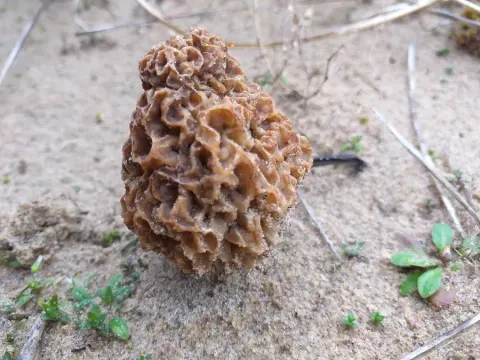
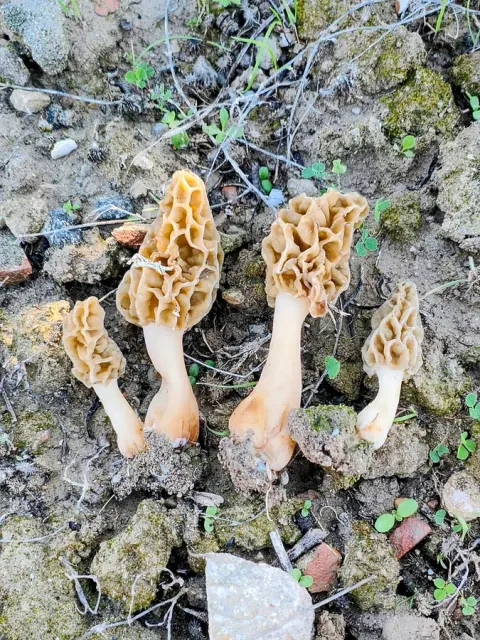
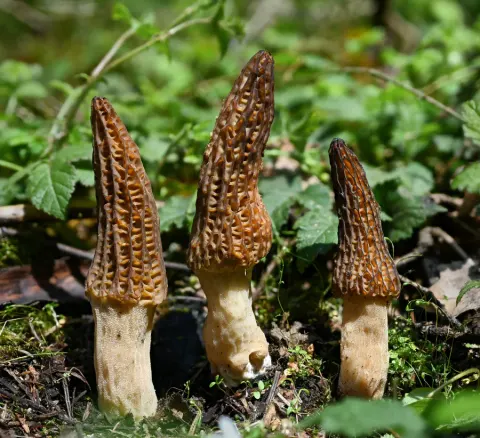
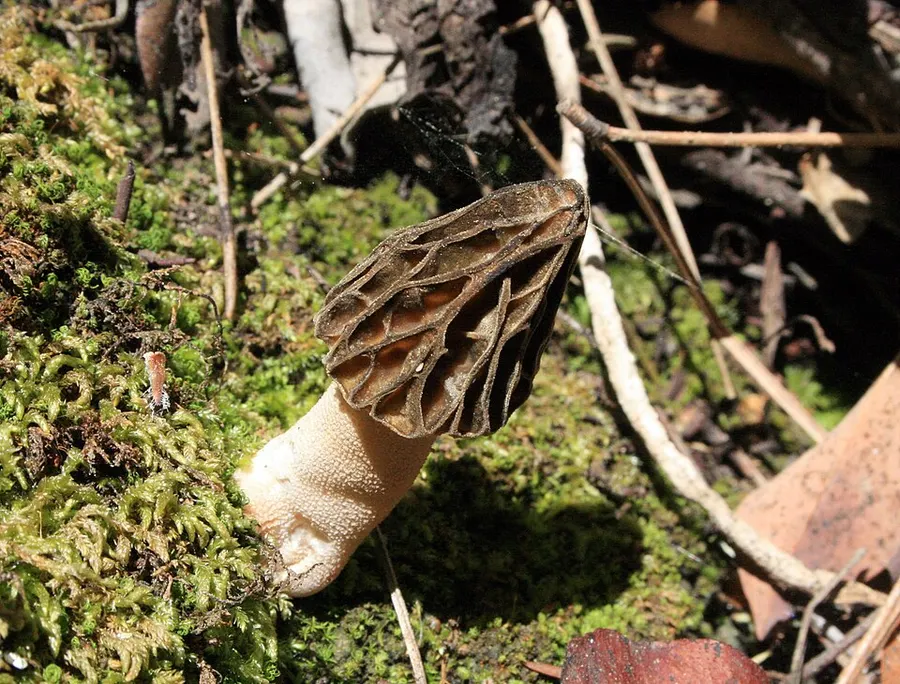
The fruit bodies are small- to medium-sized with an elongated stipe in maturity. The cap is 1–3(–4) cm high × 1–2(–3) cm wide, conical with olive-brown, greenish, olive-grey, or rarely pinkish tinges and is attached to the stipe with a distinctly deep, angular sinus. The longitudinal ridges are distant, flexuous, anastomosed and interconnected by sparse secondary ridges. The pits are usually large and irregularly shaped. The stipe is 1–4(–6) × 0.8–2(–2.5) cm, more or less cylindrical or inflated at the base, whitish or sometimes with ochre tinges, furfuraceous, hollow, short at first but gradually extends to become equal or longer than the cap. Fruit bodies have a typical, rather strong morel odour. The ascospores measure (20–)22–26(– 27) × (12–)13–17(–18) μm, are ellipsoid in shape, hyaline (translucent) and have external droplets attached to the poles. Although they appear smooth under a light microscope, when viewed in lactophenol cotton blue or under a scanning electron microscope, the spore surface is faintly creased. The asci (spore-bearing cells) measure 230– 305 × 20–25 μm, are cylindrical to clavate, hyaline, and have a simple septum at the base. The paraphyses measure 135–205 × 10–12 μm, are hyaline, irregularly cylindrical, have variably shaped tips and 1–3 septa in the lower third or at the base. The acroparaphyses measure 110–170 × 15–40 μm, are fasciculate and polymorphic, with sparse capitate elements and 1–2 septa towards the base. The stipe surface is composed of variously shaped and poorly differentiated cells, from globose to cylindrical, clavate or pyriform, measuring 55–90 × 20–40 μm.

Sebagian uraian ditampilkan dalam bahasa sumber; terjemahannya belum tersedia atau belum lolos pemeriksaan.

Rujukan: [1]

Pengukuran mengikuti objek, spesimen atau kultur, dan metode yang disebutkan sumber. Baca uraian asli untuk konteks lengkap.

02 / Kehidupan

Habitat dan peran ekologis

Morchella disparilis fruits in spring in the Mediterranean region and is so far known from the island of Cyprus, Greece and Spain. It is found in the thermomediterranean zone, often among typically Mediterranean vegetation such as cypress trees (Cupressus sempervirens), strawberry trees (Arbutus andrachne, A. unedo), or hawthorn (Crataegus azarolus).

Sebagian uraian ditampilkan dalam bahasa sumber; terjemahannya belum tersedia atau belum lolos pemeriksaan.

Rujukan: [1]

Habitat atau konteks temuan
Informasi belum tersedia pada sumber rilis ini.
Substrat
Informasi belum tersedia pada sumber rilis ini.
Peran atau konteks
Belum dikategorikan pada rilis ini.
Temukan hubungan serupa
03 / Siklus hidup

Reproduksi

The ascospores measure (20–)22–26(– 27) × (12–)13–17(–18) μm, are ellipsoid in shape, hyaline (translucent) and have external droplets attached to the poles. Although they appear smooth under a light microscope, when viewed in lactophenol cotton blue or under a scanning electron microscope, the spore surface is faintly creased. The asci (spore-bearing cells) measure 230– 305 × 20–25 μm, are cylindrical to clavate, hyaline, and have a simple septum at the base. The paraphyses measure 135–205 × 10–12 μm, are hyaline, irregularly cylindrical, have variably shaped tips and 1–3 septa in the lower third or at the base. The acroparaphyses measure 110–170 × 15–40 μm, are fasciculate and polymorphic, with sparse capitate elements and 1–2 septa towards the base.

Sebagian uraian ditampilkan dalam bahasa sumber; terjemahannya belum tersedia atau belum lolos pemeriksaan.

Rujukan: [1]

04 / Batas informasi

Catatan identitas dan cakupan

  • Nama diterima mengikuti Catalogue of Life Base2026-09-11; uraian mempertahankan konsep dan nama sumber aslinya.
  • Original geographic, specimen and life-cycle scope retained; source import awaits individual editorial review.
  • Impor dan terjemahan otomatis belum diperiksa editorial per profil. Struktur reproduktif yang disebutkan tidak membuktikan seluruh siklus hidup diketahui.
  • Pengukuran pada uraian mengikuti spesimen, kultur, dan metode sumber; angka tidak diperluas ke semua populasi.

Catatan distribusi dalam narasi mengikuti sumbernya. Dokumentasi spesimen atau foto mengikuti catatan sumber. Bukti wilayah Indonesia dan penilaian konservasi tidak disimpulkan dari gambar.

05 / Dokumentasi

Melihat dengan konteks

Dokumentasi Morchella disparilis dari Wikimedia Commons. Cyprus, 13.4.2011 © Michael Loizides Identifikasi mengikuti record berkas sumber.

Jenis
Fotografi
Kredit
Michael Loizides
Sumber media
Buka entri sumber

Gambar menunjukkan objek menurut identifikasi sumber, bukan verifikasi independen spesimen oleh Fungi. Tidak ada skala baru yang ditambahkan.

06 / Rujukan

Sumber profil

  1. [1] Morchella disparilis — Wikipedia (en)Bagian sumber: Frozen revision 1376498392
    Tanggal penghimpunan sumber: 2026-10-12
    Teks sumber: CC BY-SA4.0 · Wikipedia contributors
  2. [2] Catalogue of Life Base2026-09-11 — Morchella disparilisBagian sumber: ColDP NameUsage.tsv ID 44CPL; accepted species; source 2073
    Tanggal penghimpunan sumber: 2026-10-12
  3. [3] Dokumentasi visual — Morchella disparilisBagian sumber: Individual media record; identification follows the source, not independent determination
    Tanggal penghimpunan sumber: 2026-10-12
    Media sumber: CC BY-SA 4.0 · Michael Loizides

Adaptasi teks: CC BY-SA 4.0. Wikipedia contributors — Morchella disparilis — Wikipedia (en)

Uraian asli dan riwayat sumber

Riwayat atau halaman sumber

Ringkasan sumber

Morchella disparilis is an Ascomycete fungus in the family Morchellaceae. Described as new to science in 2016, M. disparilis appears to be confined to the Mediterranean basin and is so far known from Cyprus, Greece and Spain. Its most striking feature is the exceptionally deep sinus (the bent at the attachment of the cap with the stem), intermediate in depth between half-free morels of the Morchella semilibera clade and typical Distantes species.

Revisi sumber

Morfologi sumber

The fruit bodies are small- to medium-sized with an elongated stipe in maturity. The cap is 1–3(–4) cm high × 1–2(–3) cm wide, conical with olive-brown, greenish, olive-grey, or rarely pinkish tinges and is attached to the stipe with a distinctly deep, angular sinus. The longitudinal ridges are distant, flexuous, anastomosed and interconnected by sparse secondary ridges. The pits are usually large and irregularly shaped. The stipe is 1–4(–6) × 0.8–2(–2.5) cm, more or less cylindrical or inflated at the base, whitish or sometimes with ochre tinges, furfuraceous, hollow, short at first but gradually extends to become equal or longer than the cap. Fruit bodies have a typical, rather strong morel odour. The ascospores measure (20–)22–26(– 27) × (12–)13–17(–18) μm, are ellipsoid in shape, hyaline (translucent) and have external droplets attached to the poles. Although they appear smooth under a light microscope, when viewed in lactophenol cotton blue or under a scanning electron microscope, the spore surface is faintly creased. The asci (spore-bearing cells) measure 230– 305 × 20–25 μm, are cylindrical to clavate, hyaline, and have a simple septum at the base. The paraphyses measure 135–205 × 10–12 μm, are hyaline, irregularly cylindrical, have variably shaped tips and 1–3 septa in the lower third or at the base. The acroparaphyses measure 110–170 × 15–40 μm, are fasciculate and polymorphic, with sparse capitate elements and 1–2 septa towards the base. The stipe surface is composed of variously shaped and poorly differentiated cells, from globose to cylindrical, clavate or pyriform, measuring 55–90 × 20–40 μm.

Revisi sumber

Ekologi sumber

Morchella disparilis fruits in spring in the Mediterranean region and is so far known from the island of Cyprus, Greece and Spain. It is found in the thermomediterranean zone, often among typically Mediterranean vegetation such as cypress trees (Cupressus sempervirens), strawberry trees (Arbutus andrachne, A. unedo), or hawthorn (Crataegus azarolus).

Revisi sumber

Struktur reproduksi sumber

The ascospores measure (20–)22–26(– 27) × (12–)13–17(–18) μm, are ellipsoid in shape, hyaline (translucent) and have external droplets attached to the poles. Although they appear smooth under a light microscope, when viewed in lactophenol cotton blue or under a scanning electron microscope, the spore surface is faintly creased. The asci (spore-bearing cells) measure 230– 305 × 20–25 μm, are cylindrical to clavate, hyaline, and have a simple septum at the base. The paraphyses measure 135–205 × 10–12 μm, are hyaline, irregularly cylindrical, have variably shaped tips and 1–3 septa in the lower third or at the base. The acroparaphyses measure 110–170 × 15–40 μm, are fasciculate and polymorphic, with sparse capitate elements and 1–2 septa towards the base.

Revisi sumber

Rujukan halaman ini

Fungi. Morchella disparilis. Rilis data fungi-2026-10-12-expansion-2. https://fungi-atlas.mgadib.chatgpt.site/jamur/morchella-disparilis/.

Status: impor sumber; pemeriksaan editorial per profil belum selesai. Untuk klaim biologis, gunakan rujukan pada bagian terkait dan periksa konteks sumber aslinya.