Ciri dan struktur
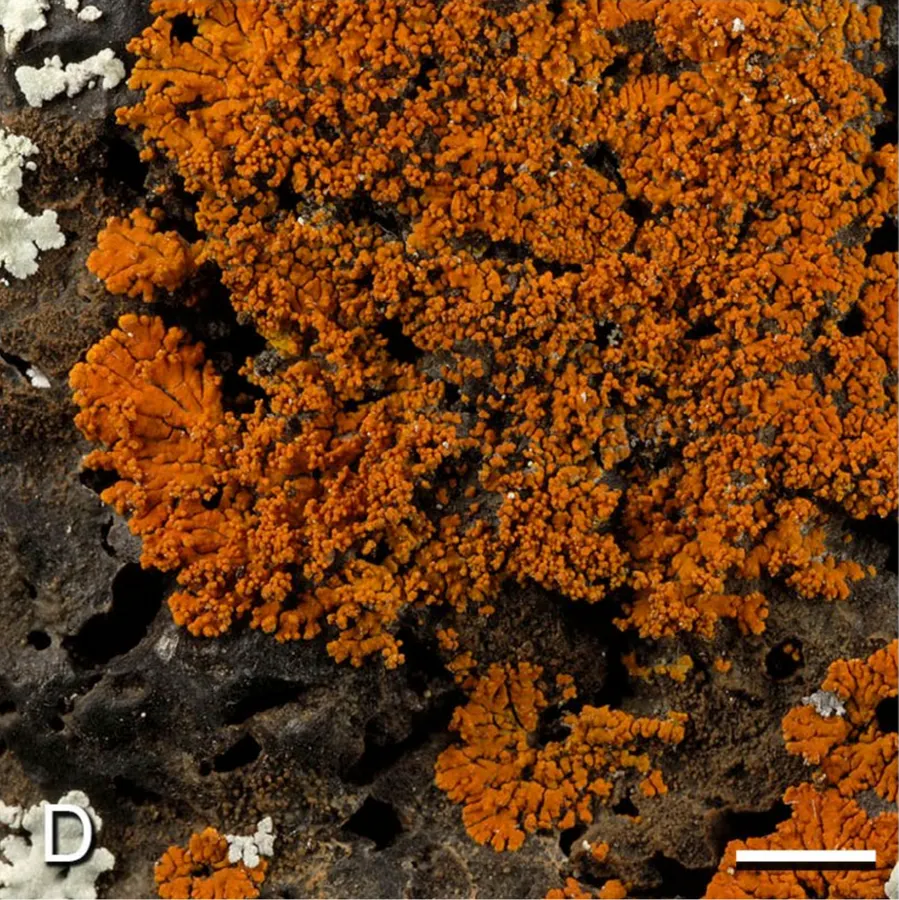
The thallus of O. isidiosa is (a crust that forms a rosette with a lobed edge). It consists of convex, elongated to radiating in the center and broader, fan-shaped lobes around the margin. Individual rosettes reach about 2.5 cm across, and neighboring thalli often merge. The surface is usually strong yellow-orange to deep reddish orange, sometimes with a faint orange dusting and only rarely a pale whitish pruina. Vegetative reproduction is typically prominent: the thallus (especially toward the center) is densely covered with isidia—tiny outgrowths that can break off and start new thalli. These begin as small or nodules and soon become broadly cylindrical to coarsely , about 0.1–0.2 mm thick. Apothecia (fruiting bodies) are often absent or poorly developed when the thallus is heavily isidiate. When present, they are typically 0.6–0.8 mm wide, in form, and orange, with the initially concave and later flatter. Spores are produced eight per ascus and are (two-celled with a thickened internal wall), typically 9.2–11.6 × 5.4–7.6 μm, occasionally ranging to 8.3–13.1 × 4.6–9.2 μm. Pycnidia have not been observed. Chemically, both thallus and apothecia react K+ purple (a standard spot test), consistent with anthraquinone pigments. The species produces abundant quantities of the anthraquinone isidiosin; the compound was named after O. isidiosa, and its chemical structure has not yet been fully resolved.
Habitat dan peran ekologis
Oceanoplaca isidiosa was described from Brazil and is also known from the Galápagos Islands of Ecuador, where it was first reported in the literature in 1986. In the Galápagos it is primarily saxicolous, forming bright rosettes on rock in open sites. It most often occurs on sunny, wind- and rain-exposed rock surfaces, and is less frequent in sheltered, semi-shaded habitats (especially close to the coast). On the islands it is recorded mainly from the coastal zone through the dry and lower transition zones, and only rarely extends into the humid zone.
- Habitat atau konteks temuan
- Informasi belum tersedia pada sumber rilis ini.
- Substrat
- Informasi belum tersedia pada sumber rilis ini.
- Peran atau konteks
- Pembentuk liken
Reproduksi
The thallus of O. isidiosa is (a crust that forms a rosette with a lobed edge). It consists of convex, elongated to radiating in the center and broader, fan-shaped lobes around the margin. Individual rosettes reach about 2.5 cm across, and neighboring thalli often merge. The surface is usually strong yellow-orange to deep reddish orange, sometimes with a faint orange dusting and only rarely a pale whitish pruina. Vegetative reproduction is typically prominent: the thallus (especially toward the center) is densely covered with isidia—tiny outgrowths that can break off and start new thalli. These begin as small or nodules and soon become broadly cylindrical to coarsely , about 0.1–0.2 mm thick.
Catatan identitas dan cakupan
- Nama diterima mengikuti Catalogue of Life Base2026-09-11; uraian mempertahankan konsep dan nama sumber aslinya.
- Original geographic, specimen and life-cycle scope retained; source import awaits individual editorial review.
- Impor dan terjemahan otomatis belum diperiksa editorial per profil. Struktur reproduktif yang disebutkan tidak membuktikan seluruh siklus hidup diketahui.
- Pengukuran pada uraian mengikuti spesimen, kultur, dan metode sumber; angka tidak diperluas ke semua populasi.
Catatan distribusi dalam narasi mengikuti sumbernya. Dokumentasi spesimen atau foto mengikuti catatan sumber. Bukti wilayah Indonesia dan penilaian konservasi tidak disimpulkan dari gambar.
Melihat dengan konteks
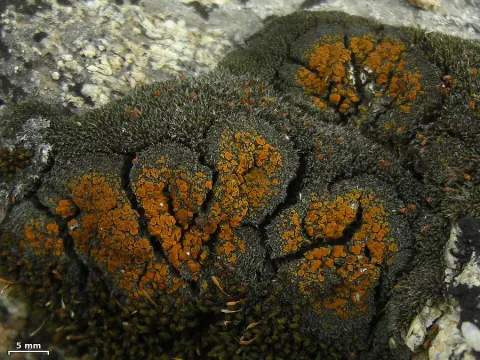
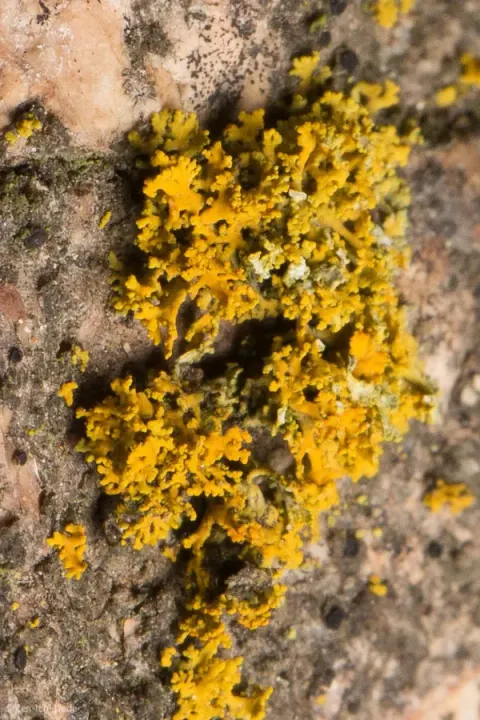
Dokumentasi Oceanoplaca isidiosa dari Wikimedia Commons. The rock-dwelling lichen Oceanoplaca isidiosa , found in Brazil and the Galapagos. Identifikasi mengikuti record berkas sumber.
- Jenis
- Fotografi
- Kredit
- Frank Bungartz
- Lisensi
- CC BY-SA 4.0
- Sumber media
- Buka entri sumber
Sumber profil
- [1] Oceanoplaca isidiosa — Wikipedia (en)
- [2] Catalogue of Life Base2026-09-11 — Oceanoplaca isidiosa
- [3] Dokumentasi visual — Oceanoplaca isidiosa
Rujukan halaman ini
Fungi. Oceanoplaca isidiosa. Rilis data fungi-2026-10-12-expansion-2. https://fungi-atlas.mgadib.chatgpt.site/jamur/oceanoplaca-isidiosa/.
Status: impor sumber; pemeriksaan editorial per profil belum selesai. Untuk klaim biologis, gunakan rujukan pada bagian terkait dan periksa konteks sumber aslinya.