01 / Morfologi

Ciri dan struktur

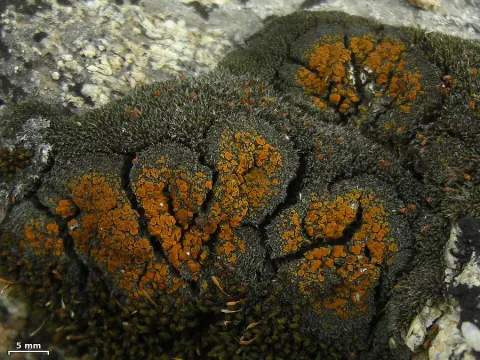
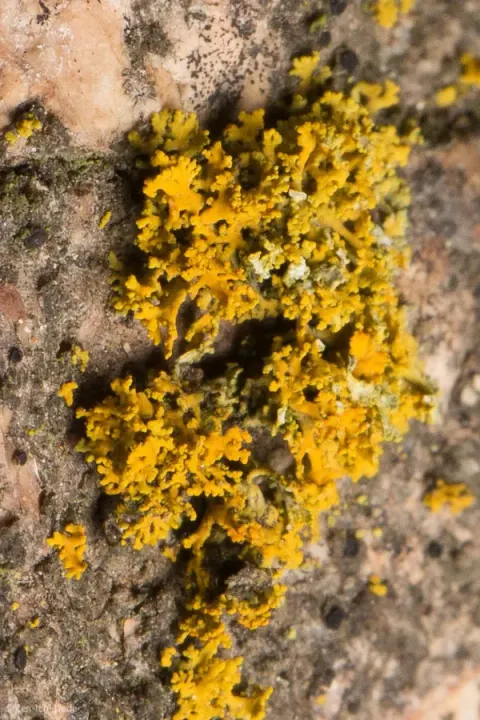
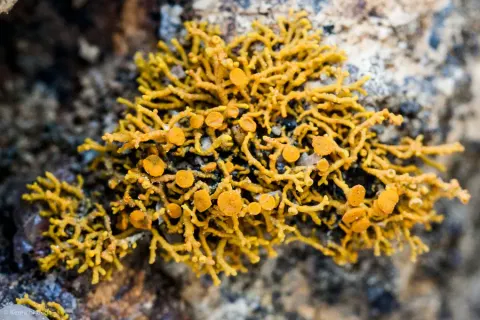
The non-fruiting body (thallus) grows in rosettes to 3 cm in diameter. The rosettes sometimes coalesce with each other. The lobes may appear divided at the tips. It is sometimes tightly appressed to the substrate (adnate), and sometimes not. The fruiting bodies (apothecia) are lecanorine, meaning that they are disc-like with a ring or rim of tissue around the that is made of tissue similar to the thallus. The tips of the lobes form hood shaped soralia that produce powdery greenish yellow soredia. It prefers growing on elm or oak bark, but can also be found on rocks, bone, or other wood types. In Norway, it has been recorded growing on the bark of various sun-exposed broadleaved trees, including Acer, Betula, Fagus, Fraxinus, Populus, Tilia, and Ulmus. Lichen spot tests on the surface are K+ (purple), C−, KC−, and P−.

Sebagian uraian ditampilkan dalam bahasa sumber; terjemahannya belum tersedia atau belum lolos pemeriksaan.

Rujukan: [1]

Pengukuran mengikuti objek, spesimen atau kultur, dan metode yang disebutkan sumber. Baca uraian asli untuk konteks lengkap.

02 / Kehidupan

Habitat dan peran ekologis

The non-fruiting body (thallus) grows in rosettes to 3 cm in diameter. The rosettes sometimes coalesce with each other. The lobes may appear divided at the tips. It is sometimes tightly appressed to the substrate (adnate), and sometimes not. The fruiting bodies (apothecia) are lecanorine, meaning that they are disc-like with a ring or rim of tissue around the that is made of tissue similar to the thallus. The tips of the lobes form hood shaped soralia that produce powdery greenish yellow soredia. It prefers growing on elm or oak bark, but can also be found on rocks, bone, or other wood types. In Norway, it has been recorded growing on the bark of various sun-exposed broadleaved trees, including Acer, Betula, Fagus, Fraxinus, Populus, Tilia, and Ulmus. Lichen spot tests on the surface are K+ (purple), C−, KC−, and P−.

Sebagian uraian ditampilkan dalam bahasa sumber; terjemahannya belum tersedia atau belum lolos pemeriksaan.

Rujukan: [1]

Habitat atau konteks temuan
Informasi belum tersedia pada sumber rilis ini.
Substrat
Informasi belum tersedia pada sumber rilis ini.
Peran atau konteks
Pembentuk liken
Temukan hubungan serupa
03 / Siklus hidup

Reproduksi

The non-fruiting body (thallus) grows in rosettes to 3 cm in diameter. The rosettes sometimes coalesce with each other. The lobes may appear divided at the tips. It is sometimes tightly appressed to the substrate (adnate), and sometimes not. The fruiting bodies (apothecia) are lecanorine, meaning that they are disc-like with a ring or rim of tissue around the that is made of tissue similar to the thallus. The tips of the lobes form hood shaped soralia that produce powdery greenish yellow soredia. It prefers growing on elm or oak bark, but can also be found on rocks, bone, or other wood types. In Norway, it has been recorded growing on the bark of various sun-exposed broadleaved trees, including Acer, Betula, Fagus, Fraxinus, Populus, Tilia, and Ulmus.

Sebagian uraian ditampilkan dalam bahasa sumber; terjemahannya belum tersedia atau belum lolos pemeriksaan.

Rujukan: [1]

Sinonim menurut acuan taksonomi rilis: Placodium fallax; Xanthoria fallax; Xanthoria lychnea var. fallax
04 / Batas informasi

Catatan identitas dan cakupan

  • Nama diterima mengikuti Catalogue of Life Base2026-09-11; uraian mempertahankan konsep dan nama sumber aslinya.
  • Original geographic, specimen and life-cycle scope retained; source import awaits individual editorial review.
  • Impor dan terjemahan otomatis belum diperiksa editorial per profil. Struktur reproduktif yang disebutkan tidak membuktikan seluruh siklus hidup diketahui.
  • Pengukuran pada uraian mengikuti spesimen, kultur, dan metode sumber; angka tidak diperluas ke semua populasi.

Catatan distribusi dalam narasi mengikuti sumbernya. Dokumentasi spesimen atau foto mengikuti catatan sumber. Bukti wilayah Indonesia dan penilaian konservasi tidak disimpulkan dari gambar.

05 / Dokumentasi

Melihat dengan konteks

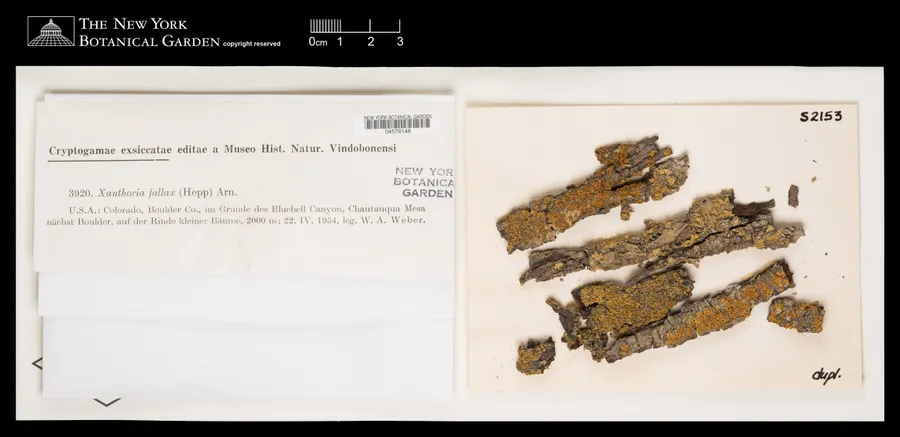
Voucher herbarium Xanthoria fallax (4576148), The New York Botanical Garden. Identifikasi mengikuti record spesimen sumber. Foto bahan, kemasan, atau label herbarium sebagaimana tersedia pada record institusi; bukan foto lapangan atau penentuan spesimen independen.

Jenis
Voucher herbarium
Kredit
The New York Botanical Garden
Lisensi
CC BY 4.0
Sumber media
Buka entri sumber

Gambar menunjukkan objek menurut identifikasi sumber, bukan verifikasi independen spesimen oleh Fungi. Tidak ada skala baru yang ditambahkan.

06 / Rujukan

Sumber profil

  1. [1] Oxneria fallax — Wikipedia (en)Bagian sumber: Frozen revision 1342824892
    Tanggal penghimpunan sumber: 2026-10-12
    Teks sumber: CC BY-SA4.0 · Wikipedia contributors
  2. [2] Catalogue of Life Base2026-09-11 — Oxneria fallaxBagian sumber: ColDP NameUsage.tsv ID 75GF5; accepted species; source 2073
    Tanggal penghimpunan sumber: 2026-10-12
  3. [3] Dokumentasi visual — Xanthoria fallaxBagian sumber: Individual media record; identification follows the source, not independent determination
    Tanggal penghimpunan sumber: 2026-10-12
    Media sumber: CC BY 4.0 · The New York Botanical Garden

Adaptasi teks: CC BY-SA 4.0. Wikipedia contributors — Oxneria fallax — Wikipedia (en)

Uraian asli dan riwayat sumber

Riwayat atau halaman sumber

Ringkasan sumber

The non-fruiting body (thallus) grows in rosettes to 3 cm in diameter. The rosettes sometimes coalesce with each other. The lobes may appear divided at the tips. It is sometimes tightly appressed to the substrate (adnate), and sometimes not. The fruiting bodies (apothecia) are lecanorine, meaning that they are disc-like with a ring or rim of tissue around the that is made of tissue similar to the thallus. The tips of the lobes form hood shaped soralia that produce powdery greenish yellow soredia.

Revisi sumber

Morfologi sumber

The non-fruiting body (thallus) grows in rosettes to 3 cm in diameter. The rosettes sometimes coalesce with each other. The lobes may appear divided at the tips. It is sometimes tightly appressed to the substrate (adnate), and sometimes not. The fruiting bodies (apothecia) are lecanorine, meaning that they are disc-like with a ring or rim of tissue around the that is made of tissue similar to the thallus. The tips of the lobes form hood shaped soralia that produce powdery greenish yellow soredia. It prefers growing on elm or oak bark, but can also be found on rocks, bone, or other wood types. In Norway, it has been recorded growing on the bark of various sun-exposed broadleaved trees, including Acer, Betula, Fagus, Fraxinus, Populus, Tilia, and Ulmus. Lichen spot tests on the surface are K+ (purple), C−, KC−, and P−.

Revisi sumber

Ekologi sumber

The non-fruiting body (thallus) grows in rosettes to 3 cm in diameter. The rosettes sometimes coalesce with each other. The lobes may appear divided at the tips. It is sometimes tightly appressed to the substrate (adnate), and sometimes not. The fruiting bodies (apothecia) are lecanorine, meaning that they are disc-like with a ring or rim of tissue around the that is made of tissue similar to the thallus. The tips of the lobes form hood shaped soralia that produce powdery greenish yellow soredia. It prefers growing on elm or oak bark, but can also be found on rocks, bone, or other wood types. In Norway, it has been recorded growing on the bark of various sun-exposed broadleaved trees, including Acer, Betula, Fagus, Fraxinus, Populus, Tilia, and Ulmus. Lichen spot tests on the surface are K+ (purple), C−, KC−, and P−.

Revisi sumber

Struktur reproduksi sumber

The non-fruiting body (thallus) grows in rosettes to 3 cm in diameter. The rosettes sometimes coalesce with each other. The lobes may appear divided at the tips. It is sometimes tightly appressed to the substrate (adnate), and sometimes not. The fruiting bodies (apothecia) are lecanorine, meaning that they are disc-like with a ring or rim of tissue around the that is made of tissue similar to the thallus. The tips of the lobes form hood shaped soralia that produce powdery greenish yellow soredia. It prefers growing on elm or oak bark, but can also be found on rocks, bone, or other wood types. In Norway, it has been recorded growing on the bark of various sun-exposed broadleaved trees, including Acer, Betula, Fagus, Fraxinus, Populus, Tilia, and Ulmus.

Revisi sumber

Rujukan halaman ini

Fungi. Oxneria fallax. Rilis data fungi-2026-10-12-expansion-2. https://fungi-atlas.mgadib.chatgpt.site/jamur/oxneria-fallax/.

Status: impor sumber; pemeriksaan editorial per profil belum selesai. Untuk klaim biologis, gunakan rujukan pada bagian terkait dan periksa konteks sumber aslinya.