01 / Morfologi

Ciri dan struktur

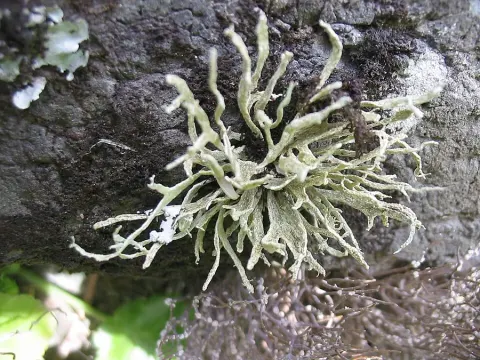
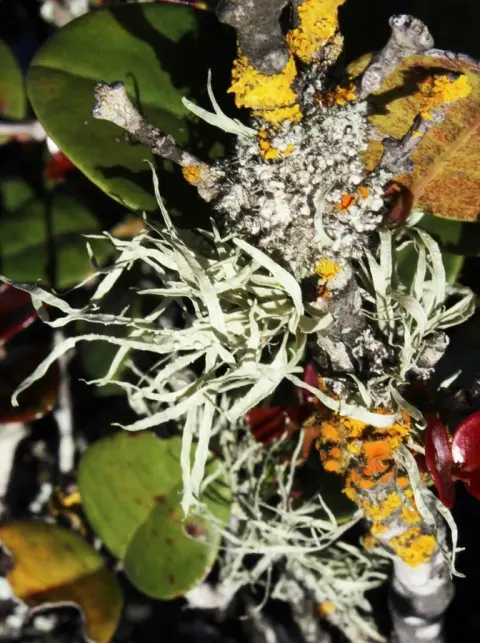
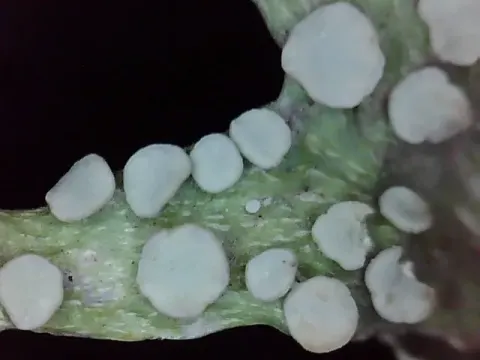
Physcidia striata is a species of corticolous (bark-dwelling), lichen in the family Ramalinaceae. Found in South America, it was formally described as a new species in 2014 by lichenologists André Aptroot, Marcela Cáceres, and Einar Timdal. The type specimen was collected by the first two authors from the (Rondônia), where it was found growing on the smooth bark of a tree in a primary rainforest. It also occurs in Peru. The thallus of the lichen is a loose mat of (scales) without a . Its are smooth, flat, branched, and greyish-green, measuring 2–7 mm long by 0.5–1.5 mm wide. The species epithet striata refers to the faint longitudinal striations that are present on the lobe undersides. Isidia occur on the thallus surface; they are the same colour as the thallus, with dimensions of 0.3–0.7 mm long by 0.1–0.2 mm wide. When they are abraded, it reveals the whitish colour of the underlying medulla. The lichen contains divaricatic acid, a lichen product that is revealed with the use of thin-layer chromatography.

Sebagian uraian ditampilkan dalam bahasa sumber; terjemahannya belum tersedia atau belum lolos pemeriksaan.

Rujukan: [1]

Pengukuran mengikuti objek, spesimen atau kultur, dan metode yang disebutkan sumber. Baca uraian asli untuk konteks lengkap.

02 / Kehidupan

Habitat dan peran ekologis

Physcidia striata is a species of corticolous (bark-dwelling), lichen in the family Ramalinaceae. Found in South America, it was formally described as a new species in 2014 by lichenologists André Aptroot, Marcela Cáceres, and Einar Timdal. The type specimen was collected by the first two authors from the (Rondônia), where it was found growing on the smooth bark of a tree in a primary rainforest. It also occurs in Peru. The thallus of the lichen is a loose mat of (scales) without a . Its are smooth, flat, branched, and greyish-green, measuring 2–7 mm long by 0.5–1.5 mm wide. The species epithet striata refers to the faint longitudinal striations that are present on the lobe undersides. Isidia occur on the thallus surface; they are the same colour as the thallus, with dimensions of 0.3–0.7 mm long by 0.1–0.2 mm wide. When they are abraded, it reveals the whitish colour of the underlying medulla. The lichen contains divaricatic acid, a lichen product that is revealed with the use of thin-layer chromatography.

Sebagian uraian ditampilkan dalam bahasa sumber; terjemahannya belum tersedia atau belum lolos pemeriksaan.

Rujukan: [1]

Habitat atau konteks temuan
Informasi belum tersedia pada sumber rilis ini.
Substrat
Informasi belum tersedia pada sumber rilis ini.
Peran atau konteks
Pembentuk liken
Temukan hubungan serupa
03 / Siklus hidup

Reproduksi

Physcidia striata is a species of corticolous (bark-dwelling), lichen in the family Ramalinaceae. Found in South America, it was formally described as a new species in 2014 by lichenologists André Aptroot, Marcela Cáceres, and Einar Timdal. The type specimen was collected by the first two authors from the (Rondônia), where it was found growing on the smooth bark of a tree in a primary rainforest. It also occurs in Peru. The thallus of the lichen is a loose mat of (scales) without a . Its are smooth, flat, branched, and greyish-green, measuring 2–7 mm long by 0.5–1.5 mm wide. The species epithet striata refers to the faint longitudinal striations that are present on the lobe undersides. Isidia occur on the thallus surface; they are the same colour as the thallus, with dimensions of 0.3–0.7 mm long by 0.1–0.2 mm wide.

Sebagian uraian ditampilkan dalam bahasa sumber; terjemahannya belum tersedia atau belum lolos pemeriksaan.

Rujukan: [1]

04 / Batas informasi

Catatan identitas dan cakupan

  • Nama diterima mengikuti Catalogue of Life Base2026-09-11; uraian mempertahankan konsep dan nama sumber aslinya.
  • Original geographic, specimen and life-cycle scope retained; source import awaits individual editorial review.
  • Impor dan terjemahan otomatis belum diperiksa editorial per profil. Struktur reproduktif yang disebutkan tidak membuktikan seluruh siklus hidup diketahui.
  • Pengukuran pada uraian mengikuti spesimen, kultur, dan metode sumber; angka tidak diperluas ke semua populasi.

Catatan distribusi dalam narasi mengikuti sumbernya. Dokumentasi spesimen atau foto mengikuti catatan sumber. Bukti wilayah Indonesia dan penilaian konservasi tidak disimpulkan dari gambar.

05 / Dokumentasi

Melihat dengan konteks

Dokumentasi visual yang memenuhi pemeriksaan subjek dan hak penggunaan belum tersedia. Foto gejala, label, dan gambar yang meragukan tidak dihitung.

06 / Rujukan

Sumber profil

  1. [1] Physcidia striata — Wikipedia (en)Bagian sumber: Frozen revision 1129526611
    Tanggal penghimpunan sumber: 2026-10-12
    Teks sumber: CC BY-SA4.0 · Wikipedia contributors
  2. [2] Catalogue of Life Base2026-09-11 — Physcidia striataBagian sumber: ColDP NameUsage.tsv ID 4HGQ5; accepted species; source 2073
    Tanggal penghimpunan sumber: 2026-10-12

Adaptasi teks: CC BY-SA 4.0. Wikipedia contributors — Physcidia striata — Wikipedia (en)

Uraian asli dan riwayat sumber

Riwayat atau halaman sumber

Ringkasan sumber

Physcidia striata is a species of corticolous (bark-dwelling), lichen in the family Ramalinaceae. Found in South America, it was formally described as a new species in 2014 by lichenologists André Aptroot, Marcela Cáceres, and Einar Timdal. The type specimen was collected by the first two authors from the (Rondônia), where it was found growing on the smooth bark of a tree in a primary rainforest. It also occurs in Peru. The thallus of the lichen is a loose mat of (scales) without a . Its are smooth, flat, branched, and greyish-green, measuring 2–7 mm long by 0.5–1.5 mm wide.

Revisi sumber

Morfologi sumber

Physcidia striata is a species of corticolous (bark-dwelling), lichen in the family Ramalinaceae. Found in South America, it was formally described as a new species in 2014 by lichenologists André Aptroot, Marcela Cáceres, and Einar Timdal. The type specimen was collected by the first two authors from the (Rondônia), where it was found growing on the smooth bark of a tree in a primary rainforest. It also occurs in Peru. The thallus of the lichen is a loose mat of (scales) without a . Its are smooth, flat, branched, and greyish-green, measuring 2–7 mm long by 0.5–1.5 mm wide. The species epithet striata refers to the faint longitudinal striations that are present on the lobe undersides. Isidia occur on the thallus surface; they are the same colour as the thallus, with dimensions of 0.3–0.7 mm long by 0.1–0.2 mm wide. When they are abraded, it reveals the whitish colour of the underlying medulla. The lichen contains divaricatic acid, a lichen product that is revealed with the use of thin-layer chromatography.

Revisi sumber

Ekologi sumber

Physcidia striata is a species of corticolous (bark-dwelling), lichen in the family Ramalinaceae. Found in South America, it was formally described as a new species in 2014 by lichenologists André Aptroot, Marcela Cáceres, and Einar Timdal. The type specimen was collected by the first two authors from the (Rondônia), where it was found growing on the smooth bark of a tree in a primary rainforest. It also occurs in Peru. The thallus of the lichen is a loose mat of (scales) without a . Its are smooth, flat, branched, and greyish-green, measuring 2–7 mm long by 0.5–1.5 mm wide. The species epithet striata refers to the faint longitudinal striations that are present on the lobe undersides. Isidia occur on the thallus surface; they are the same colour as the thallus, with dimensions of 0.3–0.7 mm long by 0.1–0.2 mm wide. When they are abraded, it reveals the whitish colour of the underlying medulla. The lichen contains divaricatic acid, a lichen product that is revealed with the use of thin-layer chromatography.

Revisi sumber

Struktur reproduksi sumber

Physcidia striata is a species of corticolous (bark-dwelling), lichen in the family Ramalinaceae. Found in South America, it was formally described as a new species in 2014 by lichenologists André Aptroot, Marcela Cáceres, and Einar Timdal. The type specimen was collected by the first two authors from the (Rondônia), where it was found growing on the smooth bark of a tree in a primary rainforest. It also occurs in Peru. The thallus of the lichen is a loose mat of (scales) without a . Its are smooth, flat, branched, and greyish-green, measuring 2–7 mm long by 0.5–1.5 mm wide. The species epithet striata refers to the faint longitudinal striations that are present on the lobe undersides. Isidia occur on the thallus surface; they are the same colour as the thallus, with dimensions of 0.3–0.7 mm long by 0.1–0.2 mm wide.

Revisi sumber

Rujukan halaman ini

Fungi. Physcidia striata. Rilis data fungi-2026-10-12-expansion-2. https://fungi-atlas.mgadib.chatgpt.site/jamur/physcidia-striata/.

Status: impor sumber; pemeriksaan editorial per profil belum selesai. Untuk klaim biologis, gunakan rujukan pada bagian terkait dan periksa konteks sumber aslinya.