Ciri dan struktur
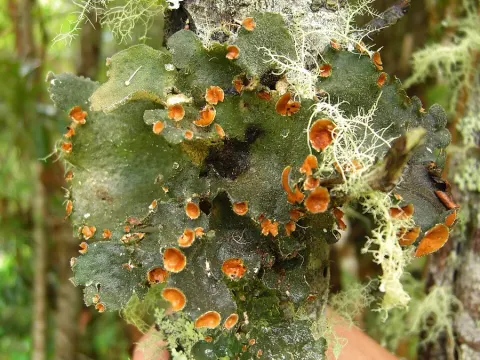
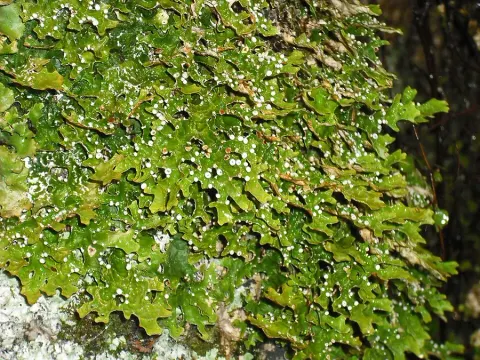
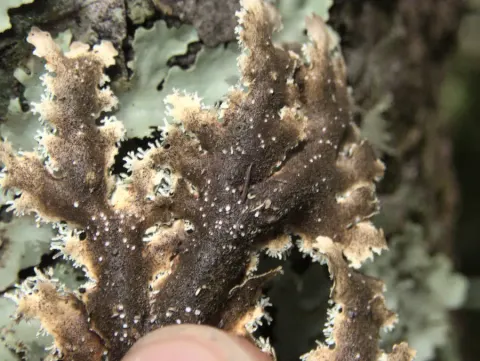
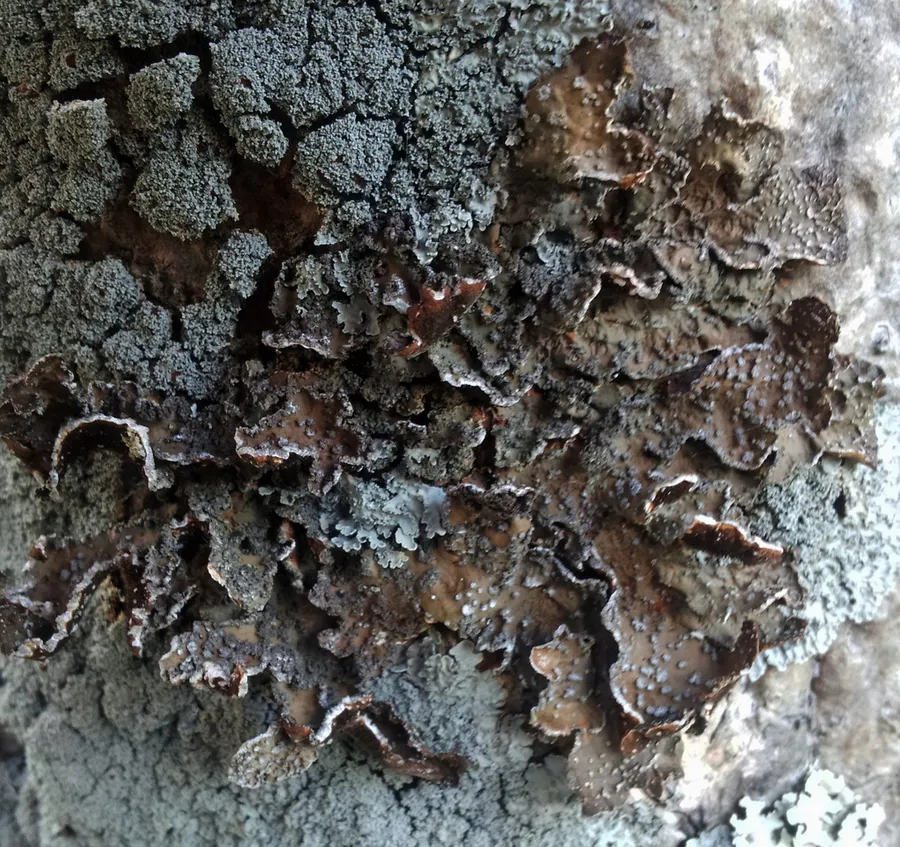
The thallus of Pseudocyphellaria haywardiorum is more or less circular, measuring 30–80 mm in diameter. This lichen loosely attaches from its edges to its centre. The edges of the thallus appear to rise slightly and display rounded , spanning 2–20 mm in length and 4–25 mm in width. These lobes stand apart but touch each other and have a complex overlapping pattern. The lichen's margins are sinuous, rising weakly with an irregular formation ranging from finely to coarsely jagged. The underbelly of the lichen occasionally presents soredia – small reproductive propagules – and has a greyish-white, eroded appearance. The upper surface showcases a spectrum of colours from dark grey-blue to brown-black, particularly becoming darker at the lobe tips when moist. When dry, the central area can vary from dark olive-brown to a pale yellowish tint with greyish edges. The surface texture can be flat or slightly wavy, with the tips more wrinkled and the remainder distinctly dotted. Additionally, the upper surface is , ranging from smooth to minutely spiderweb-like in parts. Depending on its state, it feels either leathery to brittle when dry or soft and limp when wet. It is sorediate, and it lacks or pseudocyphellae. Small, irregular light buff-coloured spots () can be seen, forming a mesh-like patterns towards the lobe tips. Sometimes, these spots form larger patches that lack . The soredia of the lichen is dark brownish-blue, transitioning to a pale grey, and often appears to erode to white. These are coarse and resemble crowded, false isidia. The soredia clusters, which can be up to 0.5 mm in diameter, can either be dispersed, densely packed, or even merge to form extensive sorediate to crusts.
Habitat dan peran ekologis
On Raoul Island, it is known from fragmentary specimens collected from amongst the debris of Kermadec pōhutukawa that were toppled by a cyclone, suggesting that in that location it inhabits the upper tree canopy. In Kohimarama, where it is quite rare, it has been found growing on the trunks of cabbage trees and on fallen dead branches.
- Habitat atau konteks temuan
- Informasi belum tersedia pada sumber rilis ini.
- Substrat
- Informasi belum tersedia pada sumber rilis ini.
- Peran atau konteks
- Pembentuk liken
Reproduksi
The lichen's margins are sinuous, rising weakly with an irregular formation ranging from finely to coarsely jagged. The underbelly of the lichen occasionally presents soredia – small reproductive propagules – and has a greyish-white, eroded appearance. The upper surface showcases a spectrum of colours from dark grey-blue to brown-black, particularly becoming darker at the lobe tips when moist. When dry, the central area can vary from dark olive-brown to a pale yellowish tint with greyish edges. The surface texture can be flat or slightly wavy, with the tips more wrinkled and the remainder distinctly dotted. Additionally, the upper surface is , ranging from smooth to minutely spiderweb-like in parts.
Catatan identitas dan cakupan
- Nama diterima mengikuti Catalogue of Life Base2026-09-11; uraian mempertahankan konsep dan nama sumber aslinya.
- Original geographic, specimen and life-cycle scope retained; source import awaits individual editorial review.
- Impor dan terjemahan otomatis belum diperiksa editorial per profil. Struktur reproduktif yang disebutkan tidak membuktikan seluruh siklus hidup diketahui.
- Pengukuran pada uraian mengikuti spesimen, kultur, dan metode sumber; angka tidak diperluas ke semua populasi.
Catatan distribusi dalam narasi mengikuti sumbernya. Dokumentasi spesimen atau foto mengikuti catatan sumber. Bukti wilayah Indonesia dan penilaian konservasi tidak disimpulkan dari gambar.
Melihat dengan konteks
Dokumentasi Pseudocyphellaria haywardiorum menurut asosiasi foto pada record takson iNaturalist. Kredit: Peter de Lange. Identitas mengikuti sumber; bukan penentuan spesimen independen.
- Jenis
- Fotografi
- Kredit
- no rights reserved, uploaded by Peter de Lange
- Lisensi
- CC0 1.0
- Sumber media
- Buka entri sumber
Dokumentasi tambahan
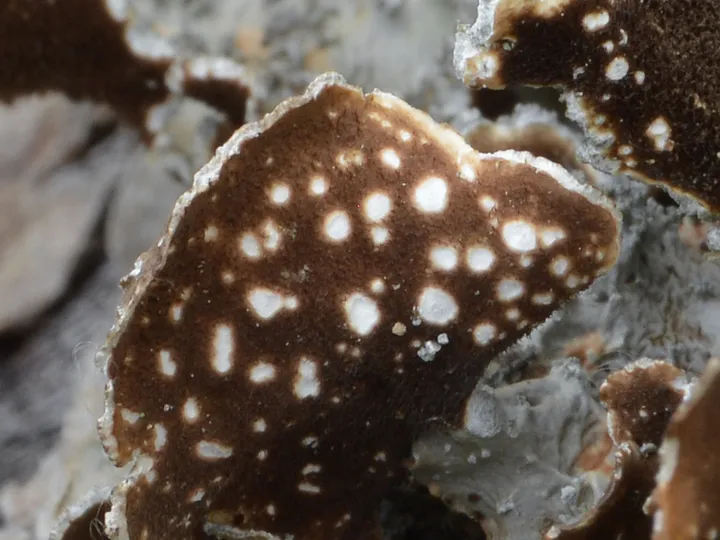
Foto yang diasosiasikan dengan Pseudocyphellaria haywardiorum pada iNaturalist. Identifikasi mengikuti sumber; bukan penentuan spesimen independen.
Kredit dan penggunaan
no rights reserved, uploaded by Peter de Lange
Ukuran dan format gambar disesuaikan tanpa pemotongan, retus, atau penambahan skala. Lisensi sumber dipertahankan.
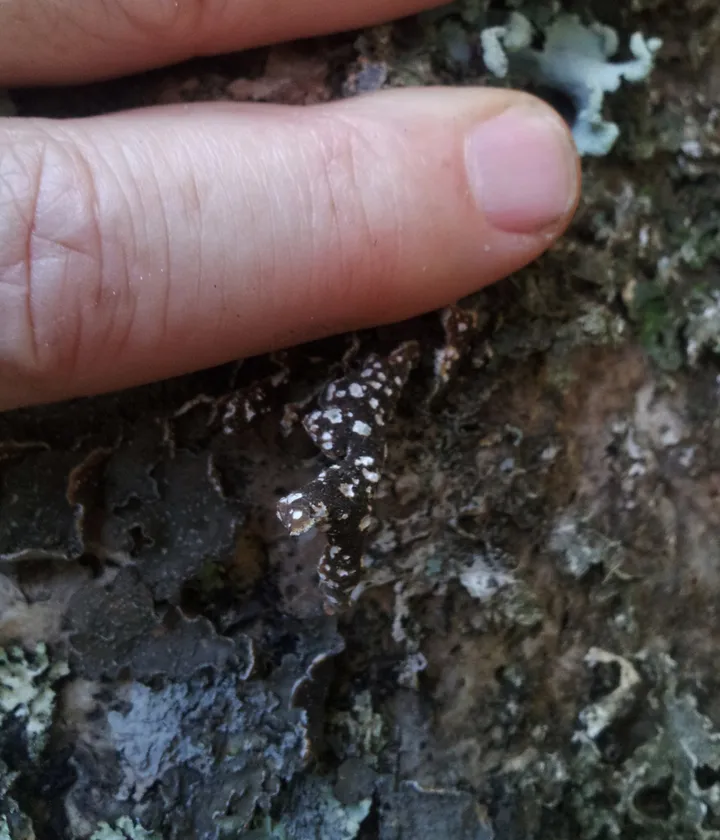
Foto yang diasosiasikan dengan Pseudocyphellaria haywardiorum pada iNaturalist. Identifikasi mengikuti sumber; bukan penentuan spesimen independen.
Kredit dan penggunaan
no rights reserved, uploaded by Peter de Lange
Ukuran dan format gambar disesuaikan tanpa pemotongan, retus, atau penambahan skala. Lisensi sumber dipertahankan.
Sumber profil
- [1] Pseudocyphellaria haywardiorum — Wikipedia (en)
- [2] Catalogue of Life Base2026-09-11 — Pseudocyphellaria haywardiorum
- [3] Dokumentasi visual — Pseudocyphellaria haywardiorum
- [4] Dokumentasi visual — Pseudocyphellaria haywardiorum
- [5] Dokumentasi visual — Pseudocyphellaria haywardiorum
Rujukan halaman ini
Fungi. Pseudocyphellaria haywardiorum. Rilis data fungi-2026-10-12-expansion-2. https://fungi-atlas.mgadib.chatgpt.site/jamur/pseudocyphellaria-haywardiorum/.
Status: impor sumber; pemeriksaan editorial per profil belum selesai. Untuk klaim biologis, gunakan rujukan pada bagian terkait dan periksa konteks sumber aslinya.