01 / Morfologi

Ciri dan struktur

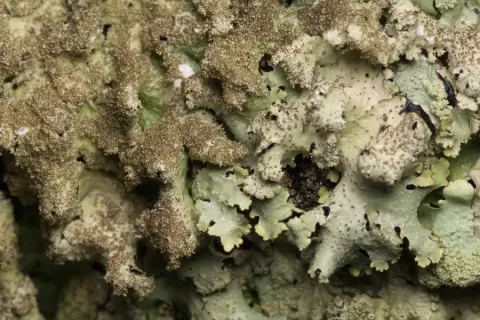
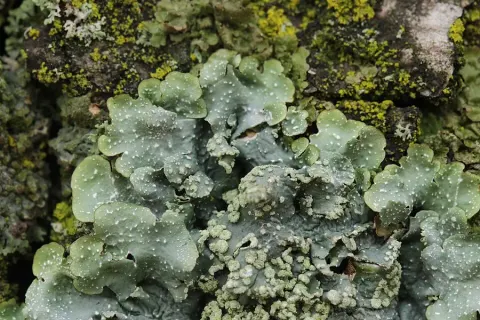
The lichen has an upper thallus surface that is grey, and covered with bright soredia. The lower surface of the thallus is black. The thallus diameter is typically 5.0 – 7.5 cm broad, comprising irregularly branched and laterally overlapping lobes that are 1.0 – 5.5 mm wide with rounded tips. Point-like, conspicuous (i.e., readily visible) pseudocyphellae are abundant on the surface. Also abundant are coarse, granular soredia. The medulla is white. The cortex is K+ (yellow), indicating the presence of atranorin, while the medulla is negative for all lichen spot tests. A chemical analysis of Brazilian specimens using thin layer chromatography revealed the known compounds praesorediosic acid, protopraesorediosic acid, and protolichesterinic acid as well as an unidentified fatty acid. The North American species Punctelia appalachensis is similar in appearance to P. reddenda, with a black thallus undersurface and negative medullary spot test reactions. However, it is distinguishable from P. reddenda because rather than soredia, it has abundant laminal and marginal (growths of the upper cortex or thallus margin, usually with a constricted base, that fall away as propagules).

Sebagian uraian ditampilkan dalam bahasa sumber; terjemahannya belum tersedia atau belum lolos pemeriksaan.

Rujukan: [1]

Pengukuran mengikuti objek, spesimen atau kultur, dan metode yang disebutkan sumber. Baca uraian asli untuk konteks lengkap.

02 / Kehidupan

Habitat dan peran ekologis

Punctelia reddenda grows on bark, but has also been recorded growing on rock. An older (1974) source considered its European distribution to be more or less limited to coastal areas ranging from southern Sweden to Brittany. A 2008 survey of parmelioid lichens in Europe indicated its presence in Germany, Spain, France, Greece, Ireland, and Madeira, also noting that it was extinct in Sweden. In North America, its centre of distribution is the Appalachian Mountains. In the Great Smoky Mountains National Park, it is only found at elevations greater than 5000 ft, in hardwood or spruce forests in the mountains. In South America, it occurs in Bolivia, Brazil, Chile, and Venezuela. It is also found in South Africa and Macaronesia.

Sebagian uraian ditampilkan dalam bahasa sumber; terjemahannya belum tersedia atau belum lolos pemeriksaan.

Rujukan: [1]

Habitat atau konteks temuan
hutan
Substrat
kulit kayu
Peran atau konteks
Pembentuk liken
Temukan hubungan serupa
03 / Siklus hidup

Reproduksi

The lichen has an upper thallus surface that is grey, and covered with bright soredia. The lower surface of the thallus is black. The thallus diameter is typically 5.0 – 7.5 cm broad, comprising irregularly branched and laterally overlapping lobes that are 1.0 – 5.5 mm wide with rounded tips. Point-like, conspicuous (i.e., readily visible) pseudocyphellae are abundant on the surface. Also abundant are coarse, granular soredia. The medulla is white. The North American species Punctelia appalachensis is similar in appearance to P. reddenda, with a black thallus undersurface and negative medullary spot test reactions. However, it is distinguishable from P. reddenda because rather than soredia, it has abundant laminal and marginal (growths of the upper cortex or thallus margin, usually with a constricted base, that fall away as propagules).

Sebagian uraian ditampilkan dalam bahasa sumber; terjemahannya belum tersedia atau belum lolos pemeriksaan.

Rujukan: [1]

Sinonim menurut acuan taksonomi rilis: Parmelia borreri var. reddenda; Parmelia reddenda
04 / Batas informasi

Catatan identitas dan cakupan

  • Nama diterima mengikuti Catalogue of Life Base2026-09-11; uraian mempertahankan konsep dan nama sumber aslinya.
  • Original geographic, specimen and life-cycle scope retained; source import awaits individual editorial review.
  • Impor dan terjemahan otomatis belum diperiksa editorial per profil. Struktur reproduktif yang disebutkan tidak membuktikan seluruh siklus hidup diketahui.
  • Pengukuran pada uraian mengikuti spesimen, kultur, dan metode sumber; angka tidak diperluas ke semua populasi.

Catatan distribusi dalam narasi mengikuti sumbernya. Dokumentasi spesimen atau foto mengikuti catatan sumber. Bukti wilayah Indonesia dan penilaian konservasi tidak disimpulkan dari gambar.

05 / Dokumentasi

Melihat dengan konteks

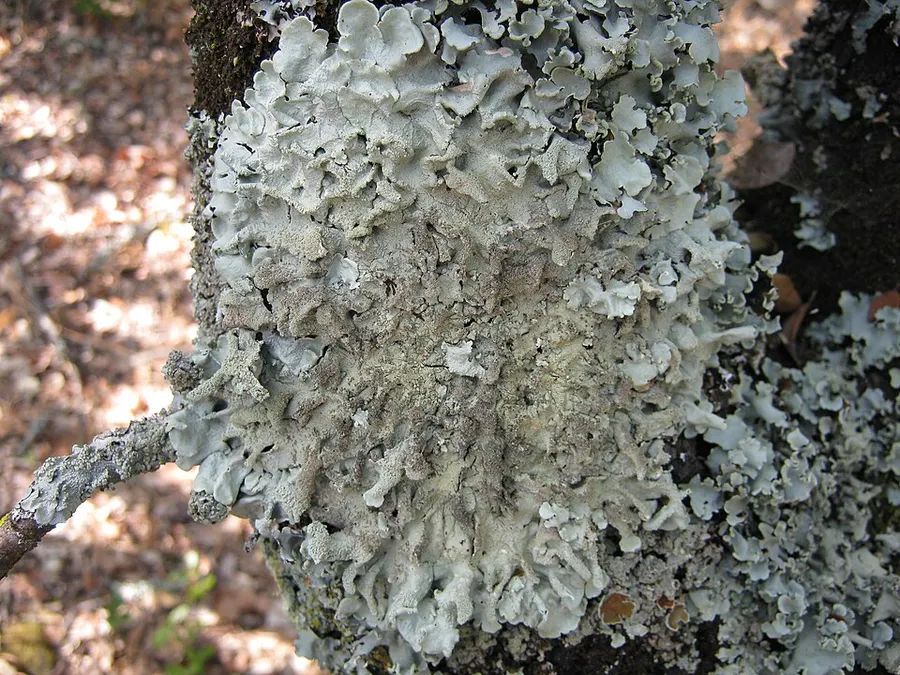
Dokumentasi Punctelia reddenda dari Wikimedia Commons. A photo of the foliose lichen species Punctelia reddenda , in Parque de Monsanto, Lisboa, Portugal Identifikasi mengikuti record berkas sumber.

Jenis
Fotografi
Kredit
Zaca Lepista
Sumber media
Buka entri sumber

Gambar menunjukkan objek menurut identifikasi sumber, bukan verifikasi independen spesimen oleh Fungi. Tidak ada skala baru yang ditambahkan.

06 / Rujukan

Sumber profil

  1. [1] Punctelia reddenda — Wikipedia (en)Bagian sumber: Frozen revision 1320189128
    Tanggal penghimpunan sumber: 2026-10-12
    Teks sumber: CC BY-SA4.0 · Wikipedia contributors
  2. [2] Catalogue of Life Base2026-09-11 — Punctelia reddendaBagian sumber: ColDP NameUsage.tsv ID 4QHNT; accepted species; source 2073
    Tanggal penghimpunan sumber: 2026-10-12
  3. [3] Dokumentasi visual — Punctelia reddendaBagian sumber: Individual media record; identification follows the source, not independent determination
    Tanggal penghimpunan sumber: 2026-10-12
    Media sumber: CC BY-SA 3.0 · Zaca Lepista

Adaptasi teks: CC BY-SA 4.0. Wikipedia contributors — Punctelia reddenda — Wikipedia (en)

Uraian asli dan riwayat sumber

Riwayat atau halaman sumber

Ringkasan sumber

Punctelia reddenda is a widely distributed species of foliose lichen in the family Parmeliaceae. It occurs in Africa, Europe, North America, and South America, where it grows on bark and on rock.

Revisi sumber

Morfologi sumber

The lichen has an upper thallus surface that is grey, and covered with bright soredia. The lower surface of the thallus is black. The thallus diameter is typically 5.0 – 7.5 cm broad, comprising irregularly branched and laterally overlapping lobes that are 1.0 – 5.5 mm wide with rounded tips. Point-like, conspicuous (i.e., readily visible) pseudocyphellae are abundant on the surface. Also abundant are coarse, granular soredia. The medulla is white. The cortex is K+ (yellow), indicating the presence of atranorin, while the medulla is negative for all lichen spot tests. A chemical analysis of Brazilian specimens using thin layer chromatography revealed the known compounds praesorediosic acid, protopraesorediosic acid, and protolichesterinic acid as well as an unidentified fatty acid. The North American species Punctelia appalachensis is similar in appearance to P. reddenda, with a black thallus undersurface and negative medullary spot test reactions. However, it is distinguishable from P. reddenda because rather than soredia, it has abundant laminal and marginal (growths of the upper cortex or thallus margin, usually with a constricted base, that fall away as propagules).

Revisi sumber

Ekologi sumber

Punctelia reddenda grows on bark, but has also been recorded growing on rock. An older (1974) source considered its European distribution to be more or less limited to coastal areas ranging from southern Sweden to Brittany. A 2008 survey of parmelioid lichens in Europe indicated its presence in Germany, Spain, France, Greece, Ireland, and Madeira, also noting that it was extinct in Sweden. In North America, its centre of distribution is the Appalachian Mountains. In the Great Smoky Mountains National Park, it is only found at elevations greater than 5000 ft, in hardwood or spruce forests in the mountains. In South America, it occurs in Bolivia, Brazil, Chile, and Venezuela. It is also found in South Africa and Macaronesia.

Revisi sumber

Struktur reproduksi sumber

The lichen has an upper thallus surface that is grey, and covered with bright soredia. The lower surface of the thallus is black. The thallus diameter is typically 5.0 – 7.5 cm broad, comprising irregularly branched and laterally overlapping lobes that are 1.0 – 5.5 mm wide with rounded tips. Point-like, conspicuous (i.e., readily visible) pseudocyphellae are abundant on the surface. Also abundant are coarse, granular soredia. The medulla is white. The North American species Punctelia appalachensis is similar in appearance to P. reddenda, with a black thallus undersurface and negative medullary spot test reactions. However, it is distinguishable from P. reddenda because rather than soredia, it has abundant laminal and marginal (growths of the upper cortex or thallus margin, usually with a constricted base, that fall away as propagules).

Revisi sumber

Rujukan halaman ini

Fungi. Punctelia reddenda. Rilis data fungi-2026-10-12-expansion-2. https://fungi-atlas.mgadib.chatgpt.site/jamur/punctelia-reddenda/.

Status: impor sumber; pemeriksaan editorial per profil belum selesai. Untuk klaim biologis, gunakan rujukan pada bagian terkait dan periksa konteks sumber aslinya.