Ciri dan struktur
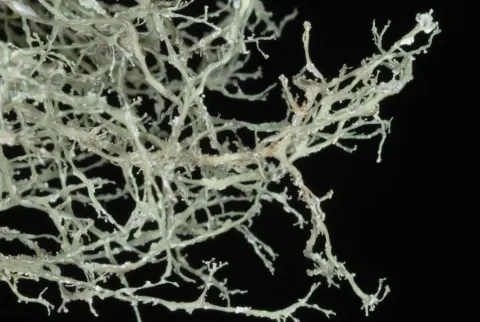
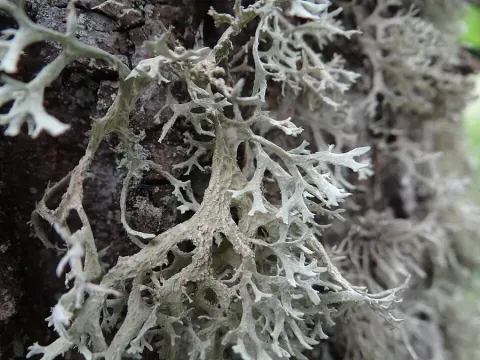
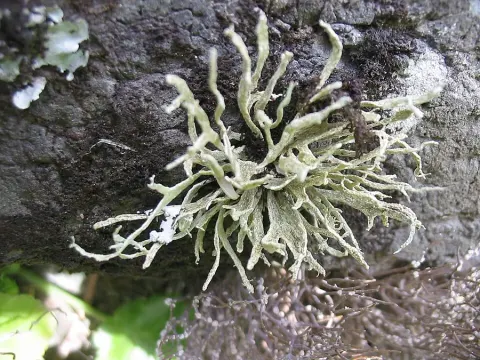
Ramalina krogiae is recognized by its saxicolous habitat, ascending, 1–2 dichotomous branched, rigid lobes, producing abundant granules, but no genuine soralia, nor apothecia, producing divaricatic acid and endemic to the Canary Islands and Madeira archipelagoes Thallus saxicolous, ascending, usually rigid, when well-developed up to 3–4 cm high, usually with 1–2 dichotomous branching in the upper half of the branch, 3–4 mm large at most, usually less, branches contorted or irregularly twisted, small dissected and elongated lobes (small laciniae) usually present, together with tiny rounded or irregularly shaped granules, these granules sometimes abundant; cortex locally and usually irregularly broken off, but no typical production of soralia observed. Apothecia rare to abundant, lateral, disc usually strongly concave (“wide open” apothecia rarely seen) with a scrobiculate outer cortex, margins of the disc usually with cortex interruption and production of tiny granules. Ascospores straight or slightly concave, 1-septate, 9–13 × 4–5 µm. Pycnidia not found.
Habitat dan peran ekologis
On exposed rocks at low elevation, in the Canary Islands and the Madeira archipelago.
- Habitat atau konteks temuan
- Informasi belum tersedia pada sumber rilis ini.
- Substrat
- Informasi belum tersedia pada sumber rilis ini.
- Peran atau konteks
- Pembentuk liken
Reproduksi
Thallus saxicolous, ascending, usually rigid, when well-developed up to 3–4 cm high, usually with 1–2 dichotomous branching in the upper half of the branch, 3–4 mm large at most, usually less, branches contorted or irregularly twisted, small dissected and elongated lobes (small laciniae) usually present, together with tiny rounded or irregularly shaped granules, these granules sometimes abundant; cortex locally and usually irregularly broken off, but no typical production of soralia observed. Apothecia rare to abundant, lateral, disc usually strongly concave (“wide open” apothecia rarely seen) with a scrobiculate outer cortex, margins of the disc usually with cortex interruption and production of tiny granules.
Catatan identitas dan cakupan
- Nama diterima mengikuti Catalogue of Life Base2026-09-11; uraian mempertahankan konsep dan nama sumber aslinya.
- Preserve original treatment localities, hosts and substrate scope. Materials examined describe documented specimens, not the full global range.
- Impor dan terjemahan otomatis belum diperiksa editorial per profil. Struktur reproduktif yang disebutkan tidak membuktikan seluruh siklus hidup diketahui.
- Pengukuran pada uraian mengikuti spesimen, kultur, dan metode sumber; angka tidak diperluas ke semua populasi.
Catatan distribusi dalam narasi mengikuti sumbernya. Dokumentasi spesimen atau foto mengikuti catatan sumber. Bukti wilayah Indonesia dan penilaian konservasi tidak disimpulkan dari gambar.
Melihat dengan konteks
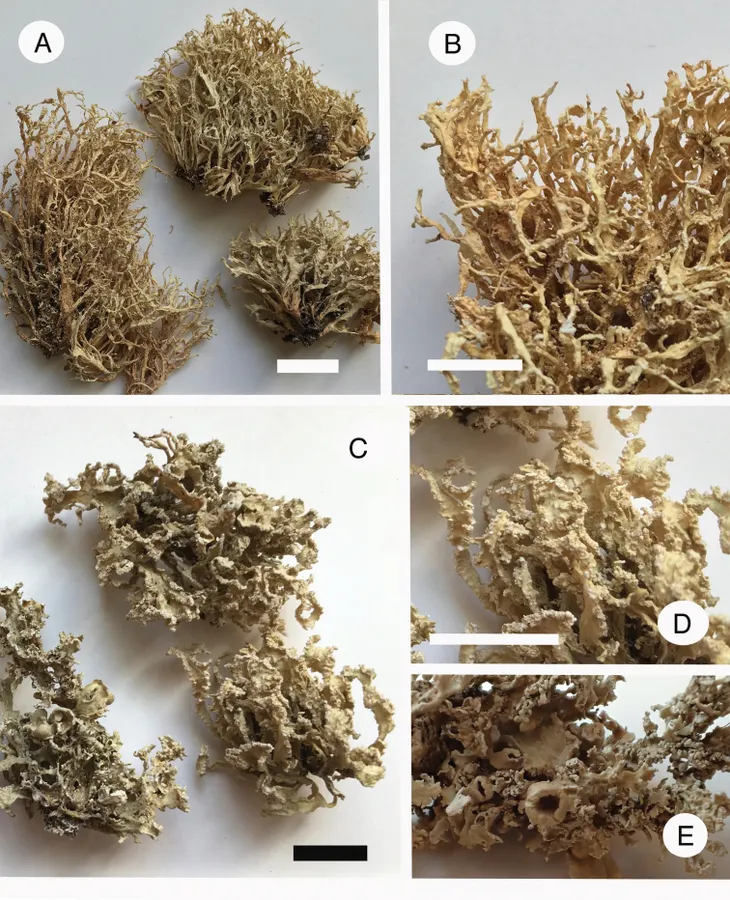
Species in Ramalina A, B R. krogiae (holotype) C–E R. requienii (France, Corsica). Scale: 1 cm (A–D); scale in E identical to D. Photographs by E. Sérusiaux.
- Jenis
- Pelat ilmiah
- Kredit
- Richard Spjut, Antoine Simon, Martin Guissard, Nicolas Magain, Emmanuël Sérusiaux
- Lisensi
- CC BY 4.0
- Sumber media
- Buka entri sumber
Sumber profil
- [1] The fruticose genera in the Ramalinaceae (Ascomycota, Lecanoromycetes): their diversity and evolutionary history — Ramalina krogiae
- [2] Catalogue of Life Base2026-09-11 — Ramalina krogiae
- [3] Dokumentasi visual — Ramalina krogiae
Rujukan halaman ini
Fungi. Ramalina krogiae. Rilis data fungi-2026-10-12-expansion-2. https://fungi-atlas.mgadib.chatgpt.site/jamur/ramalina-krogiae/.
Status: impor sumber; pemeriksaan editorial per profil belum selesai. Untuk klaim biologis, gunakan rujukan pada bagian terkait dan periksa konteks sumber aslinya.