Ciri dan struktur
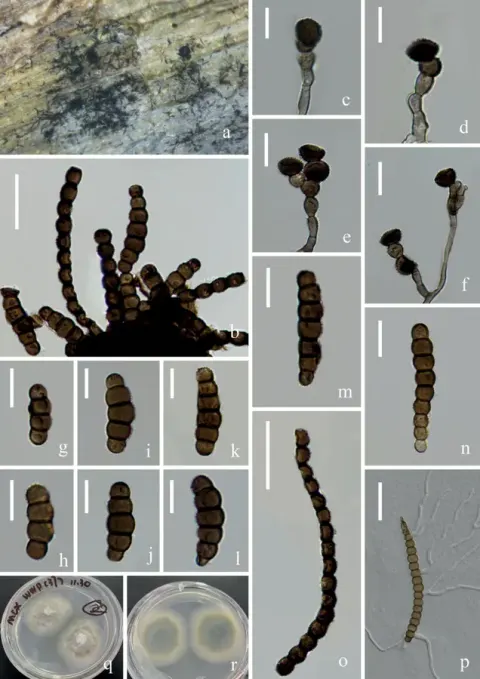
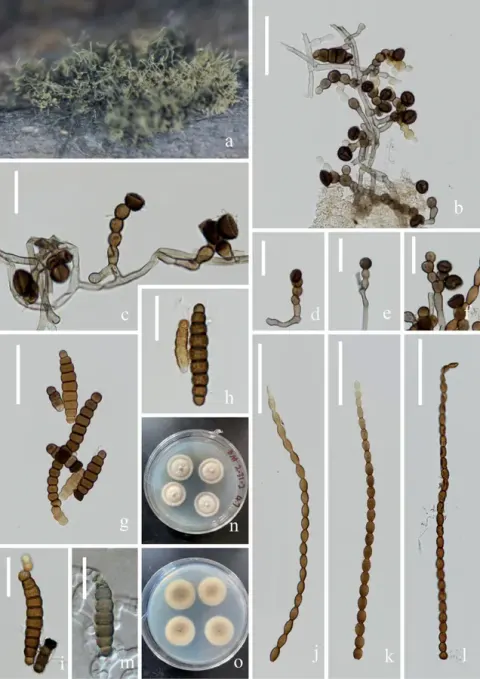
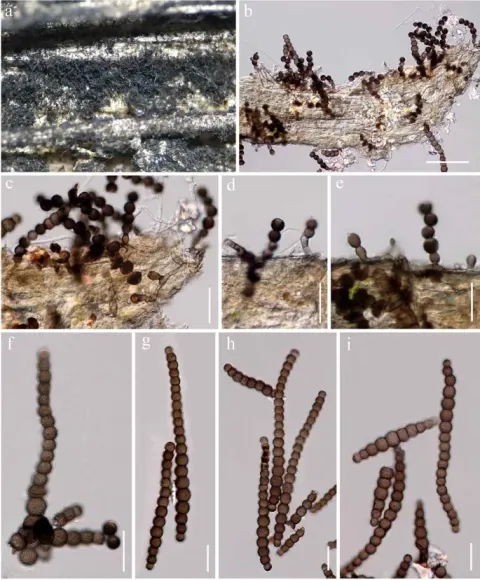
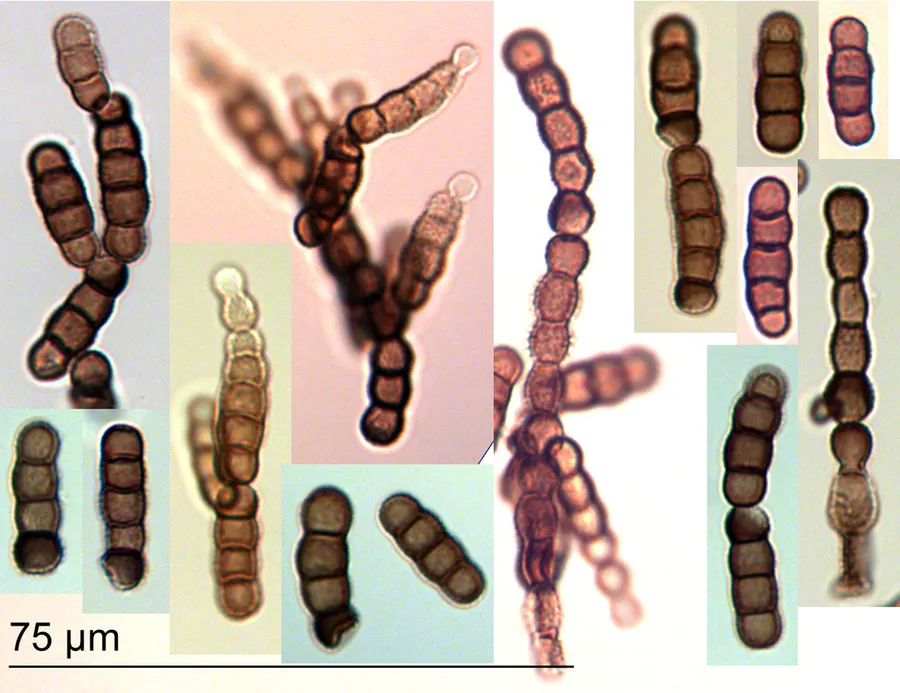
The genus Torula is defined as dematiaceous hyphomycetes, or more commonly, darkly pigmented fungi that grow slowly and reproduce asexually by conidia in string of beads-like chains. The fungal colonies are variable in size. They can range from 1–2 mm diameter patches to covering large areas and encircling stems. They appear to be olivaceous (musky yellow green) in colour when growing and dark brown when matured. They are discrete, dry and have a felty, fuzzy and velvety appearance. The mycelium can be superficial or immersed and hyaline branched, relative to the rest of the structure. They are unbranched and usually colourless or a mid-brown colour. They appear to be smooth and 2-6 μm in diameter. Some other reports state they are wider, darker and thicker cells. The conidiophores will become the conidiogenous (promotes conidiogenesis) cells that are 7-9 μm in diameter, monoblastic (single or single-celled) or polyblastic (multiple celled). The conidiophores are globose or ellipsoidal (football shape), smooth and slightly bumpy at the fertile end. In culture, colonies can cover an entire Petri dish of suitable growth medium after 2 weeks of incubation at 25 °C. Colonies are flat, smooth and distributed evenly with moderate aerial mycelium and a distinct edge. The colour is olivaceous-grey on the reverse side and paler on the surface when grown on Potato dextrose agar (PDA) and Malt Extract Agar (MEA) plates. The conidia of T. herbarum are typically 3-5 celled, dark brown or black colour and rough-walled with prickly or spiny ornamentation resembling a burned crust appearance.
Habitat dan peran ekologis
T. herbarum is a cosmopolitan species that is most commonly found in temperate climate regions, and exists in most areas with a suitable climate, including: Canada, India, United States of America, Cuba, Kenya, India, etc. It thrives on plant debris, on trees and in soil, often on or in dead herbaceous stems. It is a rot fungus that creates dark brown lesions sometimes in bands. A blight disease of ber, Ziziphus mauritiana, is caused by T. herbarum. In one study, T. herbarum accounted for 47% of the fungi recovered from earthworm casts and 6% of the mycota from non-earthworm associated soils. Less commonly, it can be found on wood and calcareous and siliceous rocks as well. Accordingly, items made out of those materials such as baskets, wood furniture, paper, tiles, linoleum and concrete may contain spores of this species. In autumn, T. herbarum grows on large dry stems of herbs. The main method of transmission is by dissemination of the conidia components of this fungus making them present in the air. Hyphal fragments of T. herbarum have been recovered from marine air above the Mediterranean Sea. T. herbarum is frequently found on plant hosts in the genera: Alnus, Aceuthobium, Bambusa Carya, Impatiens, Juncus, Mesembryanthemum, Pinus, and Yucca.
- Habitat atau konteks temuan
- Informasi belum tersedia pada sumber rilis ini.
- Substrat
- kayu; tanah
- Peran atau konteks
- Belum dikategorikan pada rilis ini.
Reproduksi
The genus Torula is defined as dematiaceous hyphomycetes, or more commonly, darkly pigmented fungi that grow slowly and reproduce asexually by conidia in string of beads-like chains. The fungal colonies are variable in size. They can range from 1–2 mm diameter patches to covering large areas and encircling stems. They appear to be olivaceous (musky yellow green) in colour when growing and dark brown when matured. They are discrete, dry and have a felty, fuzzy and velvety appearance. The mycelium can be superficial or immersed and hyaline branched, relative to the rest of the structure. They are unbranched and usually colourless or a mid-brown colour. They appear to be smooth and 2-6 μm in diameter.
Catatan identitas dan cakupan
- Nama diterima mengikuti Catalogue of Life Base2026-09-11; uraian mempertahankan konsep dan nama sumber aslinya.
- Original geographic, specimen and life-cycle scope retained; source import awaits individual editorial review.
- Impor dan terjemahan otomatis belum diperiksa editorial per profil. Struktur reproduktif yang disebutkan tidak membuktikan seluruh siklus hidup diketahui.
- Pengukuran pada uraian mengikuti spesimen, kultur, dan metode sumber; angka tidak diperluas ke semua populasi.
Catatan distribusi dalam narasi mengikuti sumbernya. Dokumentasi spesimen atau foto mengikuti catatan sumber. Bukti wilayah Indonesia dan penilaian konservasi tidak disimpulkan dari gambar.
Melihat dengan konteks
Dokumentasi Torula herbarum menurut asosiasi foto pada record takson iNaturalist. Kredit: Jerry Cooper. Identitas mengikuti sumber; bukan penentuan spesimen independen.
- Jenis
- Fotografi
- Kredit
- (c) Jerry Cooper, some rights reserved (CC BY), uploaded by Jerry Cooper
- Lisensi
- CC BY 4.0
- Sumber media
- Buka entri sumber
Dokumentasi tambahan
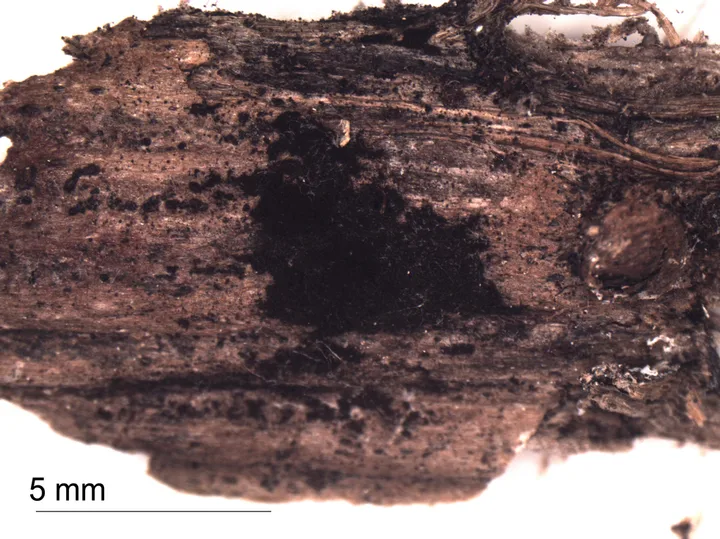
Foto yang diasosiasikan dengan Torula herbarum pada iNaturalist. Identifikasi mengikuti sumber; bukan penentuan spesimen independen.
Kredit dan penggunaan
(c) Jerry Cooper, some rights reserved (CC BY), uploaded by Jerry Cooper
Ukuran dan format gambar disesuaikan tanpa pemotongan, retus, atau penambahan skala. Lisensi sumber dipertahankan.
Sumber profil
- [1] Torula herbarum — Wikipedia (en)
- [2] Catalogue of Life Base2026-09-11 — Torula herbarum
- [3] Dokumentasi visual — Torula herbarum
- [4] Dokumentasi visual — Torula herbarum
Rujukan halaman ini
Fungi. Torula herbarum. Rilis data fungi-2026-10-12-expansion-2. https://fungi-atlas.mgadib.chatgpt.site/jamur/torula-herbarum/.
Status: impor sumber; pemeriksaan editorial per profil belum selesai. Untuk klaim biologis, gunakan rujukan pada bagian terkait dan periksa konteks sumber aslinya.