Ciri dan struktur
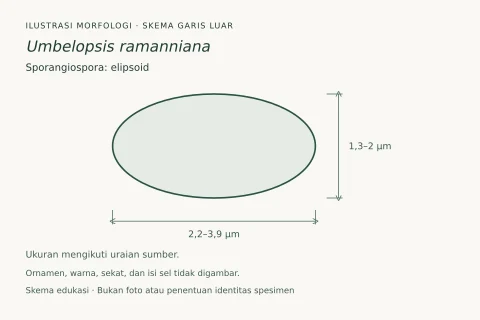
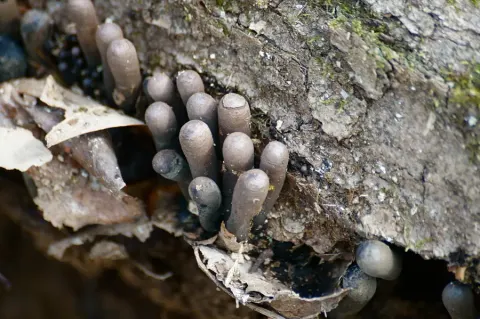
Typhula quisquiliaris produces fruit bodies in the form of clubs. Each fruit body consists of a single distinct "stem" and "head", The surface of the head is smooth and white, Typhula quisquiliaris spores are narrowly ellipsoid, and measure from 9 to 14 by 4 to 5.5 micrometres (μm). The spores are white, and contain small granules. The spores are borne on basidia which measure 50 to 70 by 7 to 8 μm, with four spores on each basidium. The downy covering of the stem is made up of thick-walled hairs, each measuring 15 to 60 by 3 to 7 μm, though they are often swollen towards the base. The sclerotium measures from 1.5 to 3 by 0.5 μm, and is a pale yellow colour. Clamp connections are present in the hyphae.
Habitat dan peran ekologis
Typhula quisquiliaris tubuh buah biasanya ditemukan dalam baris, tumbuh dari detritus tanaman. Spesies ini lebih menyukai braken, terutama Pteridium aquilinum, tetapi kolonialisasi bahan mati dari tanaman lain tidak diketahui. Upon these substrat, itu makan sebagai saprotroph, memecah mati bahan organik untuk mempertahankan dirinya sendiri. Spesies ini telah tercatat di Afrika utara Europe and. Di Eropa, tubuh buah dapat ditemukan dari April to Desember.
- Habitat atau konteks temuan
- Informasi belum tersedia pada sumber rilis ini.
- Substrat
- Informasi belum tersedia pada sumber rilis ini.
- Peran atau konteks
- Pengurai
Reproduksi
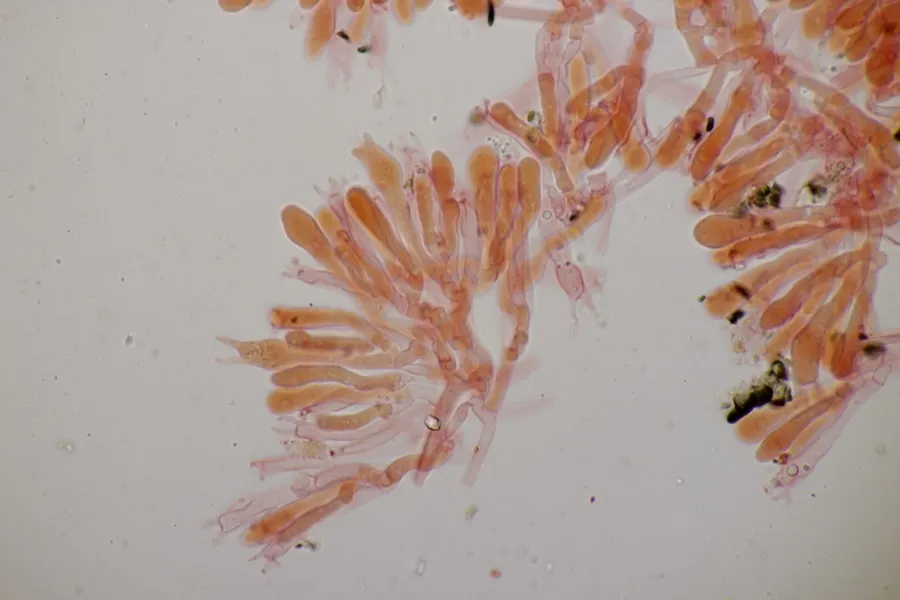
Typhula quisquiliaris spores are narrowly ellipsoid, and measure from 9 to 14 by 4 to 5.5 micrometres (μm). The spores are white, and contain small granules. The spores are borne on basidia which measure 50 to 70 by 7 to 8 μm, with four spores on each basidium. The downy covering of the stem is made up of thick-walled hairs, each measuring 15 to 60 by 3 to 7 μm, though they are often swollen towards the base. The sclerotium measures from 1.5 to 3 by 0.5 μm, and is a pale yellow colour. Clamp connections are present in the hyphae.
Catatan identitas dan cakupan
- Nama diterima mengikuti Catalogue of Life Base2026-09-11; uraian mempertahankan konsep dan nama sumber aslinya.
- Original geographic, specimen and life-cycle scope retained; source import awaits individual editorial review.
- Impor dan terjemahan otomatis belum diperiksa editorial per profil. Struktur reproduktif yang disebutkan tidak membuktikan seluruh siklus hidup diketahui.
- Pengukuran pada uraian mengikuti spesimen, kultur, dan metode sumber; angka tidak diperluas ke semua populasi.
Catatan distribusi dalam narasi mengikuti sumbernya. Dokumentasi spesimen atau foto mengikuti catatan sumber. Bukti wilayah Indonesia dan penilaian konservasi tidak disimpulkan dari gambar.
Melihat dengan konteks
Dokumentasi Typhula quisquiliaris menurut asosiasi foto pada record takson iNaturalist. Kredit: Björn Sothmann. Identitas mengikuti sumber; bukan penentuan spesimen independen.
- Jenis
- Fotografi
- Kredit
- (c) Björn Sothmann, some rights reserved (CC BY-SA), uploaded by Björn Sothmann
- Lisensi
- CC BY-SA 4.0
- Sumber media
- Buka entri sumber
Dokumentasi tambahan
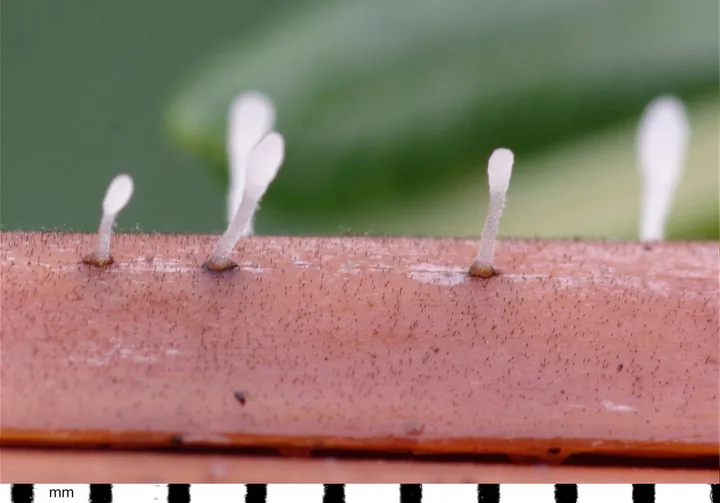
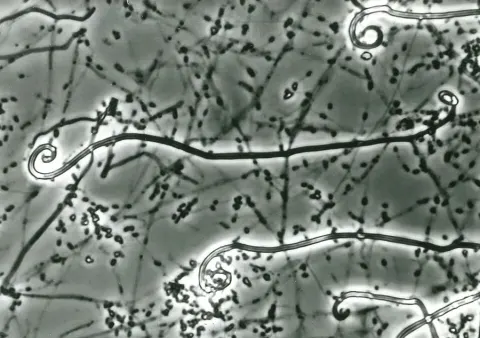
Foto yang diasosiasikan dengan Typhula quisquiliaris pada iNaturalist. Identifikasi mengikuti sumber; bukan penentuan spesimen independen.
Kredit dan penggunaan
no rights reserved, uploaded by Ben Mitchell
Ukuran dan format gambar disesuaikan tanpa pemotongan, retus, atau penambahan skala. Lisensi sumber dipertahankan.
Sumber profil
- [1] Typhula quisquiliaris — Wikipedia (en)
- [2] Catalogue of Life Base2026-09-11 — Typhula quisquiliaris
- [3] Dokumentasi visual — Typhula quisquiliaris
- [4] Dokumentasi visual — Typhula quisquiliaris
Rujukan halaman ini
Fungi. Typhula quisquiliaris. Rilis data fungi-2026-10-12-expansion-2. https://fungi-atlas.mgadib.chatgpt.site/jamur/typhula-quisquiliaris/.
Status: impor sumber; pemeriksaan editorial per profil belum selesai. Untuk klaim biologis, gunakan rujukan pada bagian terkait dan periksa konteks sumber aslinya.