01 / Morfologi

Ciri dan struktur

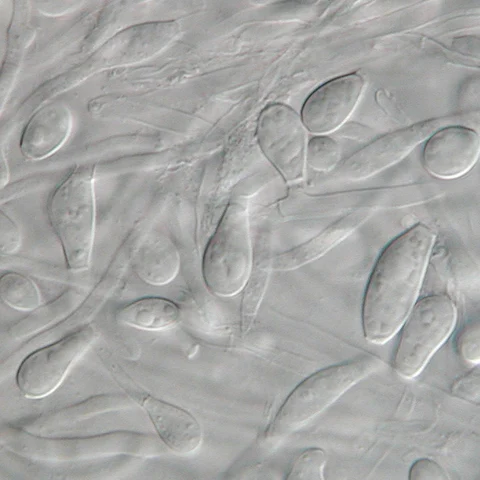
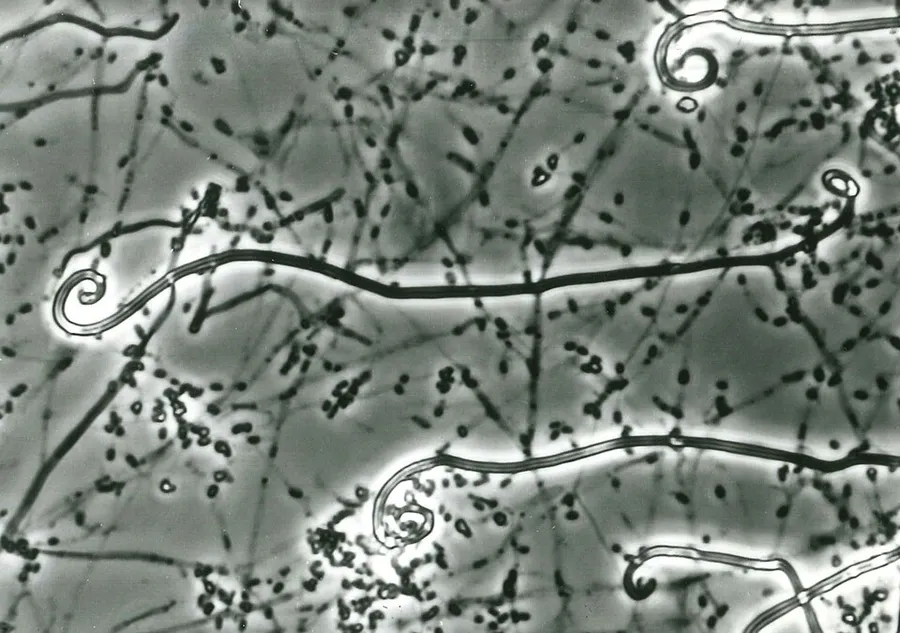
In culture, colonies of U. reesii grow moderately fast and are yellowish-white to buff in colour, are flat and dense in shape, and range from velvety to powdery in texture. Arthroconidia of U. reesii tend to be broad compared to most Malbranchea, ranging from approximately 2.5-3.5 μm x 3.5-6 μm in size. As a heterothallic species, two compatible "sexes" are required for sexual reproduction to occur. As with other members of the genus Uncinocarpus, U. reesii can develop hooked (uncinate) appendages on vegetative hyphae. These appendages are short and rigid, with thick walls approximately 8.8μm in diameter. Appendage length rarely exceeds the diameter of the fruiting body (ascocarp). These appendages are found in the asexual stage as extensions of vegetative hyphae, but only develop fertile spore-bearing structures (gymnothecia) in the sexual morph when compatible strains are mated. The gymnothecia are reddish-brown, initially formed on short, bulbous stalks before becoming more or less spherical. The ascospores are smooth, oblate and hole-filled (punctate). When the asexual morph of U. reesii develops these hooked appendages, they are referred to as "pseudogymnothecia", due to their similar appearance but lack of a spore-bearing structure. In lieu of spores, the asexual form produces arthroconidia that are cylindrical shaped with flattened ends.

Sebagian uraian ditampilkan dalam bahasa sumber; terjemahannya belum tersedia atau belum lolos pemeriksaan.

Rujukan: [1]

Pengukuran mengikuti objek, spesimen atau kultur, dan metode yang disebutkan sumber. Baca uraian asli untuk konteks lengkap.

02 / Kehidupan

Habitat dan peran ekologis

In the natural environment, U. reesii is commonly found growing in soil and on keratinous materials, and is found over a wide geographic range. Though there are no recorded cases of disease caused by U. reesii, there is evidence to support the hypothesis that the species is the root of the evolutionary branch from which pathogenic species in the Onygenales arose. The ability of U. reesii to shift from plant to animal substrates are theorized to have led to development of pathogenicity in several Coccidioides and Paracoccidioides species, both of which are highly genetically similar to U. reesii. Another related Uncinocarpus species, U. orissi, has been implicated in one deep skin infection and two pulmonary infections of humans.

Sebagian uraian ditampilkan dalam bahasa sumber; terjemahannya belum tersedia atau belum lolos pemeriksaan.

Rujukan: [1]

Habitat atau konteks temuan
Informasi belum tersedia pada sumber rilis ini.
Substrat
tanah
Peran atau konteks
Belum dikategorikan pada rilis ini.
Temukan hubungan serupa
03 / Siklus hidup

Reproduksi

In culture, colonies of U. reesii grow moderately fast and are yellowish-white to buff in colour, are flat and dense in shape, and range from velvety to powdery in texture. Arthroconidia of U. reesii tend to be broad compared to most Malbranchea, ranging from approximately 2.5-3.5 μm x 3.5-6 μm in size. As a heterothallic species, two compatible "sexes" are required for sexual reproduction to occur. As with other members of the genus Uncinocarpus, U. reesii can develop hooked (uncinate) appendages on vegetative hyphae. These appendages are short and rigid, with thick walls approximately 8.8μm in diameter. Appendage length rarely exceeds the diameter of the fruiting body (ascocarp). These appendages are found in the asexual stage as extensions of vegetative hyphae, but only develop fertile spore-bearing structures (gymnothecia) in the sexual morph when compatible strains are mated.

Sebagian uraian ditampilkan dalam bahasa sumber; terjemahannya belum tersedia atau belum lolos pemeriksaan.

Rujukan: [1]

Sinonim menurut acuan taksonomi rilis: Gymnoascus siglerae
04 / Batas informasi

Catatan identitas dan cakupan

  • Nama diterima mengikuti Catalogue of Life Base2026-09-11; uraian mempertahankan konsep dan nama sumber aslinya.
  • Original geographic, specimen and life-cycle scope retained; source import awaits individual editorial review.
  • Impor dan terjemahan otomatis belum diperiksa editorial per profil. Struktur reproduktif yang disebutkan tidak membuktikan seluruh siklus hidup diketahui.
  • Pengukuran pada uraian mengikuti spesimen, kultur, dan metode sumber; angka tidak diperluas ke semua populasi.

Catatan distribusi dalam narasi mengikuti sumbernya. Dokumentasi spesimen atau foto mengikuti catatan sumber. Bukti wilayah Indonesia dan penilaian konservasi tidak disimpulkan dari gambar.

05 / Dokumentasi

Melihat dengan konteks

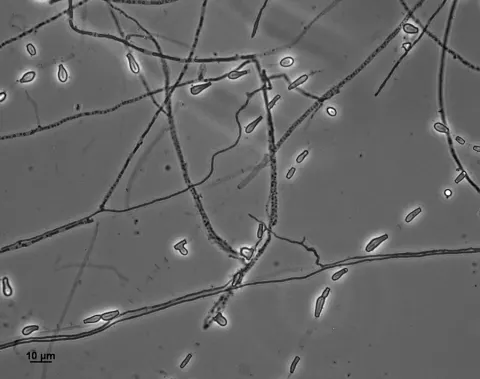
Dokumentasi Uncinocarpus reesii dari Wikimedia Commons. Strain UAMH 160 in phase contrast microscopy showing hooked ascomatal appendage and Malbranchea anamorph Identifikasi mengikuti record berkas sumber.

Jenis
Fotografi
Kredit
Medmyco
Sumber media
Buka entri sumber

Gambar menunjukkan objek menurut identifikasi sumber, bukan verifikasi independen spesimen oleh Fungi. Tidak ada skala baru yang ditambahkan.

06 / Rujukan

Sumber profil

  1. [1] Uncinocarpus reesii — Wikipedia (en)Bagian sumber: Frozen revision 1332659521
    Tanggal penghimpunan sumber: 2026-10-12
    Teks sumber: CC BY-SA4.0 · Wikipedia contributors
  2. [2] Catalogue of Life Base2026-09-11 — Uncinocarpus reesiiBagian sumber: ColDP NameUsage.tsv ID 7DJ3G; accepted species; source 2073
    Tanggal penghimpunan sumber: 2026-10-12
  3. [3] Dokumentasi visual — Uncinocarpus reesiiBagian sumber: Individual media record; identification follows the source, not independent determination
    Tanggal penghimpunan sumber: 2026-10-12
    Media sumber: CC BY-SA 4.0 · Medmyco

Adaptasi teks: CC BY-SA 4.0. Wikipedia contributors — Uncinocarpus reesii — Wikipedia (en)

Uraian asli dan riwayat sumber

Riwayat atau halaman sumber

Ringkasan sumber

Uncinocarpus reesii is a species of saprotrophic microfungi that grows in soil and on keratinous materials such as hair, feathers and skin. It was the first species to be designated as part of the genus Uncinocarpus, owing in part to its characteristic development of hooked (uncinate) appendages. As the closest non-pathogenic relative of Coccidioides immitis and C. posadasii, it has become a subject of research interest.

Revisi sumber

Morfologi sumber

In culture, colonies of U. reesii grow moderately fast and are yellowish-white to buff in colour, are flat and dense in shape, and range from velvety to powdery in texture. Arthroconidia of U. reesii tend to be broad compared to most Malbranchea, ranging from approximately 2.5-3.5 μm x 3.5-6 μm in size. As a heterothallic species, two compatible "sexes" are required for sexual reproduction to occur. As with other members of the genus Uncinocarpus, U. reesii can develop hooked (uncinate) appendages on vegetative hyphae. These appendages are short and rigid, with thick walls approximately 8.8μm in diameter. Appendage length rarely exceeds the diameter of the fruiting body (ascocarp). These appendages are found in the asexual stage as extensions of vegetative hyphae, but only develop fertile spore-bearing structures (gymnothecia) in the sexual morph when compatible strains are mated. The gymnothecia are reddish-brown, initially formed on short, bulbous stalks before becoming more or less spherical. The ascospores are smooth, oblate and hole-filled (punctate). When the asexual morph of U. reesii develops these hooked appendages, they are referred to as "pseudogymnothecia", due to their similar appearance but lack of a spore-bearing structure. In lieu of spores, the asexual form produces arthroconidia that are cylindrical shaped with flattened ends.

Revisi sumber

Ekologi sumber

In the natural environment, U. reesii is commonly found growing in soil and on keratinous materials, and is found over a wide geographic range. Though there are no recorded cases of disease caused by U. reesii, there is evidence to support the hypothesis that the species is the root of the evolutionary branch from which pathogenic species in the Onygenales arose. The ability of U. reesii to shift from plant to animal substrates are theorized to have led to development of pathogenicity in several Coccidioides and Paracoccidioides species, both of which are highly genetically similar to U. reesii. Another related Uncinocarpus species, U. orissi, has been implicated in one deep skin infection and two pulmonary infections of humans.

Revisi sumber

Struktur reproduksi sumber

In culture, colonies of U. reesii grow moderately fast and are yellowish-white to buff in colour, are flat and dense in shape, and range from velvety to powdery in texture. Arthroconidia of U. reesii tend to be broad compared to most Malbranchea, ranging from approximately 2.5-3.5 μm x 3.5-6 μm in size. As a heterothallic species, two compatible "sexes" are required for sexual reproduction to occur. As with other members of the genus Uncinocarpus, U. reesii can develop hooked (uncinate) appendages on vegetative hyphae. These appendages are short and rigid, with thick walls approximately 8.8μm in diameter. Appendage length rarely exceeds the diameter of the fruiting body (ascocarp). These appendages are found in the asexual stage as extensions of vegetative hyphae, but only develop fertile spore-bearing structures (gymnothecia) in the sexual morph when compatible strains are mated.

Revisi sumber

Rujukan halaman ini

Fungi. Uncinocarpus reesii. Rilis data fungi-2026-10-12-expansion-2. https://fungi-atlas.mgadib.chatgpt.site/jamur/uncinocarpus-reesii/.

Status: impor sumber; pemeriksaan editorial per profil belum selesai. Untuk klaim biologis, gunakan rujukan pada bagian terkait dan periksa konteks sumber aslinya.