Ciri dan struktur
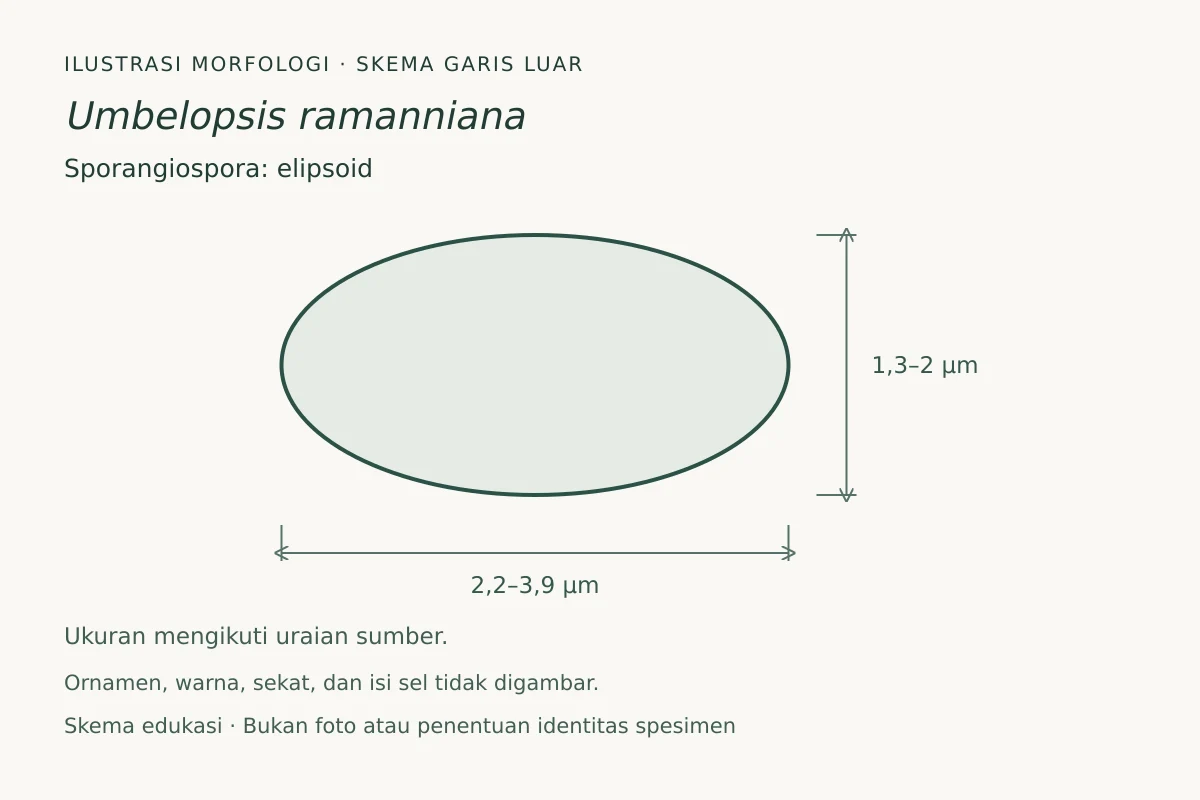
The species is a part of a complex phylogeny and classification, but the group this species is in differs from others in the order Mucorales by their sporangial structure, their spore shape and size, as well as in their dichotomously branched hyphae. The sporangial structure is generally branched, producing sympodially proliferated sporangiospores. The spores are tinted pink (though some discussion has been on whether the pigmentations come from the spores, the sporangium itself, or even from the spore drop from the evanescent sporangial wall). Another characteristic morphological feature is the variation of the sporangiospore shape and size. The shapes vary from subglobose, rounded oblong, and ellipsoidal. The spore sizes vary from 2.2-3.9 μm by 1.3-2.0 μm. The wide ranges are characteristic of the species, but the three sub clades have been shown to account for that difference, each with their own ranges (Ogawa et al. 2005). The variation in the spore shape is thought to be a result of packing spores in a rigid sporangial wall. This prevents the development of round spores when they come to maturity, though differences in this effect are seen throughout the subclades (Tokumasu et al. 1990). U. ramanniana has been observed to have microchlamydospores, ranging from 4.9 ± 0.4 – 9.1 ± 0.8 μm, as well as the potential for macrochlamydospores, though not observed in all subclades. The chlamydospores have been observed to be filled with lipids. Umbelopsis ramanniana is not known to form any sexual structures, and are lacking in zygospores. The species is further characterized by its velvety colonies, a rudimentary columella being subglobose to flattened, and is lacking in the garlic-like odor that is common in the Mortierella isabellina-Group that U. ramanniana was originally thought to belong to.
Habitat dan peran ekologis
As of today, the exact ecological role of this fungus is not completely understood. It is a common soil saprobe, but has also been observed in other locations. It has been recorded in Great Britain, Hong Kong, Ireland, Kerala, Mauritius, New Zealand North, Ontario, Peninsular Malaysia, Queensland, Sri Lanka, Sweden, Victoria, and throughout the US. The most prevalent studies have shown Umbelopsis ramanniana to be present in leaf litter, animal dung, on the roots and within the xylem of some conifers, and on spore producing bodies of some ascomycetes including the ascocarp of Peziza species. Specifically, in reference to the roots and xylem tissue of some trees, it has been observed within the soil in the root zone, with an affinity for fine roots, as well as within root core samples as an endophyte of certain conifers, including Picea abies and the Ponderosa pine. A study by Hoff et al. in 2004 researched the soil mycology before and after a change in the soil environment, in this case a forest fire, to see how the fungal populations changed. U. ramanniana was one of the first to bounce back, with affinity for the ponderosa pine, leading the authors to believe that it is a common endophyte and soil saprobe that is favored by disturbance in a dry environment.
- Habitat atau konteks temuan
- hutan
- Substrat
- Informasi belum tersedia pada sumber rilis ini.
- Peran atau konteks
- Belum dikategorikan pada rilis ini.
Reproduksi
The species is a part of a complex phylogeny and classification, but the group this species is in differs from others in the order Mucorales by their sporangial structure, their spore shape and size, as well as in their dichotomously branched hyphae. The sporangial structure is generally branched, producing sympodially proliferated sporangiospores. The spores are tinted pink (though some discussion has been on whether the pigmentations come from the spores, the sporangium itself, or even from the spore drop from the evanescent sporangial wall). Another characteristic morphological feature is the variation of the sporangiospore shape and size. The shapes vary from subglobose, rounded oblong, and ellipsoidal.
Catatan identitas dan cakupan
- Nama diterima mengikuti Catalogue of Life Base2026-09-11; uraian mempertahankan konsep dan nama sumber aslinya.
- Original geographic, specimen and life-cycle scope retained; source import awaits individual editorial review.
- Impor dan terjemahan otomatis belum diperiksa editorial per profil. Struktur reproduktif yang disebutkan tidak membuktikan seluruh siklus hidup diketahui.
- Pengukuran pada uraian mengikuti spesimen, kultur, dan metode sumber; angka tidak diperluas ke semua populasi.
Catatan distribusi dalam narasi mengikuti sumbernya. Dokumentasi spesimen atau foto mengikuti catatan sumber. Bukti wilayah Indonesia dan penilaian konservasi tidak disimpulkan dari gambar.
Melihat dengan konteks
Ilustrasi skematis garis luar sporangiospora Umbelopsis ramanniana, berdasarkan uraian sumber; ukuran yang dilaporkan 2,2–3,9 × 1,3–2 µm. Proporsi disederhanakan, bukan salinan satu spesimen. Ornamen permukaan, warna, sekat, dan isi sel tidak direkonstruksi. Skema memilih bentuk elipsoid dari beberapa bentuk sporangiospora yang dijelaskan sumber. Rentang 2,2–3,9 × 1,3–2,0 µm mencakup variasi spesies/kelompok subklad, bukan pengukuran satu isolat.
- Jenis
- Ilustrasi skematis
- Kredit
- Fungi, ilustrasi orisinal (2026); fakta morfologi berdasarkan Wikipedia contributors
- Lisensi
- CC BY-SA 4.0
- Sumber media
- Buka entri sumber
Sumber profil
- [1] Umbelopsis ramanniana — Wikipedia (en)
- [2] Catalogue of Life Base2026-09-11 — Umbelopsis ramanniana
Rujukan halaman ini
Fungi. Umbelopsis ramanniana. Rilis data fungi-2026-10-12-expansion-2. https://fungi-atlas.mgadib.chatgpt.site/jamur/umbelopsis-ramanniana/.
Status: impor sumber; pemeriksaan editorial per profil belum selesai. Untuk klaim biologis, gunakan rujukan pada bagian terkait dan periksa konteks sumber aslinya.