01 / Morfologi

Ciri dan struktur

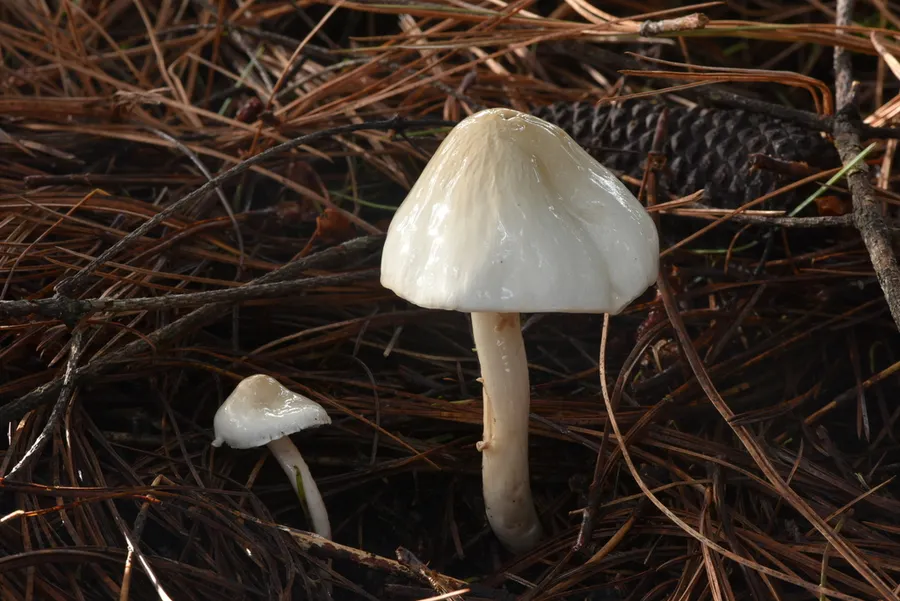
The cap (pileus) is whitish or gray-brown and between 2–7 cm in width. The caps are roundish at first and typically become convex then plane with age. They can have a broad umbo, with a smooth or slimy surface, and slimy veil remnants hanging from the margin. The gills are white. They are free from the stalk, non-waxy, close, broad, and white in color. The spore print is white. The stalk is typically 5–10 cm long and can stain brown when bruised. It tapers a bit toward the top. It is fleshy, soft and has a ring. White in color, it is also sticky and slimy, as is the flesh of the fruit body. Its edibility is unknown, with the slime being a deterrent against culinary interest. The translucent slime on the fresh cap is part of the universal veil of the fungus that does not leave the volva when mature. This slimy veil is a key difference between the Zhuliangomyces genus and its relative Amanita. Another difference between the two is that the uppermost layer of hyphae of Z. illinitus pileus is composed of narrow, subcylindrical terminal cells. For the newly defined Zhuliangomyces, the key difference between members of this genus and the Limacella genus is the lack of a rudimentary annulus and the presence of slimy, smooth stalk.

Sebagian uraian ditampilkan dalam bahasa sumber; terjemahannya belum tersedia atau belum lolos pemeriksaan.

Rujukan: [1]

Pengukuran mengikuti objek, spesimen atau kultur, dan metode yang disebutkan sumber. Baca uraian asli untuk konteks lengkap.

02 / Kehidupan

Habitat dan peran ekologis

According to Hutchinson (1998), the fungus was expected to be facultatively mycorrhizal, in which the fungus draws its nutrients from a symbiotic relationship with plant roots. However, in a laboratory setting, it was found that this species does not form ectomycorrhizal relationships with plant roots. It is typically found scattered in temperate mixed forests, swamps, and grass lawns, growing in scattered formations. L. illinita is widely distributed in North America and often found in Europe. These can habitat singly, scattered, or in groups in woods, fields, lawns, roadsides and sand dunes. In North America, the mushrooms are in season between August or July and October or November.

Sebagian uraian ditampilkan dalam bahasa sumber; terjemahannya belum tersedia atau belum lolos pemeriksaan.

Rujukan: [1]

Habitat atau konteks temuan
hutan
Substrat
Informasi belum tersedia pada sumber rilis ini.
Peran atau konteks
Mitra tumbuhan
Temukan hubungan serupa
03 / Siklus hidup

Reproduksi

The cap (pileus) is whitish or gray-brown and between 2–7 cm in width. The caps are roundish at first and typically become convex then plane with age. They can have a broad umbo, with a smooth or slimy surface, and slimy veil remnants hanging from the margin. The gills are white. They are free from the stalk, non-waxy, close, broad, and white in color. The spore print is white.

Sebagian uraian ditampilkan dalam bahasa sumber; terjemahannya belum tersedia atau belum lolos pemeriksaan.

Rujukan: [1]

Sinonim menurut acuan taksonomi rilis: Agaricus illinitus; Amanita illinita var. illinitus; Amanita illinita var. ochracea; Amanita illinitus; Amanitella illinita; Lepiota illinita; Limacella illinita; Limacella illinita f. ochracea; Limacella illinita var. argillacea; Limacella illinita var. rubescens; Myxoderma illinitum
04 / Batas informasi

Catatan identitas dan cakupan

  • Nama diterima mengikuti Catalogue of Life Base2026-09-11; uraian mempertahankan konsep dan nama sumber aslinya.
  • Original geographic, specimen and life-cycle scope retained; source import awaits individual editorial review.
  • Impor dan terjemahan otomatis belum diperiksa editorial per profil. Struktur reproduktif yang disebutkan tidak membuktikan seluruh siklus hidup diketahui.
  • Pengukuran pada uraian mengikuti spesimen, kultur, dan metode sumber; angka tidak diperluas ke semua populasi.

Catatan distribusi dalam narasi mengikuti sumbernya. Dokumentasi spesimen atau foto mengikuti catatan sumber. Bukti wilayah Indonesia dan penilaian konservasi tidak disimpulkan dari gambar.

05 / Dokumentasi

Melihat dengan konteks

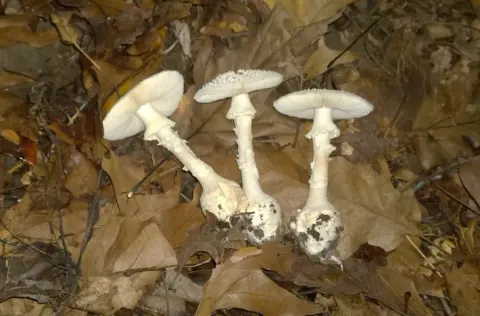
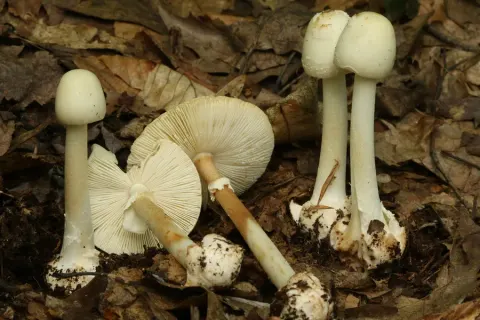
Dokumentasi Zhuliangomyces illinitus menurut asosiasi foto pada record takson iNaturalist. Kredit: Alan Rockefeller. Identitas mengikuti sumber; bukan penentuan spesimen independen.

Jenis
Fotografi
Kredit
(c) Alan Rockefeller, some rights reserved (CC BY), uploaded by Alan Rockefeller
Lisensi
CC BY 4.0
Sumber media
Buka entri sumber

Gambar menunjukkan objek menurut identifikasi sumber, bukan verifikasi independen spesimen oleh Fungi. Tidak ada skala baru yang ditambahkan.

06 / Rujukan

Sumber profil

  1. [1] Zhuliangomyces illinitus — Wikipedia (en)Bagian sumber: Frozen revision 1329011314
    Tanggal penghimpunan sumber: 2026-10-12
    Teks sumber: CC BY-SA4.0 · Wikipedia contributors
  2. [2] Catalogue of Life Base2026-09-11 — Zhuliangomyces illinitusBagian sumber: ColDP NameUsage.tsv ID 7GFPJ; accepted species; source 2073
    Tanggal penghimpunan sumber: 2026-10-12
  3. [3] Dokumentasi visual — Zhuliangomyces illinitusBagian sumber: Individual media record; identification follows the source, not independent determination
    Tanggal penghimpunan sumber: 2026-10-12
    Media sumber: CC BY 4.0 · (c) Alan Rockefeller, some rights reserved (CC BY), uploaded by Alan Rockefeller

Adaptasi teks: CC BY-SA 4.0. Wikipedia contributors — Zhuliangomyces illinitus — Wikipedia (en)

Uraian asli dan riwayat sumber

Riwayat atau halaman sumber

Ringkasan sumber

Zhuliangomyces illinitus is a mushroom-forming fungus species of genus Zhuliangomyces in the family Amanitaceae in the order Agaricales. It has recently been known as Limacella illinita, and previously as Agaricus illinitus and Mastocephalus illinitus. The fungus is known for its distinctive slimy cap, for which it is commonly known as the dripping slimecap or the overflowing slimy stem.

Revisi sumber

Morfologi sumber

The cap (pileus) is whitish or gray-brown and between 2–7 cm in width. The caps are roundish at first and typically become convex then plane with age. They can have a broad umbo, with a smooth or slimy surface, and slimy veil remnants hanging from the margin. The gills are white. They are free from the stalk, non-waxy, close, broad, and white in color. The spore print is white. The stalk is typically 5–10 cm long and can stain brown when bruised. It tapers a bit toward the top. It is fleshy, soft and has a ring. White in color, it is also sticky and slimy, as is the flesh of the fruit body. Its edibility is unknown, with the slime being a deterrent against culinary interest. The translucent slime on the fresh cap is part of the universal veil of the fungus that does not leave the volva when mature. This slimy veil is a key difference between the Zhuliangomyces genus and its relative Amanita. Another difference between the two is that the uppermost layer of hyphae of Z. illinitus pileus is composed of narrow, subcylindrical terminal cells. For the newly defined Zhuliangomyces, the key difference between members of this genus and the Limacella genus is the lack of a rudimentary annulus and the presence of slimy, smooth stalk.

Revisi sumber

Ekologi sumber

According to Hutchinson (1998), the fungus was expected to be facultatively mycorrhizal, in which the fungus draws its nutrients from a symbiotic relationship with plant roots. However, in a laboratory setting, it was found that this species does not form ectomycorrhizal relationships with plant roots. It is typically found scattered in temperate mixed forests, swamps, and grass lawns, growing in scattered formations. L. illinita is widely distributed in North America and often found in Europe. These can habitat singly, scattered, or in groups in woods, fields, lawns, roadsides and sand dunes. In North America, the mushrooms are in season between August or July and October or November.

Revisi sumber

Struktur reproduksi sumber

The cap (pileus) is whitish or gray-brown and between 2–7 cm in width. The caps are roundish at first and typically become convex then plane with age. They can have a broad umbo, with a smooth or slimy surface, and slimy veil remnants hanging from the margin. The gills are white. They are free from the stalk, non-waxy, close, broad, and white in color. The spore print is white.

Revisi sumber

Rujukan halaman ini

Fungi. Zhuliangomyces illinitus. Rilis data fungi-2026-10-12-expansion-2. https://fungi-atlas.mgadib.chatgpt.site/jamur/zhuliangomyces-illinitus/.

Status: impor sumber; pemeriksaan editorial per profil belum selesai. Untuk klaim biologis, gunakan rujukan pada bagian terkait dan periksa konteks sumber aslinya.